Travelling to Vienna by train is one of the most fascinating and sustainable ways to discover the Austrian capital. The city lies at the centre of a dense European rail network that connects it directly with the continent’s major metropolises, making train travel not only practical but also an experience to be enjoyed.
The Vienna Hauptbahnhof, fully opened in 2015, has become the city’s main railway hub and one of the most modern in Europe. Besides this central station, Vienna has other important stations such as Wien Meidling and Wien Westbahnhof, which serve specific international and national routes.
The train offers numerous advantages over other means of transport: you travel comfortably without traffic stress or long queues at security checks, you arrive directly in the heart of the city without having to transfer from the airport, and you can enjoy spectacular scenery along the way.
International train connections to Vienna are frequent and punctual, with trains departing daily from dozens of European cities. From night trains that criss-cross Europe while you sleep, to fast high-speed connections that get you to your destination in just a few hours, the options are many and suitable for every travel need.
Vienna is strategically located, making it perfectly connected to all the capital cities and major cities of Central Europe. The Austrian railway network is renowned for its punctuality and efficiency, with modern trains guaranteeing comfortable travel.
High-speed trains depart every hour from Munich to Vienna in just four hours. Railjet trains cover the 400 kilometres separating the two cities at high speed, offering free wifi, restaurant cars and reclining seats. This is one of the busiest routes and is the main connection between Austria and southern Germany.
Connections to Bratislava, the capital of Slovakia, are exceptionally frequent due to the proximity of the two cities: just 60 kilometres away, which trains cover in 60-75 minutes. Regional trains depart almost every hour during the day, making day trips possible. From Vienna you can easily explore the neighbouring Slovak capital and vice versa.
Prague is about four hours by train from Vienna, with direct Railjet connections departing several times a day. The journey passes through beautiful rural areas of the Czech Republic and is a much more comfortable alternative to the bus. From Budapest, trains take about 2 hours and 30 minutes to reach Vienna, with frequent departures throughout the day.
Connections to Switzerland
From Zurich and other Swiss cities there are direct connections through western Austria. The journey from Zurich takes about 8 hours and passes through some of Europe’s most spectacular Alpine areas, via Innsbruck and Salzburg. Railjet trains offer high levels of comfort for this long, scenic journey.
Connections from Western and Eastern Europe
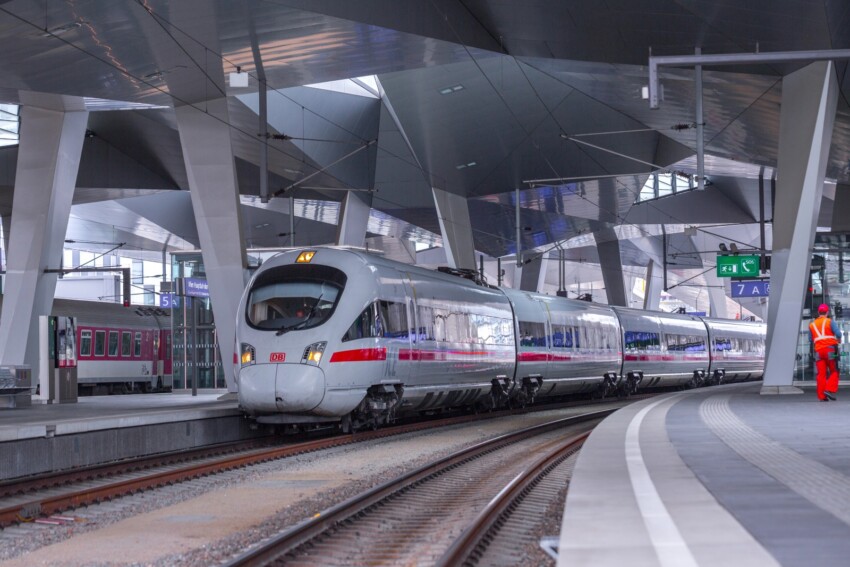
A Die Bahn train arriving in Vienna
Vienna also maintains excellent train connections with western and eastern European countries, confirming its role as a continental crossroads. Nightjet night trains have revolutionised long-distance travel, making it possible to reach Vienna comfortably while sleeping in a sleeper berth.
Direct trains depart from Berlin and take about 9 hours to reach Vienna via the Czech Republic. There are both day and night options, with night trains allowing you to optimise your time by leaving in the evening and arriving in the morning ready to explore the city. Daytime trains offer the opportunity to admire the scenery en route.
Connections to Warsaw and other Polish cities usually require a change, often in Krakow or Katowice, with journey times of around 7-8 hours. From Krakow, however, there are direct connections that cover the distance in about 6 hours and 30 minutes.
For those coming from Western Europe, there are overnight trains from Brussels and Amsterdam that travel through Germany to Vienna. The overnight journey takes about 14 hours but saves you a night’s hotel stay and waking up directly at your destination. From Paris there are no direct connections, but you can reach Vienna with a change in Munich or Zurich, with total times of about 12-13 hours.
Balkans and south-eastern Europe
Vienna maintains historic train connections with the Balkan countries, although journey times are generally longer than on western routes. From Zagrebdirect trains take about 6-7 hours, while from Belgrade the journey takes about 11 hours with night trains available.
Connections to Romania generally pass through Budapest, with total times from Bucharest exceeding 15 hours. In such cases, the night train plus plane combination may be more convenient depending on requirements.
Vienna railway stations
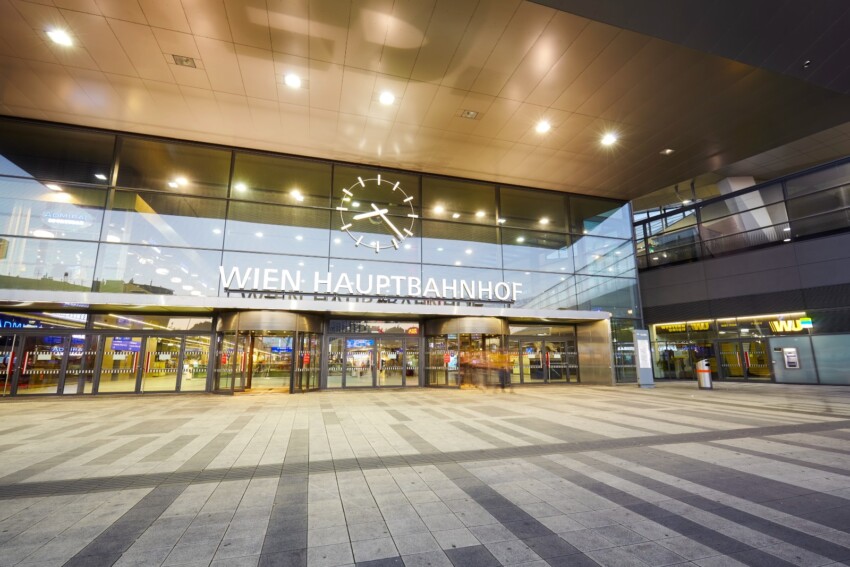
Entrance to the Wien Hauptbahnhof
Understanding the Viennese railway station system is essential in order to best organise your arrival. The city has several stations serving specific directions, although the Wien Hauptbahnhof centralises most of the international traffic.
Wien Hauptbahnhof
Vienna Central Station is a masterpiece of modern architecture that was fully opened in 2015. This impressive structure with its characteristic glass and steel roof handles around 1,000 trains a day and is the main arrival point for train travellers to Vienna.
The station is located in the third district of the city, south of the historic centre, and is perfectly integrated into Vienna’s public transport network. The underground line U1 directly connects the station with the heart of the city: in only 10 minutes you reach iconic squares such as Stephansplatz or Karlsplatz.
Inside the Hauptbahnhof you will find everything you need: a large shopping centre with over 90 shops open until late at night seven days a week, restaurants and cafés offering both fast food and traditional Austrian dishes, 24-hour automatic luggage storage, currency exchange offices and ATMs, a tourist information centre with free city maps, and even a supermarket to stock up on supplies before you reach your accommodation.
Wien Westbahnhof
Vienna West Station mainly serves connections to Salzburg, Munich and West Germany. Located in the 15th district, it is served by the U3 and U6 underground lines that quickly connect it with the city centre.
Many private trains, particularly those of the Westbahn company, which operates cheap connections to Salzburg, depart from this station. Westbahnhof is more compact than Hauptbahnhof but still offers good services to travellers, including shops, bars and luggage rooms.
Wien Meidling
This important station in the south of the city serves as a hub for many international trains, particularly those from Italy and the Balkans. Some trains continuing to the Hauptbahnhof stop at Meidling, however, which may be more convenient if your hotel is located in the south-west of Vienna.
The station is served by the underground line U6 and numerous bus and tram lines. Facilities are adequate, with bars, small shops and luggage storage available.
Train types and travel classes
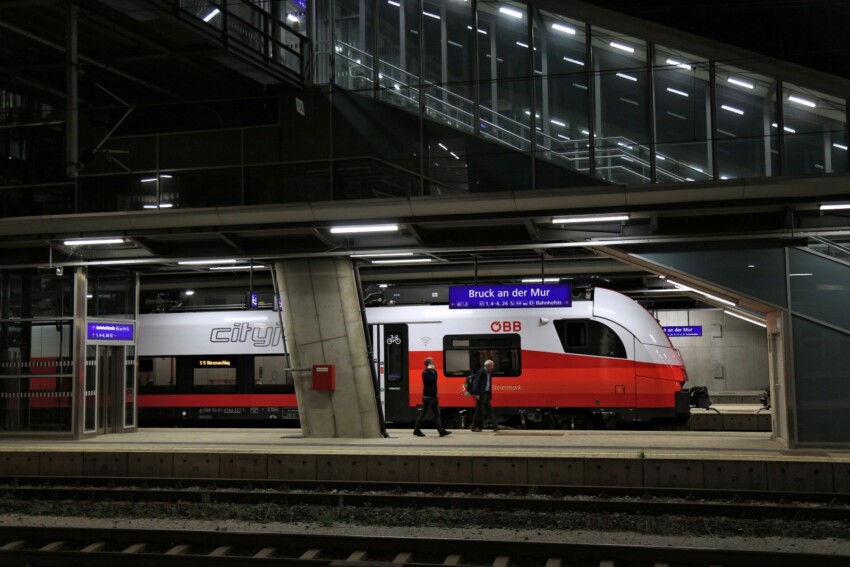
A train of the ÖBB, the Austrian railway company
Knowing the different train types and classes available will help you choose the option that best suits your needs and budget. European trains generally offer very high standards of comfort, with significant differences between the various categories.
Railjet high-speed trains
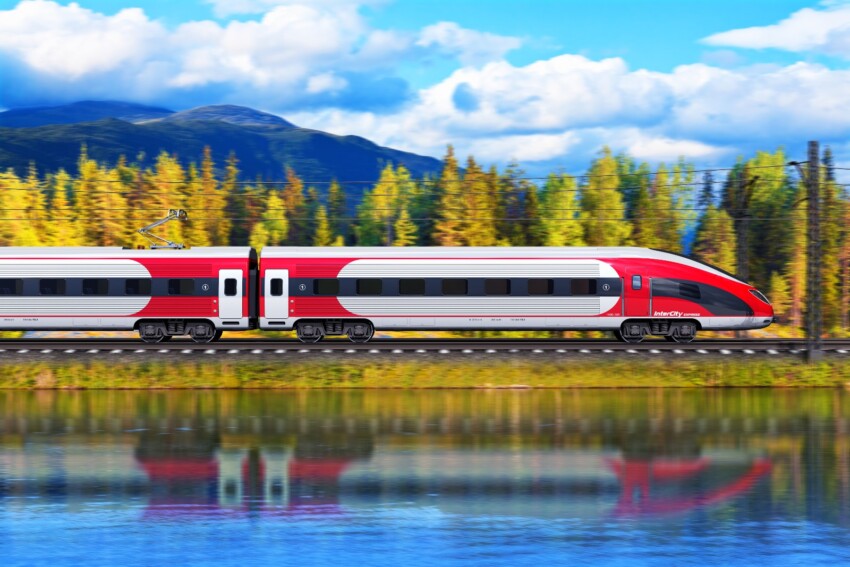
The Railjet trains of the Austrian ÖBB railways represent the excellence of rail transport in Austria. These trains reach speeds of 230 km/h and offer three classes of service: Economy, First Class and Premium. The Railjets are easily recognisable by their distinctive red and white livery.
Economy Class already offers remarkable comfort with ergonomic seats, electrical outlets at every seat, free wifi and ample legroom. First Class adds wider leather seats, more privacy, seat service with hot meal menu and drinks included, and access to VIP lounges in the main stations. Premium Class is the ultimate: reclining seats that recline to 40 degrees, a personal butler, gourmet meals served at your seat, and peace and quiet in dedicated carriages.
Nightjet night trains
The ÖBB Nightjet has revolutionised night travel in Europe, offering a comfortable and sustainable alternative to low-cost flights. These modern trains offer a variety of accommodations: reclining seats for budget travellers, 4- or 6-seat couchettes ideal for families or small groups, and private single, double or triple cabins for those seeking privacy and maximum comfort.
The bunks (Liegewagen in German) offer a real bed with sheets, blankets and pillows provided. The cabins are equipped with a sink, breakfast service in the morning and can be locked from the inside for privacy and security. Nightjets also have shower cars that are accessible to all passengers upon reservation.
Regional and Eurocity trains
For shorter distances or secondary connections, travel on regional trains that make more stops but cost significantly less. These trains are perfect for day trips around Vienna or to places like Bratislava or smaller Austrian towns.
Eurocity trains are international trains connecting major European cities with standards of comfort intermediate between regional and high-speed. They offer restaurant carriages, wifi (not always reliable) and luggage space, but travel at lower speeds than the Railjet.
Where to buy tickets
The most convenient method is to book online on the official Austrian railway website ÖBB, which offers an interface available in several languages. The ÖBB mobile app allows you to manage everything from your smartphone: ticket purchase, digital check-in, real-time timetable consultation and management of any changes.
The app also shows the train composition (which dining car, where the family areas are located, which carriages are first class) helping you to position yourself in the right spot on the platform even before the train arrives. During the journey, it provides information on the next stops and stop times.
Alternatively, platforms such as Trainline or Omio aggregate offers from different railway companies allowing you to easily compare prices and timetables.
Tickets can also be bought at the station at ticket machines or staffed counters, but you will rarely find discounted fares available online. This method is only useful for last-minute purchases of fixed-price regional tickets.
Interrail and Eurail rail passes
For those planning an itinerant trip through several European countries, Interrail (for European residents) and Eurail (for non-European travellers) passes can be a convenient option. These passes allow unlimited travel on regional trains and discounts on high-speed trains, although seat reservations are required for Railjet and Nightjet at extra charge.
Passes are available in different configurations: single country (Austria) or multi-country, with durations ranging from 3 days of travel in a month to 3 consecutive months of unlimited travel. Consider carefully whether the pass is worthwhile compared to buying individual tickets, taking into account the surcharges for compulsory bookings.
From the station to your accommodation
Once you arrive at the station in Vienna, getting to your accommodation is easy thanks to the efficient public transport system. Planning your final transfer helps you start your holiday stress-free.
From Wien Hauptbahnhof, the underground line U1 connects the main tourist and hotel areas of the centre in 10-15 minutes. The line runs through Karlsplatz, Stephansplatz and continues north to Praterstern. If your hotel is located in other areas, numerous tram and bus lines also depart from Hauptbahnhof to all city districts.
Tickets for public transport can be purchased from machines at all stations, conveniently also with a credit card. If you plan to use public transport a lot, consider buying a day pass or the Vienna City Card, which includes unlimited transport plus discounts at attractions.
Taxis always stop in front of the main stations and charge metered fares. A ride from Hauptbahnhof to the city centre costs approximately 15-20 euros depending on the exact destination. Alternatively, apps such as Uber and Bolt operate regularly in Vienna with rates that are often competitive with traditional taxis. For those who prefer absolute flexibility, consider renting a car, although parking in the centre of Vienna is expensive and limited.
If you arrive with a lot of luggage and your hotel is not immediately accessible by metro, consider a private transfer service that can be booked in advance. Many hotels offer this service directly, often at competitive rates, with the advantage of having someone waiting for you with a sign at the station exit.
Documents and travel formalities
Travelling by train to Vienna involves minimal formalities due to Austria’s membership of the European Union and the Schengen area. Border controls are virtually non-existent for those coming from other Schengen countries, making travel much smoother than at airports.
EU citizens simply require a valid identity document: a valid identity card or passport are both accepted. For minors, a valid personal travel document is required. If you are travelling with children who are not accompanied by both parents, it is advisable to bring a declaration of consent signed by the other parent, although this is rarely required.
There are no customs controls on trains from EU countries, but occasionally the Austrian authorities carry out random checks on international trains, mainly to check documents and to combat irregular immigration. These checks generally take place during the journey or upon arrival at the main stations and are quick and unobtrusive.
As far as health insurance is concerned, the European Health Insurance Card (EHIC) guarantees access to necessary medical care in Austria under the same conditions as Austrian citizens. However, it is advisable to take out comprehensivetravel insurance that also covers any repatriation costs or specific assistance.
Special experiences by train
Travelling by train to Vienna can become a memorable experience by choosing scenic routes or special services that enhance the journey itself as part of the holiday.
Panorama routes
The route from Venice to Vienna through the Eastern Alps offers some of the most spectacular mountain views in Europe. After leaving the Venetian plain, the train ascends to Tarvisio through the Julian Alps, with views of deep valleys, Alpine villages and snow-capped peaks most of the year. In Austria, the route through Carinthia offers glimpses of Alpine lakes before entering the flat region around Vienna.
The connection from Zurich passes through Tyrol and Salzburg, offering views of Austria’s most famous Alps. This route is particularly scenic in winter, when the mountains are covered in snow, or in spring during the Alpine blossoming season. From Innsbruck to Salzburg, the train runs along Alpine valleys and through small Tyrolean villages that look like postcards.
Historic carriages and special trains
Occasionally, the Austrian railways organise journeys on vintage trains with restored historical carriages, especially during special events or festivities. These special trains reproduce the atmosphere of the great railway journeys of the past, with staff in period costume and traditional catering.
During the Christmas period, some trains are thematically decorated with travelling Christmas markets, creating a unique experience combining travel and festivity. Check the railway websites for special events during the period of your trip.
How to save on transport and entrance fees
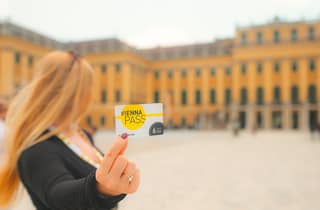
City Card allow you to save on public transport and / or on the entrances to the main tourist attractions.
 Hotel
Hotel  Budget accommodations
  Apartments
  Family Hotel
  Luxury Hotel