Bestseller
Vienna: City Cruise
From 33,00 €
Buy the ticket
At first glance it might not seem so, but Vienna is a city lying on the waters of the Danube, which, unlike other cities such as Budapest, Bratislava or Belgrade, does not flow in the centre, but about 4 kilometres to the north-east. Moreover, it seems that the Danube in Vienna is less wide than usual, since in the middle lies the Donauinsel, a very long artificial island 20 kilometres long and only 200 metres wide, created to separate the course of the Danube from the Neue Donau canal, which is also artificial.
But the Danube is there in Vienna, and it is vital to the city’s economy. Along the river are industries, factories and even man-made beaches, modern skyscrapers and trendy neighbourhoods; visiting Vienna on a Danube cruise gives you the chance to discover this part of the city from a completely different perspective, perhaps not as poetic as in other European capitals, but certainly worth a visit.
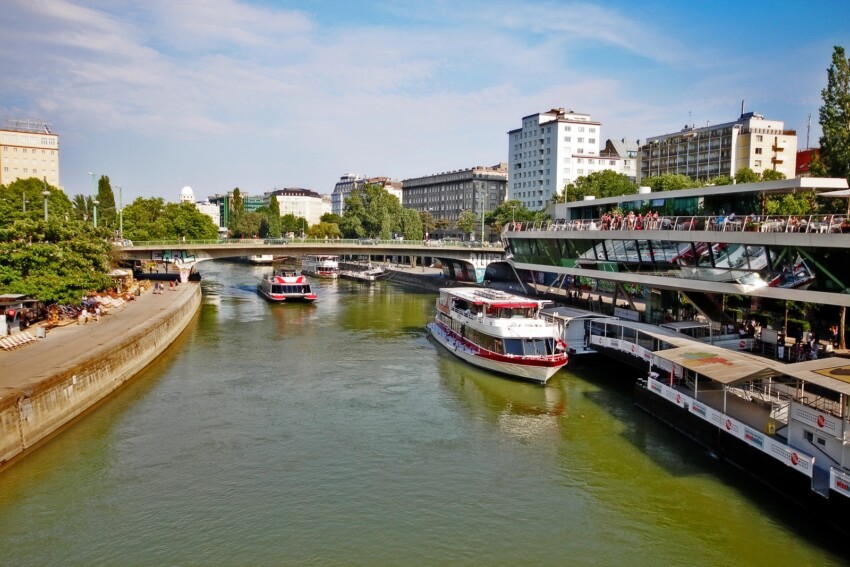
The Danube river system in Vienna is completed by the Donaukanal, an arm of the river that forms a large island on which the districts of Brigittenau and Leopoldstadt are located. The Donaukanal is much closer to the city centre than the Danube itself, and can be reached on foot or by underground, via the U1 line with the Schwedenplatz stop. And it is precisely at Schwedenplatz, between the two bridges Schwedenbrücke and Marienbrücke, that the departure point for the tourist ships is located.
Cruises on the Danube in Vienna are of all kinds, from the simplest to sail for only a couple of hours, to the most comprehensive ones that also offer dinner. Finally, it is also possible to board a cruise to Budapest or Bratislava.
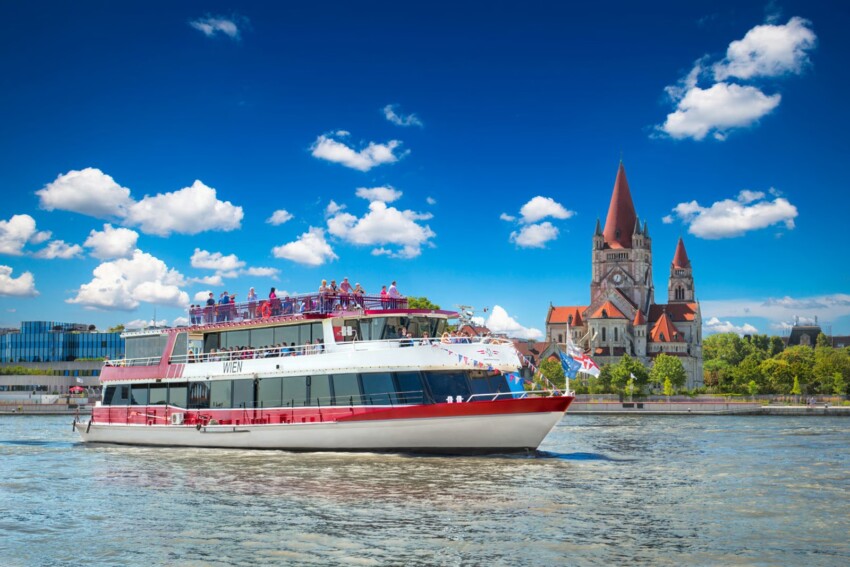
Classic sightseeing cruises generally last between one and three hours and follow scenic routes that pass the main monuments visible from the river. During these cruises you pass through the historical centre, past the Imperial Palace, the Old Town and the modern Donau City. The boats are equipped with covered and uncovered outdoor decks, allowing you to enjoy the view in all weather conditions.
Among the various cruises offered and all the operators, we have selected the best-selling cruise: if you want to play it safe, book it by following questa pagina or using the form below.
Lunch or dinner cruises are a more complete experience, combining sailing with sampling Austrian cuisine. These excursions usually last 2-3 hours and include menus ranging from traditional Viennese dishes to international offerings. The highlight is the sunset cruise, when the golden light of the setting sun reflects off the waters of the Danube and illuminates the historic buildings.
During the summer, cruises to the Wachau, the Danube valley famous for its vineyards and medieval villages, are also available. These full-day excursions take you as far as Melk or Krems, through UNESCO World Heritage landscapes. It is an excellent opportunity to discover Austria beyond Vienna, admiring castles, abbeys and picturesque villages along the river.
For those who want a more intimate experience, private cruises allow you to customise the itinerary and on-board services. Ideal for special occasions such as anniversaries or marriage proposals, these cruises offer maximum flexibility and privacy. Some companies also offer themed cruises during special events, such as Christmas markets or the Viennese New Year.
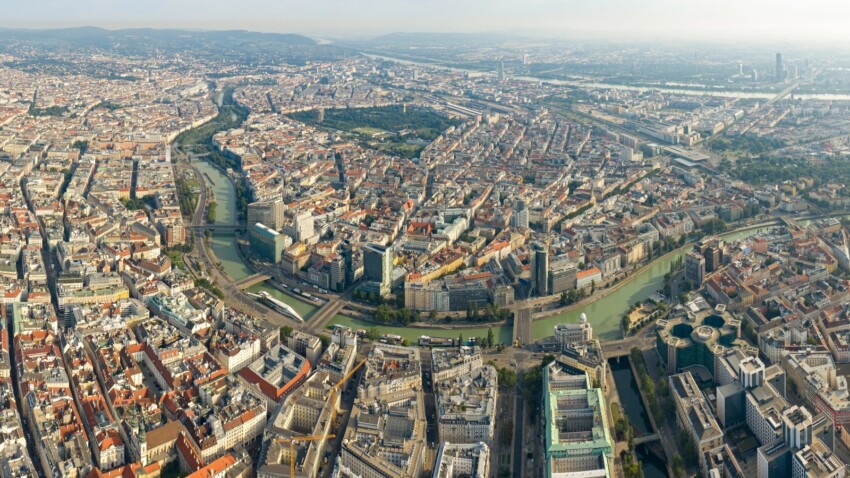
The classic cruise route starts at the Schwedenplatz pier in the city centre and proceeds along the Danube Canal (Donaukanal), an arm of the river that runs through the heart of Vienna. Here, observe the Urania, the historic observatory with its distinctive dome, and the Museum of Applied Art (MAK) with its elegant 19th-century façade.
Moving on, boats pass under several historic bridges, including the Schwedenbrücke and Marienbrücke, which connect the two banks of the canal. Along the banks of the Donaukanal, street art murals, trendy clubs and restaurants with terraces overlooking the water alternate, showing the more contemporary and lively face of Vienna.
When the boat reaches the main Danube, the panorama opens up to broader scenery. On the right bank rises the Donau City, the modern UN headquarters in Vienna, with its skyscrapers including the DC Tower, Austria’s tallest building at 220 metres. This contrast between the imperial architecture of the city centre and the futuristic architecture of the modern district tells the story of Vienna’s evolution into the 21st century.
Along the way, you can also admire the Donauinsel, the 21-kilometre-long artificial island created in the 1970s as protection from river flooding. Today it is a favourite recreational spot for the Viennese, with beaches, cycle paths and green areas.
The DDSG Blue Danube is the most historic and best known company, operating on the Danube since 1829. It operates a large fleet of modern, fully equipped vessels with covered and open viewing decks, on-board restaurants and multilingual audio guides. It offers the largest number of daily departures during the tourist season, with cruises ranging from short one-hour excursions to full-day tours to the Wachau.
The Twin City Liner specialises in the fast connection between Vienna and Bratislava, the Slovakian capital located only 60 kilometres away. Modern catamarans complete the journey in 75 minutes, offering a scenic alternative to land transport. This option is perfect if you want to visit two capitals in one trip, taking advantage of the geographical proximity.
Vienna Sightseeing operates hop-on hop-off cruises along the Danube Canal, with strategic stops near major attractions. The boats run every 30-60 minutes during the high season, allowing you to plan your own day. The service is especially popular with families with children who prefer a more flexible pace.
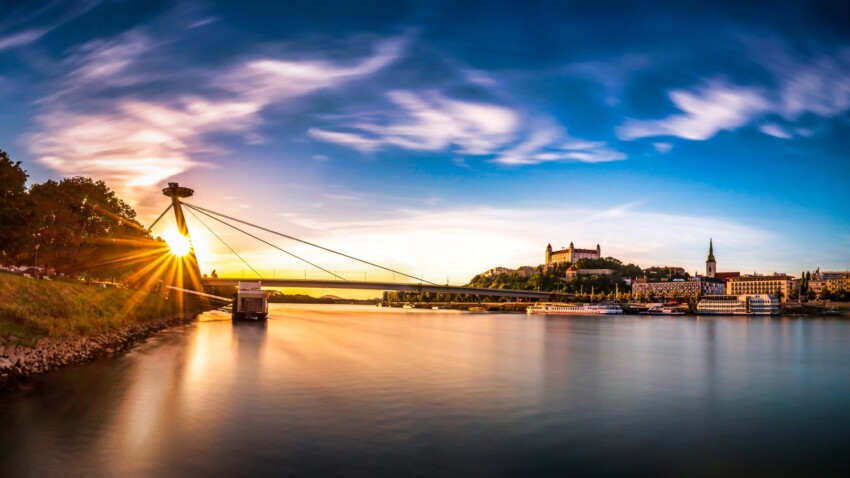
The Slovak capital Bratislava is only 60 kilometres from Vienna along the Danube, making it one of the most popular excursions for visitors to Austria. The river link between the two cities is a scenic and relaxing way to visit two European capitals in one day, sailing through natural landscapes that alternate between cultivated fields, forests and small villages along the banks.
The Twin City Liner, the most frequently used high-speed catamaran for this route, completes the journey in about 75-90 minutes. The modern vessels offer spacious air-conditioned lounges with large panoramic windows, outdoor decks where you can enjoy the journey in the open air, and on-board catering services.
Departures from Vienna generally take place from the Schwedenplatz pier or the terminal near Reichsbrücke, arriving at the port of Bratislava located in the heart of the old city, just a few minutes’ walk from Bratislava Castle and the old town.
An alternative to fast cruises are the traditional scenic cruises, which are slower but allow for a better appreciation of the landscape. These boats take about 4-5 hours for the Vienna-Bratislava route and are ideal if you prefer a more relaxed experience. They often include on-board catering services and allow you to have lunch while admiring the Danube panorama.
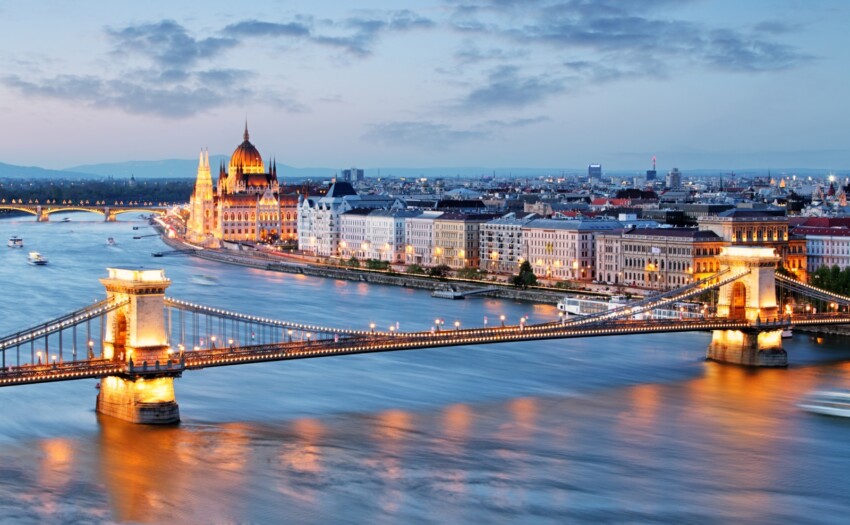
Budapest, the atmospheric Hungarian capital, can be reached from Vienna via Danube cruises lasting from one to several days. This 240-kilometre route is one of the most scenic river routes in Europe, crossing the Danube Bend (Dunakanyar), one of the most beautiful scenic areas of the river with medieval villages, fortresses and monasteries perched on hillsides.
Day cruises are the fastest but also the most intense, departing early in the morning from Vienna and arriving in Budapest in the late afternoon. During the cruise, you pass through historical towns such as Esztergom, the ancient Hungarian capital with its impressive basilica, and Visegrád, dominated by the ruins of a medieval castle offering breathtaking views of the river. These cruises generally include lunch on board and short stops for sightseeing.
The 2-3 day cruises are the most balanced option, allowing you to fully enjoy both sailing and discovering the cities along the way. On the first day you sail from Vienna to Bratislava or directly to the Danube Bend, with an overnight stay on board. On the second day you continue to Budapest with stops at the most interesting locations. This format allows you to appreciate the sunset and sunrise over the river, particularly impressive moments.
Once in Budapest, you can continue cruising by taking part in a further cruise on the Danube, where you will discover the beauty of the Hungarian capital in detail.
Book your cruise in advance, especially if you are travelling in the high season or want a special cruise such as a dinner or sunset cruise. During summer weekends and holiday periods, boats fill up quickly. Many companies offer discounted rates for online bookings made in advance.
The main embarkation points are located at Schwedenplatz in the city centre, easily accessible via the U1 and U4 underground, and at the Reichsbrücke pier for cruises to the Donau City. Other departure points include the Vienna City Cruise Terminal near Handelskai station and various piers along the Danube Canal. Check the departure point on your booking.
Dress in layers, even in summer. On the river the temperature can be cooler than in the city, especially during the evenings or when the boat is in motion. A light windbreaker is always advisable. Take sunglasses and sunscreen with you during the summer months, as the glare from the water intensifies exposure to the sun’s rays.
If you get seasick, be aware that the Danube in Vienna is generally very calm and the boats are stable. In any case, sit in the middle of the boat where movement is minimal. Most modern companies use boats with stabilisers that further reduce swaying.
Danube cruises are an ideal activity for families, offering a relaxing time while the children enjoy watching the scenery and boats go by. Many companies provide reduced fares or free entry for children under 6 years old, while some boats have dedicated play areas for the little ones.
During the summer, some companies organise thematic cruises for children with on-board entertainment, treasure hunts and educational activities on the flora and fauna of the Danube. These special cruises turn the cruise into an interactive adventure that keeps children engaged for the duration of the trip.
City Card allow you to save on public transport and / or on the entrances to the main tourist attractions.
 Hotel
Hotel  Budget accommodations
  Apartments
  Family Hotel
  Luxury Hotel