Leonardo Boutique Hotel Linz City Center
Linz - Steingasse 6
Book now
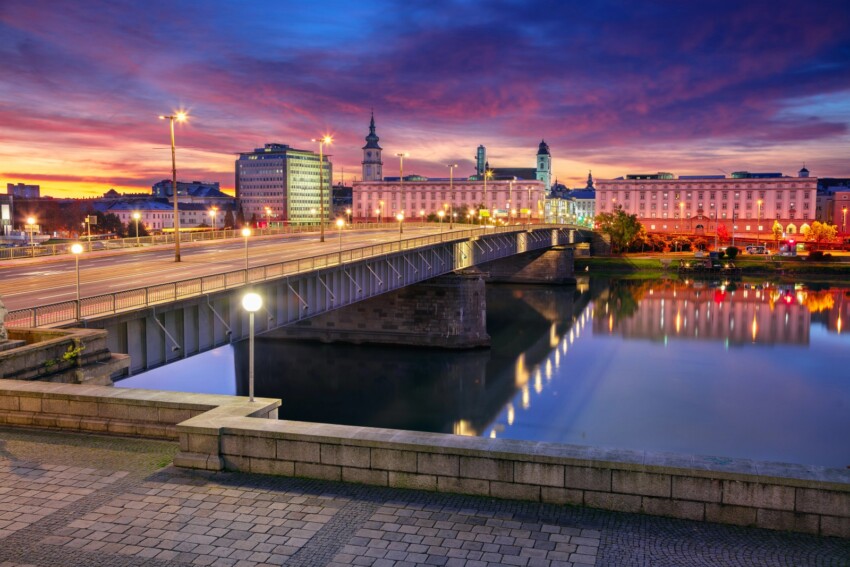
Despite being an ancient city with a charming old town, Linz may not boast the regal charm of cities like Vienna and Salzburg, but it is a valuable addition to an Austrian travel itinerary or the ideal destination for a weekend break in an original destination.
Criss-crossed by the Danube and rich in green oases, it is a modern yet people-friendly city characterised by an exceptional creative and cultural ferment, thanks to which it earned the title of European Capital of Culture in 2009.
Tourists admire its vitality, original attractions, green walks and the delicious Linzertorte to be tasted in an elegant café in the centre.
In the evening, when the futuristic buildings are spectacularly illuminated and reflected in the waters of the Danube, images of an industrial Linz disappear from the memory and only the enchantment of a vital and energetic city remains.
Linz gives you the choice between projecting yourself into the future by visiting super-technological attractions or wandering aimlessly through the picturesque streets of the old town – we recommend doing both!
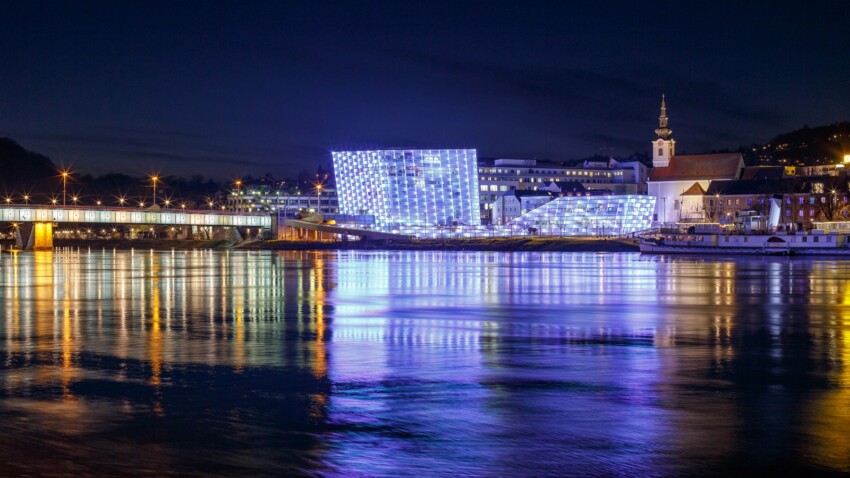
The tourist gem of Linz is the Ars Electronica Centre, an innovative interactive museum and cultural centre dedicated to digital art and technology in general: a place of exploration, but also experimentation and discovery, where the present is investigated in order to anticipate future trends.
The museum houses a permanent exhibition divided into four laboratories (BrainLab, BioLab, FanLab and VRLab) where you can see, touch and experience for yourself; it also organises temporary exhibitions, workshops and events.
Discovering how your brain perceives its surroundings and responds to stimuli, having fun analysing DNA and cloning plants, immersing yourself in virtual reality or having your voice recognised by Paro, the robot baby seal used for therapeutic purposes, are just some of the amazing experiences bordering on science fiction that you can enjoy when visiting the Ars Electronica Centre in Linz.
The futuristic building along the Danube that houses the museum is one of the symbols of Linz: at night it is completely illuminated and its image reflected in the waters of the river is particularly striking. The ideal subject for exceptional night photos!
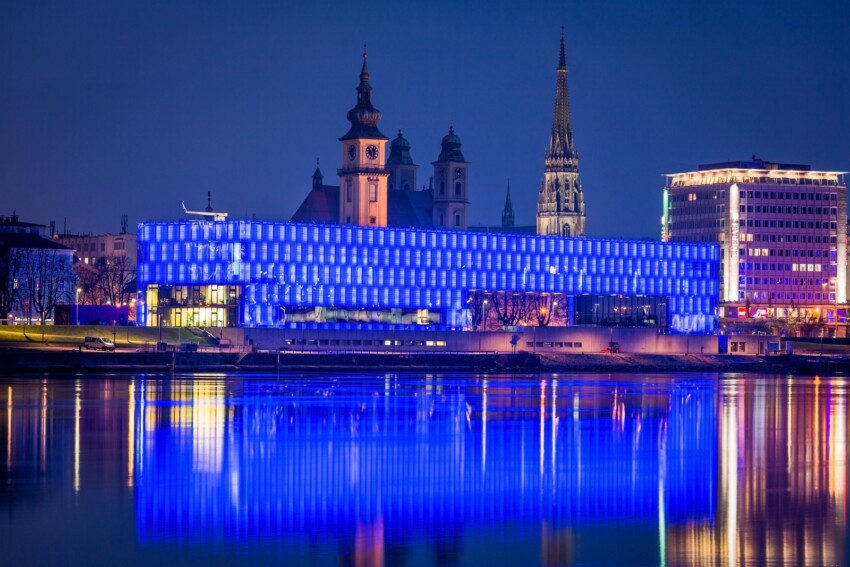
The other ultra-modern building that colours the Linz night is the Lentos Kunstmuseum, a museum of modern and contemporary art opened in 2003 that organises temporary exhibitions of international standing.
The building itself is an extraordinary piece of architecture. To find out more about its features, its location and the thinking that inspired Austrian architects Weber and Hofer, you can join a guided group tour.
Another good reason to visit Lentos is to have a coffee on the terrace of the café-restaurant on the ground floor; if it gets too cold, you can stay inside and still enjoy the sunshine: the building is flooded with natural light!
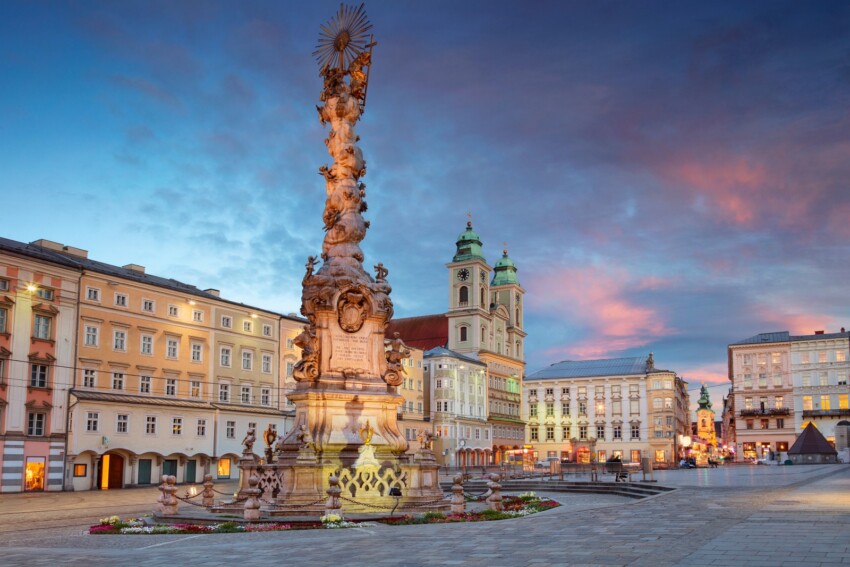
Linz’s Hauptplatz is one of the largest central squares in Austria, with a surface area of 13,200 square metres, testifying to the city’s medieval importance along the Danube trade routes. In the centre of the square stands the majestic Trinity Column, 20 metres high and made of white marble between 1717 and 1723 as a votive offering for the end of the plague that had decimated the city’s population.
The elegant Baroque and Renaissance palaces surrounding the square preserve centuries of commercial and craft history. The Old Town Hall (Altes Rathaus), with its characteristic pink Baroque façade, still houses municipal offices and richly decorated state rooms. Every Saturday morning, the square comes alive with the flea market (Flohmarkt), where the authentic atmosphere of local life can be felt among the stalls selling antiques and various objects.
Landstraße, the elegant pedestrian street branching off from Hauptplatz, is the heart of shopping in Linz and is considered one of the most beautiful shopping streets in Austria. This 600-metre-long thoroughfare, closed to traffic and embellished with historic cafés, designer boutiques and traditional shops, leads towards the Danube through the city’s most characteristic urban fabric.
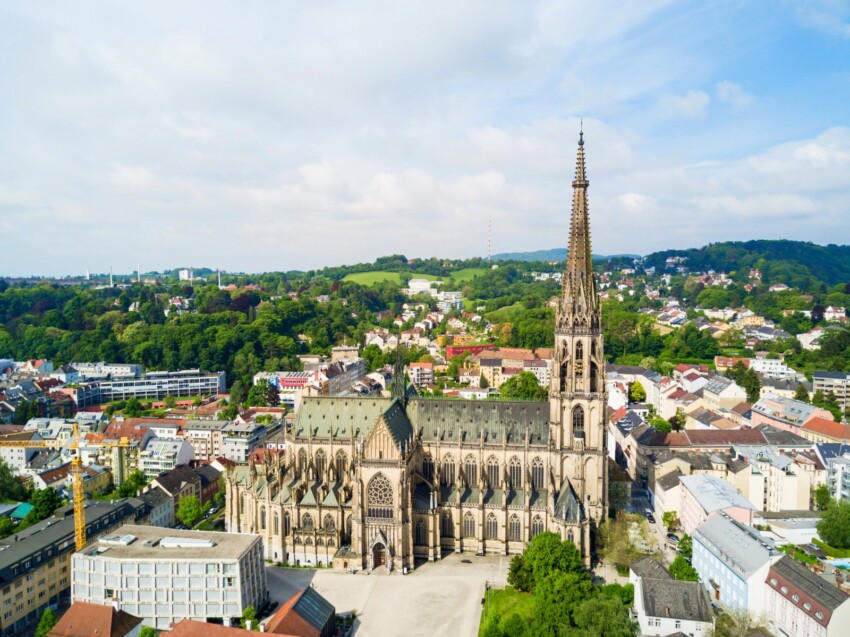
The Mariendom or New Cathedral is a masterpiece of European neo-Gothic architecture and holds the record of being Austria’s largest church by capacity, accommodating over 20,000 worshippers. Built between 1862 and 1924 to a design by French architect Vincenz Statz, this imposing basilica stands 134 metres long and 33 metres wide, with a bell tower reaching a height of 130 metres.
The interior of the cathedral impresses with magnificent polychrome stained glass windows that narrate important moments in Austrian and Linz history. The Linzer Fenster (Linz Window) illustrates local history from Roman origins to modern times, while the Kaiserfenster (Imperial Window) celebrates the House of Habsburg. The majestic organ from 1968, with its 4,264 pipes, is considered one of the most valuable instruments in central Austria.
It is possible to climb to the viewing tower via 633 steps or use the lift to admire one of the most spectacular views of Linz and the Danube valley. The cathedral regularly hosts concerts of sacred music, especially during Christmas and Holy Week.
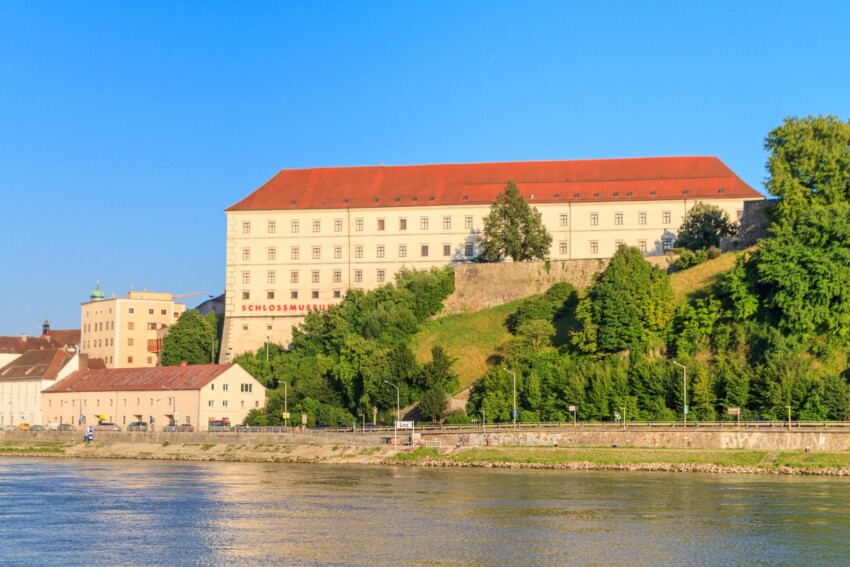
Linz Castle dominates the city from the top of the hill 285 metres above sea level, offering one of the most spectacular views of the Danube and the entire cityscape. This fortress, whose origins date back to 1207 but was rebuilt in Renaissance style between 1497 and 1607 under Emperor Frederick III, is one of the best preserved fortified complexes in central Austria.
Today, the castle houses the Schlossmuseum, one of the richest provincial museums in Upper Austria with collections ranging from prehistory to contemporary art. The nature and technology sections present fossils, minerals and historical scientific instruments, while the art collection holds works from the Middle Ages to the 20th century. Particularly interesting is the permanent exhibition on Austrian folk traditions, with costumes, furniture and everyday objects recounting five centuries of regional life.
The castle’s courtyard of honour hosts open-air concerts and theatre performances during the summer, while the panoramic terrace offers a vantage point for watching the sunset over the Danube.
A link between tradition and innovation is Musiktheater6, Europe’s most modern opera house, which opened in Linz in 2013. It is a theatre that is characterised by a very high level of comfort, impeccable acoustics and state-of-the-art stage technology that allows complex and highly spectacular productions to be brought to the stage.
How is steel produced? What are the most modern technologies used in its production? Find out by visiting the original interactive museum Voestalpine Stahlwelt7, which also includes a history section.
The city’s green oasis is Donaulände8, the beautiful park along the banks of the Danube, perfect for walks, naps and picnics.
For easy walks you can also climb Pöstlingberg9, more simply known as ‘Linz Mountain’, on the top of which you will find the inevitable viewing terrace, a basilica, a zoo and children’s attractions.
In the following map you can see the location of the main places of interest mentioned in this article.

The typical dessert of Linz is the Linzer Torte, a tart traditionally baked on festive occasions.
It is considered the oldest cake in the world: historical documents testify to the existence of the recipe already in the 17th century. Already at that time, the cake was prepared according to four different recipes, but all of them included the use of almonds.
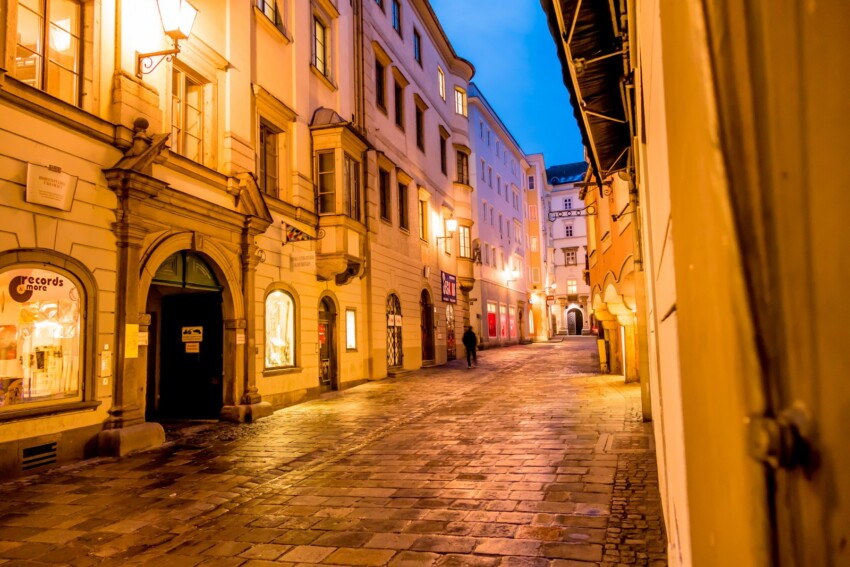
The fact that Linz is a future-oriented city is also evident from the hotels in the city, many of which are very modern and comfortable. The historic centre is the most convenient area to stay, with numerous boutique hotels and family-run guesthouses within walking distance of all major attractions.
Linz is also an important commercial centre and this has resulted in the city having many international chain hotels, preferred by business travellers and those who want to be sure of finding high standards of quality.
For longer stays, flats in the Urfahr district on the left bank of the Danube provide peace and quiet and easy access to the Pöstlingberg, while remaining connected to the centre via the modern tram system.
Linz has a small airport, known as Blue Danube Airport or Linz Airport (LNZ), located 14 km from the city centre in the municipality of Hörsching. It offers few direct connections in addition to seasonal charter flights. From the airport, bus 601 connects the terminal with Linz Central Station (Hauptbahnhof) in 22 minutes with trips every 30-60 minutes. Alternatively, you can use the free shuttle bus to the Hörsching railway station and continue by train to Linz (11 minutes).
For those who prefer larger airports, Vienna Airport (VIE) is approximately 185 km away and is connected to Linz by direct Railjet trains every two hours (1 hour 40 minutes travel time). Salzburg Airport (120 km) is a good alternative with good rail and motorway connections.
Linz is fully integrated into the European rail network via the Linz Hauptbahnhof station, one of the main hubs in central Austria. Railjet trains connect the city with Vienna in 1 hour 15 minutes, with Salzburg in 1 hour 20 minutes, while German ICE trains continue to Munich, Frankfurt and Berlin. It is also possible to reach Linz via Innsbruck (3 hours 30 minutes) or via Villach and Salzburg.
Linz is crossed by the A1 motorway, which connects Vienna and Salzburg. The city centre has numerous car parks, including the Parkhaus Zentrum and several underground garages connected to the main tourist attractions.
What's the weather at Linz? Below are the temperatures and the weather forecast at Linz for the next few days.
Linz is located in the heart of UpperAustria (Oberösterreich), 185 km west of Vienna and 120 km east of Salzburg, occupying a strategic position along the course of the Danube at the point where the great European river receives its waters from the Traun stream.
 Hotel
Hotel  Budget accommodations
  Apartments
  Family Hotel
  Luxury Hotel