Gasthof Simony Hallstatt B&B
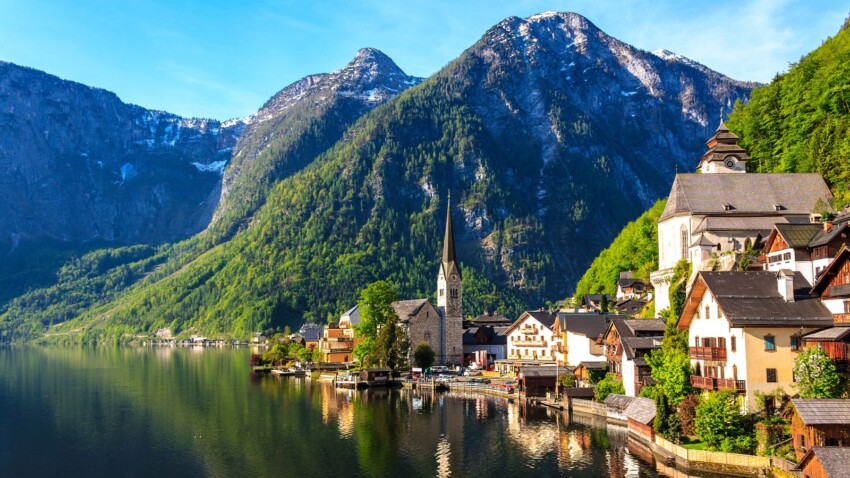
Upper Austria, or Oberösterreich in German, is a wonderful destination for active outdoor summer holidays. Its capital city Linz is the ideal starting point to explore it, rich in culture and tradition, but also with efficient services and modern touches. Dedicate a couple of days to it, then set off on the road to explore the entire area.
From the imperial villa in Bad Ischl to the Dachstein caves, from the marvellous Schloss Ort castle to the steepest steam rack railway in the country, Upper Austria will amaze you at every turn. Then don’t miss the Augustinian monastery of St. Florian, with its magnificent frescoed library and baroque style. And of course, don’t miss the town that is perhaps the most representative of the region: the wonderful, hyper-touristic Hallstatt, located on the shores of the lake of the same name.
But Upper Austria, like the whole country, has nature as its strong point. Green valleys and high mountain landscapes, but also the beautiful Attersee lake, which can also be travelled on board one of the many ships that ply its turquoise waters in summer. Finally, it is worth mentioning the 5fingers, or ‘the 5 fingers’ panoramic footbridge, from which you have a wonderful view of Lake Hallstatt and the Salzkammergut region.
Upper Austria is located in the north of the country, bordering Bavaria, Germany, and Bohemia, a region of the Czech Republic. The other regions it borders are Lower Austria in the east, Salzburg in the west and Styria in the south. It is Austria’s third most populated Land with approximately 1.5 million inhabitants, and the fourth largest in terms of surface area, with almost 12,000 square kilometres.
Upper Austria is divided into 15 districts and 442 municipalities, but traditionally it is simply divided into four zones called Viertel, which are:
Upper Austria’s climate is generally oceanic or humid continental, with pleasant summers and rather cold winters. Due to the continental influence, snowfall is frequent from November to March, while during the summer months rainfall is not uncommon.
There are many things to see in Upper Austria, and all of them are very interesting. Mountains, lakes, towns and villages: everyone will find their ideal holiday.
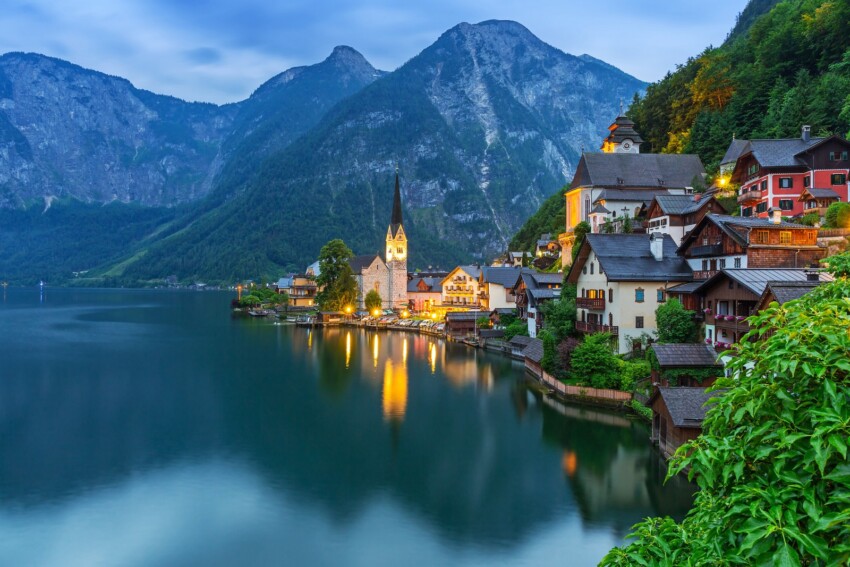
We start the list of things to see in Upper Austria with what is certainly its most famous tourist attraction, the town of Hallstatt. The photo taken from the water, immortalising it with its soaring church tower and mountains in the background, is one of the most famous postcards of Austria and the whole of Europe.
Part of the UNESCO World Heritage list along with the Dachstein massif and the Salzkammergut region, Hallstatt is located on the shores of the lake of the same name, and is a village of less than 1,000 inhabitants but which has been literally flooded by tourists, especially Asians, since it was featured in a South Korean TV show in 2006, so much so that a replica was even built in China in 2011.
It is estimated that it is visited by as many as 30,000 people a day, most of whom arrive on organised tours. That is why, if you can, choose to sleep in Hallstatt; when the tourist hordes have returned to their buses, you will have the pleasant feeling of having the town all to yourself, and you will be able to enjoy it to the full.
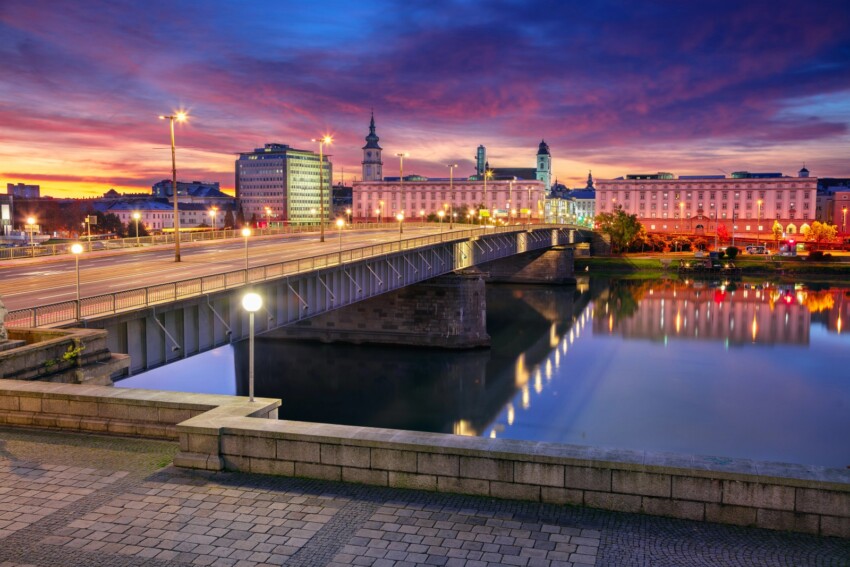
Second, but no less deserving, among the things to see in Upper Austria is its capital Linz. Austria’s third largest city by population, it was the European Capital of Culture in 2009 and was the birthplace of, among others, Johannes Kepler. Its main street, Landstraße, starts at Blumauerplatz and leads to Taubenmarkt, near the main square or Hauptplatz, dating back to 1240 and today one of the largest squares in Europe, with a surface area of over 12,000 square metres.
Then pay a visit to St. Martins Church, the oldest in Austria, and St. Mary’s Cathedral, in Gothic style; with a height of 135 metres, it is the highest church in the country. Then visit the Mozarthaus, the house where the famous composer created the Linz Symphony and Linz Sonata.
Finally, take a ride on the Pöstlingbergbahn, an electric train that runs from Hauptplatz to Pöstlingberg, located on a hilltop north of the city. With a maximum gradient of 11.6%, it is one of the steepest railways in the world.
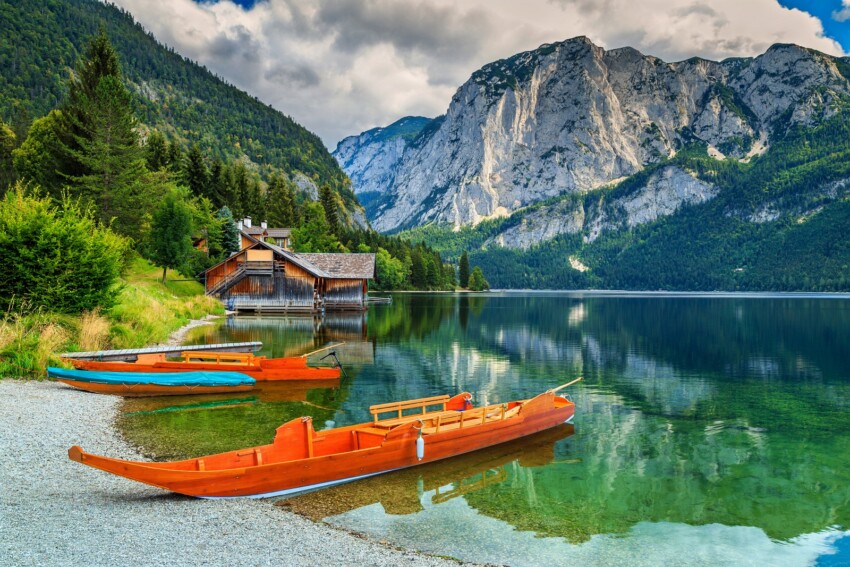
The Salzkammergut is a tourist area that extends east of Salzburg to the Dachstein mountains. Its name translates as ‘salt domain’, where domain is to be understood in its ancient feudal sense, i.e. land owned by the feudal lord for his own use. In this case, the feudal lord coincided with the Habsburgs, while the salt was extracted from mines in the area.
A UNESCO World Heritage Site since 1987, the Salzkammergut straddles the river Traun, between glacial lakes, mountains and valleys. As it is not an Austrian administrative region, it has no clearly defined borders, although since 2002 the Tourismusregion Salzkammergut has been established, which includes, among others, Lake Hallstatt, the towns of Bad Goisern, Hallstatt, Obertraun and Gosaun, Lake Traun, Lake Atter, and the towns of Bad Ischl, Attergau and Almtal.
All in all, the Salzkgammerkut is Austria in miniature, to be visited far and wide to be amazed by the wonders of nature and enchanting villages.
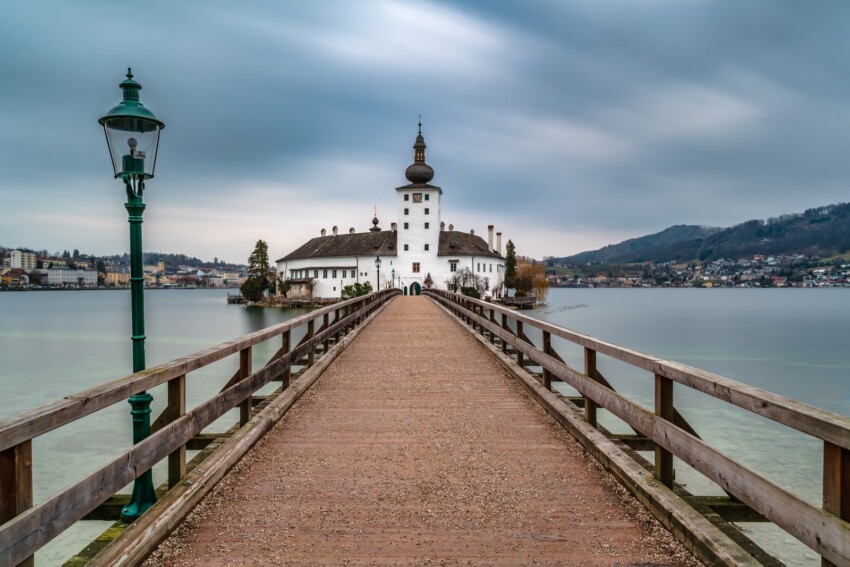
Schloss Ort Castle is located on a small island in Lake Traunsee, connected to the mainland by a wooden platform. Located just a few kilometres from the beautiful town of Gmunden, Schloss Ort was founded in 1080, and century after century it was extended, modernised and renovated until it was purchased in 1876 by the Florentine Archduke John of Habsburg-Lorraine.
Following the fall of the Habsburgs, the castle was left to itself until 1973, when it was restored by the Austrian government. It was then purchased by the town of Gmunden, and from there was used for tourism purposes. Its beauty is such that it was even used as the main setting for the Austrian TV series Schlosshotel Orth!
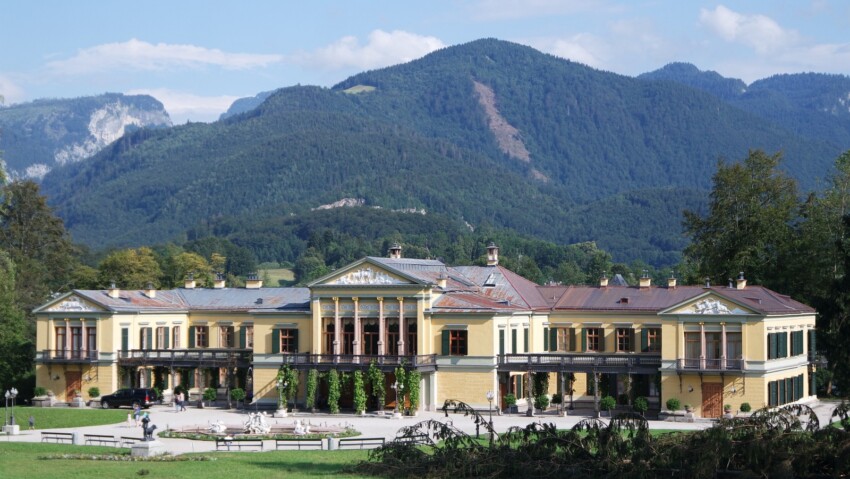
The Kaiservilla, or imperial villa, is one of Upper Austria’s main tourist attractions. Located in Bad Ischl, it was the summer residence of Emperor Franz Joseph I of Habsburg and Empress Sissi. Built in the Biedermeier style, it was later modified in the Neoclassical style by inserting large colonnades at the entrance and two additional wings, which give the building an ‘E’ shape.
The villa is surrounded by a magnificent English garden, with flowerbeds, fountains and beautiful lawns. The park is also home to one of 13 Peace Trees planted around the world, a project by Slovak architect Marek Sobola created in 2018 to mark the centenary of the end of the First World War.
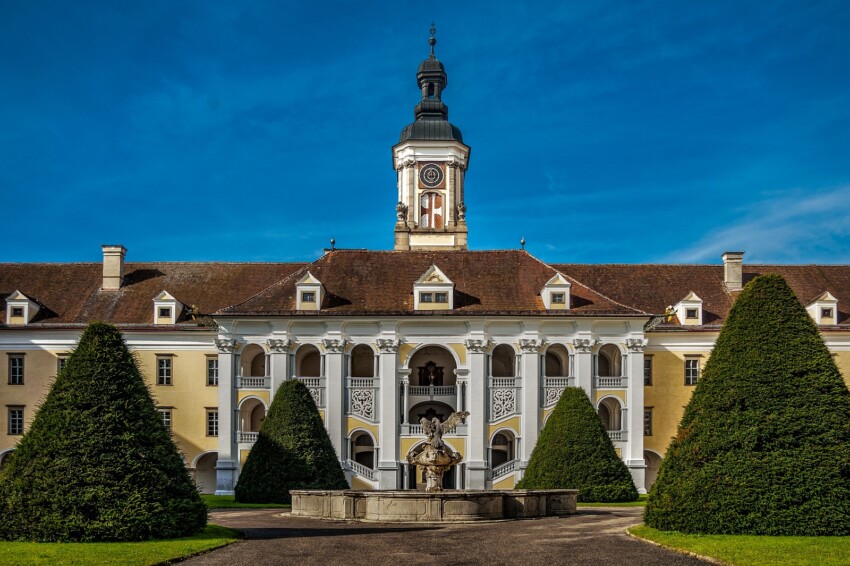
Near Linz, in the heart of Upper Austria, is the abbey of St. Florian. This monastery complex dates back to 1701, on the site where, according to legend, the martyr St. Florian was buried. The highlight of the abbey is its huge façade, more than 200 metres long, and the church with eight side chapels.
Don’t miss the abbey’s magnificent frescoes , painted by the German Anton Grump and his pupil Melchior Seindl, while the huge Anton Bruckner organ deserves a separate mention. With no less than 7343 pipes, it is one of the largest in Austria.
Inside the abbey, take some time to visit the courtyard, with a fountain dating from 1757 and a wrought-iron well. From the courtyard you can get an overview of the entire complex. Finally, the library: with over 150,000 volumes and a magnificent frescoed ceiling, it is one of the most important in the country.
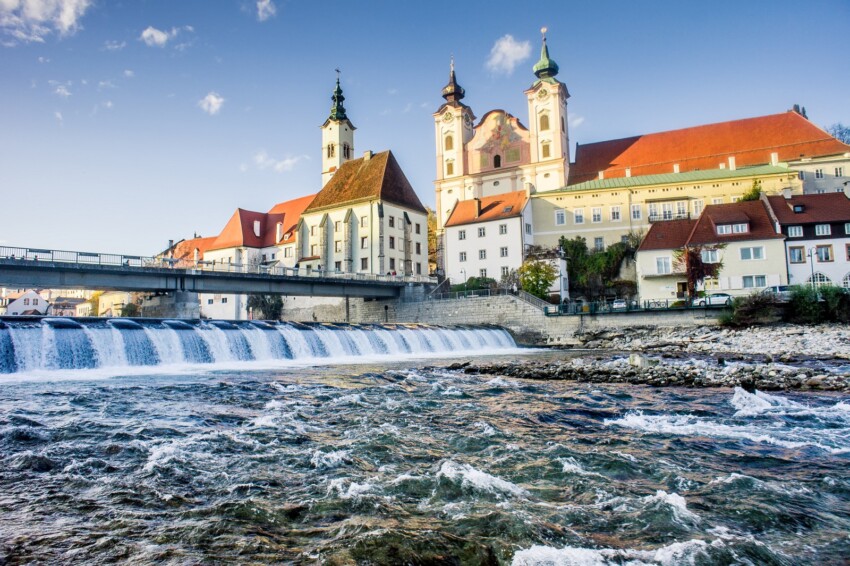
Steyr, with its strategic location at the confluence of the Steyr and Enns rivers, is one of the best-preserved historical centres in Austria and a unique example of late Gothic architecture. The triangular Stadtplatz, surrounded by Gothic and Renaissance patrician houses with characteristically decorated erkers (bay windows), is one of the most photographed urban ensembles in the country. The Bummerlhaus, dating from 1497, is considered one of the most beautiful late Gothic buildings in central Austria.
Lamberg Castle, which dominates the town from the top of the hill, hosts concerts and cultural events in its historic Baroque halls, while the parish Church of St. Michael houses a magnificent 15th-century wooden Gothic altar. The town has a strong industrial tradition linked to the production of weapons and musical instruments. The Town Museum documents this history through collections of historical weapons and old musical instruments, while the old forges along the river keep the local craft traditions alive.
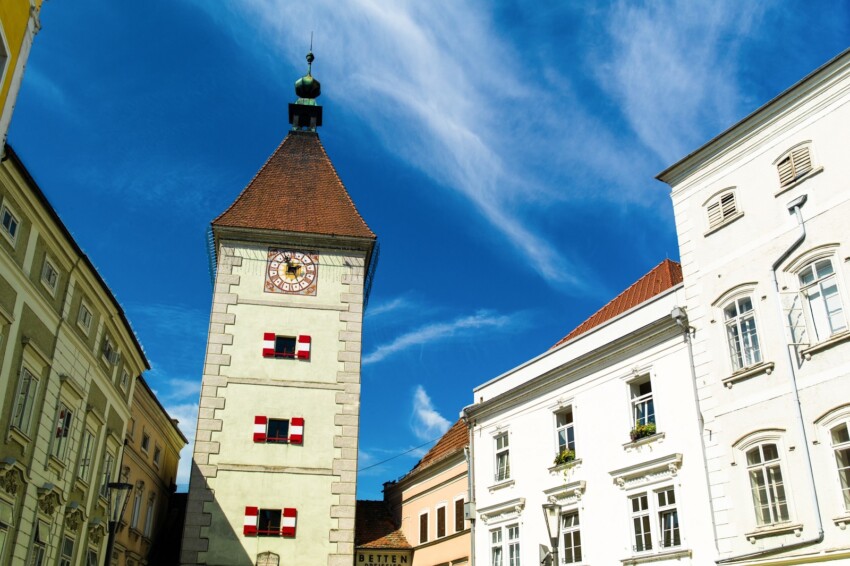
Wels, Austria’s fourth largest city by population with over 60,000 inhabitants, is an important economic and cultural centre in Upper Austria, where agricultural tradition and industrial innovation coexist harmoniously. The old town centre is built around the Stadtplatz, one of the largest central squares in Austria at 200 metres long, surrounded by buildings from different eras that bear witness to the town’s continuous architectural evolution.
Wels Castle, dating back to the 13th century and extended in Renaissance style, houses the Municipal Museum with important collections of Roman archaeology, medieval art and Upper Austrian folk traditions. The town is famous for hosting the International Agricultural Fair, one of the most important events of its kind in Central Europe, while the International Jazz Festival attracts musicians and fans from all over the world every year. The Traun Park, which stretches over 20 hectares along the river, offers nature trails and recreational areas perfect for families.
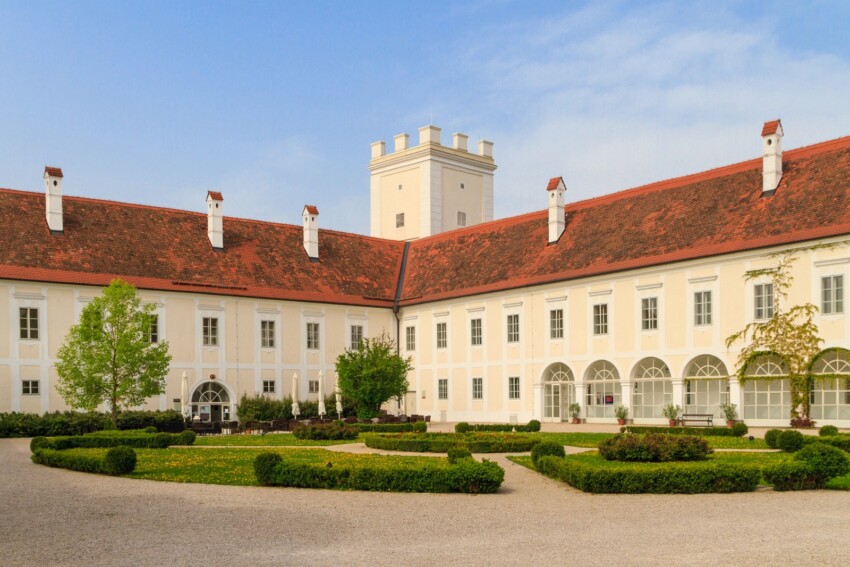
Enns boasts the privilege of being the oldest town in Austria, having received its citizenship rights in 1212, and retains a perfectly intact mediaeval old town that bears witness to eight centuries of urban history. The 60-metre-high 16th-century Civic Tower dominates the rectangular Hauptplatz surrounded by Gothic and Renaissance buildings with colourful façades, while the 13th-century Ennsegg Castle offers a privileged view of the Danube valley.
The Lauriacum Museum documents the Roman history of the city, which in imperial times was an important legionary castrum along the Danube limes. Archaeological excavations have uncovered remains of Roman baths, the forum and an early Christian basilica from the 4th century, testifying to the strategic importance of this settlement in the Roman Empire. The old town also houses the Basilica of St. Lawrence, one of the oldest Christian buildings in central Austria, dating back to the 4th century and remodelled in Gothic style in the 14th century.
In the following map you can see the location of the main places of interest mentioned in this article.
 Hotel
Hotel  Budget accommodations
  Apartments
  Family Hotel
  Luxury Hotel