VAYA Zillertal
Aschau - Höhenstraße 17
Book now
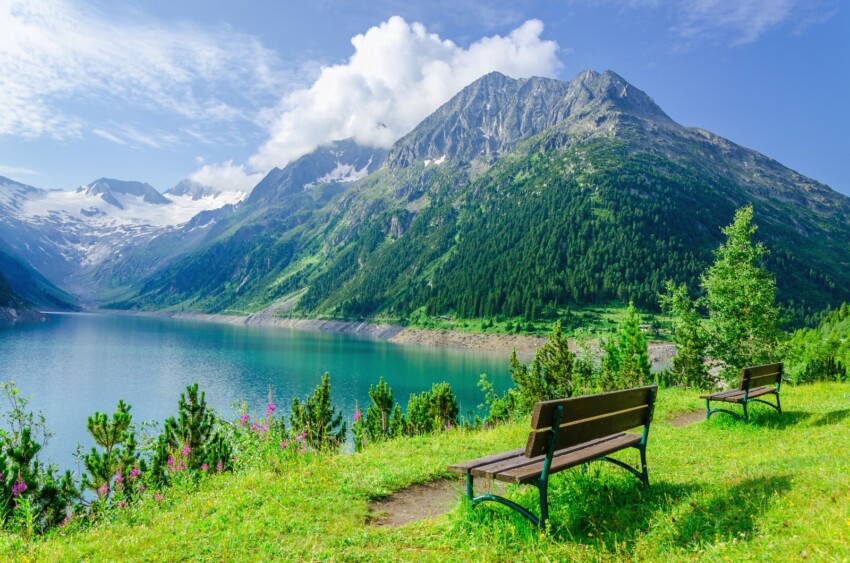
Zillertal is the most famous valley in the Austrian Tyrol, an alpine paradise that stretches 32 kilometres into the heart of the Zillertal Alps, home to more than 35,000 inhabitants distributed in picturesque municipalities that keep Tyrolean traditions intact. This enchanting valley is world-famous for its four world-class ski resorts, the musical traditions that gave birth to the famous Strass family, and the breathtaking landscapes dominated by more than 80 peaks over 3,000 metres.
The Ziller Valley is characterised by an extraordinary variety of landscapes ranging from green valley floors dotted with traditional alpine pastures to the perennial glaclers of the Hintertuxer Gletscher, Austria’s only glacier open for skiing 365 days a year. The Zillertal Alps are home to some of Austria’s most impressive peaks, including the Hochfeiler (3,509m) and the Olperer (3,476m), offering alpine scenery of rare beauty.
The cultural heritage of the valley is very rich, from baroque churches to ethnographic museums, from traditional distilleries producing alpine herb schnapps to craft workshops where wood and textiles are still worked according to techniques handed down for centuries. Tyrolean folk music finds its most authentic roots here, with numerous festivals and concerts enlivening the valley throughout the year.
The perfect combination of top winter sports, summer hiking on the 1,400 kilometres of marked trails, thermal wellness and Alpine gastronomy makes the Zillertal a complete destination for every season, easily accessible from Innsbruck in just 45 minutes by car.
The Zillertal valley offers an extraordinary natural and cultural heritage, where each location tells a thousand-year-old story of Alpine traditions, tourism innovation and respect for the mountain environment. From glacial peaks to verdant valley floors, every corner of the valley holds unforgettable discoveries.
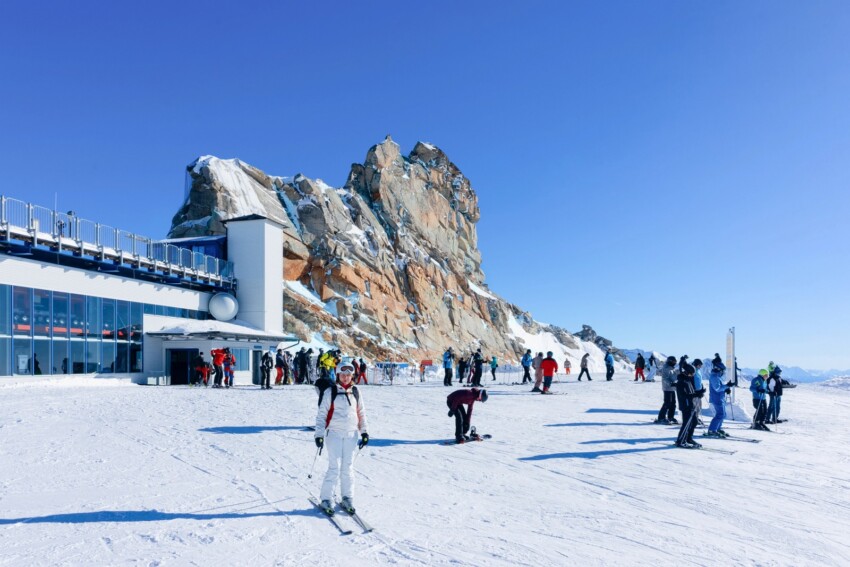
The Hintertuxer Gletscher is one of Austria’s most spectacular natural wonders and the only glacier skiable 365 days a year in the entire country. Located at an altitude of 3,250 metres in the heart of the Zillertal Alps, this perennial glacier offers perfect skiing conditions in every season, with 60 kilometres of slopes served by 21 ultra-modern lifts and guaranteed snow even in the hottest summer months.
The glacier cable car reaches the top station in just 15 minutes, passing through breathtakingly beautiful landscapes ranging from fir forests to fields of eternal snow. The Nature Ice Palace, a natural grotto carved into the glacier 15 metres deep, offers a unique experience amidst natural ice sculptures, crystal-clear underground lakes and thousand-year-old glacial formations illuminated by coloured lights. The panorama restaurant at 3,250 metres offers spectacular views of more than 100 Alpine peaks and is one of the highest observation points accessible to the public in Austria.
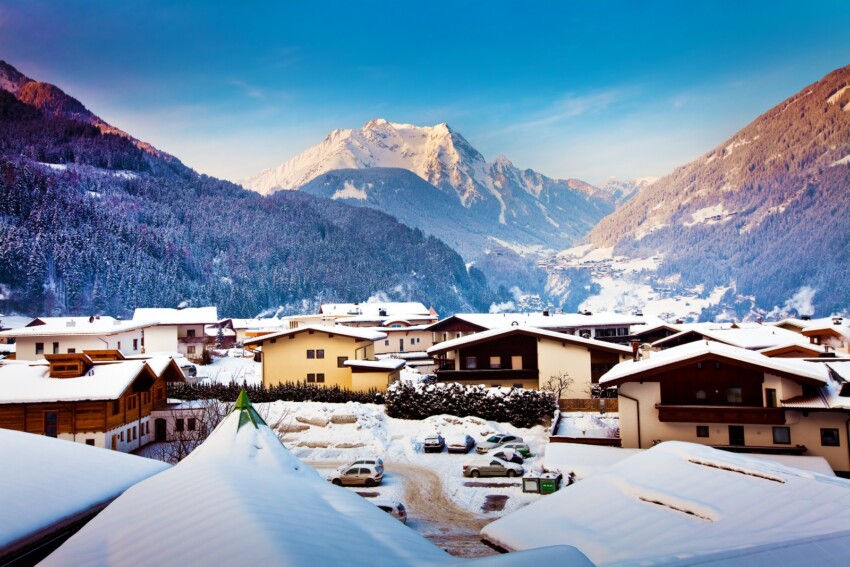
Mayrhofen is regarded as the capital of the Zillertal and is the liveliest tourist centre in the valley, famous for the Penkenbahn, one of the steepest cable cars in Europe, which climbs up to an altitude of 2,095 metres with a 24% gradient. This town of 3,800 inhabitants is the beating heart of Tyrolean nightlife, with traditional clubs where folk music resounds and modern discos attracting young people from all over Europe.
The Harakiri, Austria’s steepest ski slope with a 78% gradient, starts right at the top station of the Penkenbahn and is an extreme challenge for experienced skiers. During the summer, Mayrhofen turns into a hiker’s paradise, with over 400 kilometres of trails starting right from the village centre. The White Lounge, a panoramic bar at an altitude of 2,000 metres, offers aperitifs with a view of the Zillertal Alps and is considered one of the most exclusive venues in the Austrian Alps.
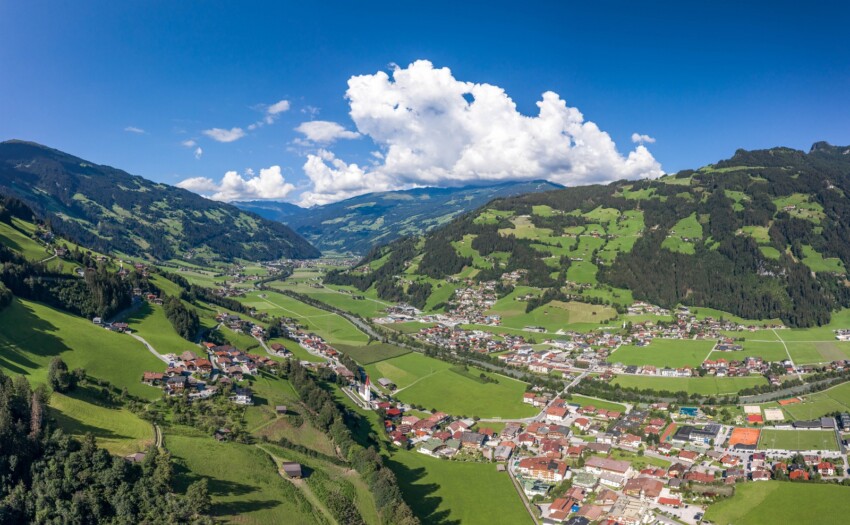
Zell am Ziller is the valley’s main municipality with 1,850 inhabitants and represents the historical and cultural heart of the Zillertal. The village is home to the Baroque parish church dating from 1782 with its characteristic onion tower and the famous Mauracher organ, which resounds during sacred music concerts. Zell am Ziller is also the gateway to the Zillertal Arena, the largest ski area in the valley with 143 kilometres of pistes spread between Austria and Italy.
The historic centre retains traditional Tyrolean architecture, with frescoed houses, flower-decked balconies and craft shops where carved wooden objects and typical textiles are still produced. The Freizeitpark Zell, opened in 2018, is a modern adventure park with panoramic pools, water slides and wellness areas offering fun for the whole family. During the Gauder Fest in May, the biggest beer festival in the Tyrol, Zell am Ziller welcomes over 30,000 visitors for four days of music, gastronomy and Alpine traditions.
Fügen is a pretty town of 2,700 inhabitants at the entrance to the valley, famous for the Spieljochbahn, a modern panoramic cable car that takes you up to 1,860 metres above sea level to the Zillertal’s most beautiful viewing terrace. The top station houses the First Flieger, the world’s longest zipline at 1,450 metres in length and speeds of up to 84 km/h, offering a unique adrenaline experience suspended above the valley.
The Erlebnispark Zirbenpark is a high-altitude adventure park with suspension bridges, trails through the trees and a 1.2-kilometre barefoot trail that allows you to walk barefoot on various natural materials while stimulating your senses. The viewing platform at 1,950 metres offers a 360-degree view from the Dolomites to the Swiss Alps. Fügen is also home to the Zillertal Distillery Museum, where more than 30 varieties of alpine herb schnapps produced according to traditional recipes handed down through five generations can be tasted.
Kaltenbach is a modern ski resort with a population of 1,200 and is the main access point to the Hochzillertal-Kaltenbach ski area, famous for its technical slopes and state-of-the-art lifts. The Rosenalmbahn, a 28-seater panoramic gondola lift, takes you up to 2,500 metres above sea level through breathtaking alpine landscapes and connects with the nearby Hintertuxer Gletscher ski area.
The Wedelhütte, a panoramic mountain hut at 2,350 metres, is famous for its revolving terrace that makes a complete rotation in 45 minutes, offering spectacular views of the surrounding mountains. Kaltenbach is home to Badesee Stumm, a natural bathing lake with 24°C thermal water fed by underground springs, surrounded by green meadows and equipped with modern recreational facilities. Salvenaland is an Alpine playground with a summer toboggan run, adventure trails and scenic picnic areas, making it an ideal destination for families.
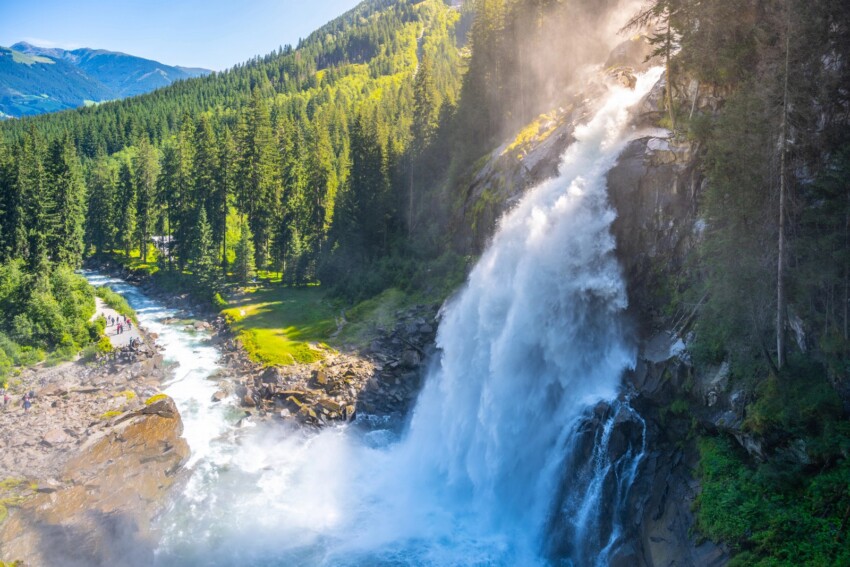
Gerlos is the last village in the Zillertal valley before the border with Salzburg, a picturesque hamlet with a population of 900 located at an altitude of 1,250 metres. It is the gateway to the Krimml Waterfalls, the highest in Austria with a total drop of 380 metres spread over three levels. These spectacular waterfalls are a UNESCO World Heritage Site and attract over 400,000 visitors a year.
The waterfall trail runs 4 kilometres through a national park that protects one of the most intact alpine ecosystems in the Eastern Alps, with over 1,200 different plant species and a fauna that includes ibex, chamois and golden eagles. Gerlos is also famous for the Gerlospass, an Alpine pass at 1,628 metres that connects Tyrol with Salzburg via a panoramic road that is considered one of the most beautiful in Austria. The Dorfmuseum Gerlos documents traditional life in the valley with a collection of more than 2,000 original objects testifying to the evolution of Alpine agriculture and crafts from the 17th century to the present day.
Zillertal offers an exceptional range of accommodation throughout the valley, from family pensions in small hamlets to luxury hotels with panoramic spas. Mayrhofen concentrates most of the modern hotels and nightlife venues, ideal for those looking for fun and full service. Zell am Ziller offers accommodation in the historic centre with an authentic Tyrolean atmosphere, while high-altitude resorts such as Hintertux provide tranquillity and direct access to the ski lifts.
Zillertal can be easily reached from Innsbruck via the A12 Inn Valley motorway as far as the Wiesing-Achensee exit, then continuing on the B169 state road, which runs through the entire valley for 32 kilometres to Mayrhofen. The journey from Innsbruck takes 45 minutes by car through spectacular Alpine landscapes. The Zillertal Railway, a historic narrow-gauge line, connects Jenbach (on the main Innsbruck-Salzburg line) with Mayrhofen in 55 minutes with scenic trains through the entire valley. Innsbruck airport is 60 kilometres away and is connected by direct flights from major European cities.
Zillertal stretches in the Austrian Tyrol for 32 kilometres from Strass im Zillertal (542m) to the Hintertux Glacier (3,250m), 50 kilometres from Innsbruck and 160 kilometres from Salzburg. The valley borders Salzburg to the east via the Gerlospass and Italian South Tyrol to the south, while the Zillertal Alps separate it from the Ötztal to the west. The strategic location makes the Zillertal easily accessible from both Austria and Italy, making it one of the most visited Alpine destinations in the Eastern Alps.
 Hotel
Hotel  Budget accommodations
  Apartments
  Family Hotel
  Luxury Hotel