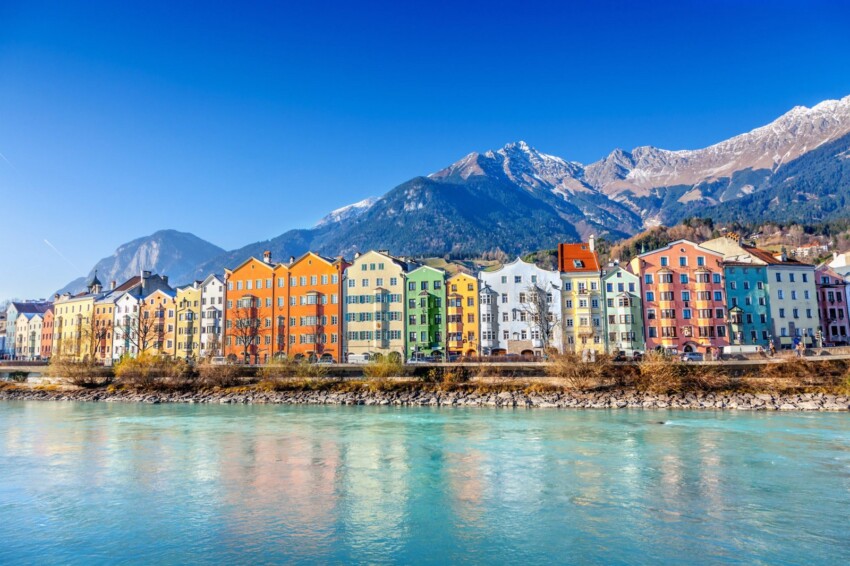
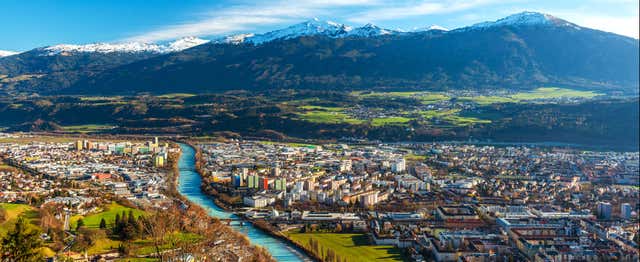
There are resorts for ‘seeing’ and others for ‘doing’: Innsbruck, the capital of Tyrol, is both. Perfect for both summer and winter holidays, Innsbruck is a charming city of medieval origin nestled between Alpine peaks of extraordinary beauty: a successful marriage of urban and mountain ambience.
It is a city where you can enjoy romantic experiences such as shopping at the Christmas market, an afternoon at the thermal baths and a visit to the bell museum, or you can test your courage with continuous adrenalin rushes by throwing yourself down 70% steep ski slopes, reaching 100 kmh on an Olympic bobsleigh run or throwing yourself off a 192 metre high bridge (and these are just a few examples!).
In the evening, you can retreat to a typical restaurant to enjoy the specialities of Tyrolean cuisine, perhaps adding a classical or folk music concert to the evening programme, or regain your strength in the hotel and then let loose to the rhythm of dance and electronic music.
Things to do in Innsbruck
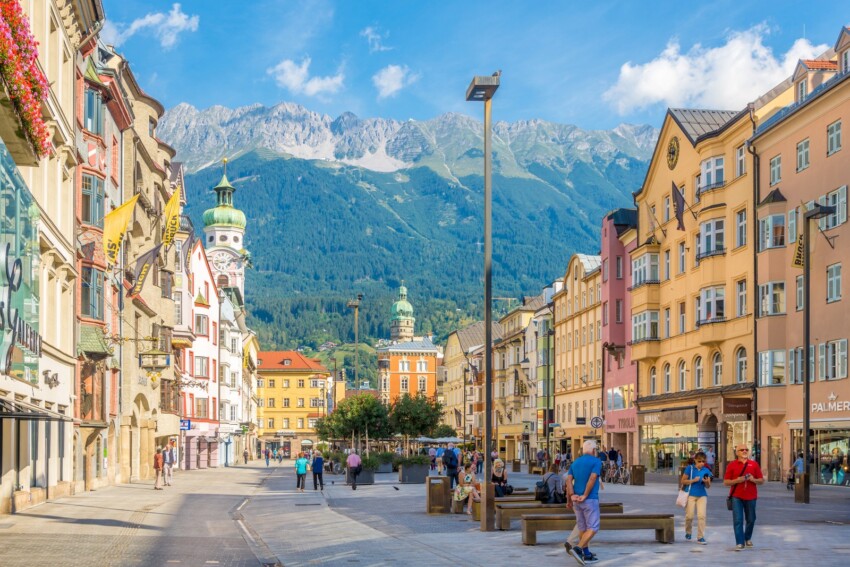
Situated at 574 metres above sea level, the old town of Innsbruck is pretty and full of cultural and historical attractions, framed by the beautiful Tyrolean Alps that seem to sprout from every corner: it is well worth a visit.
Golden Roof (Goldenes Dachl)
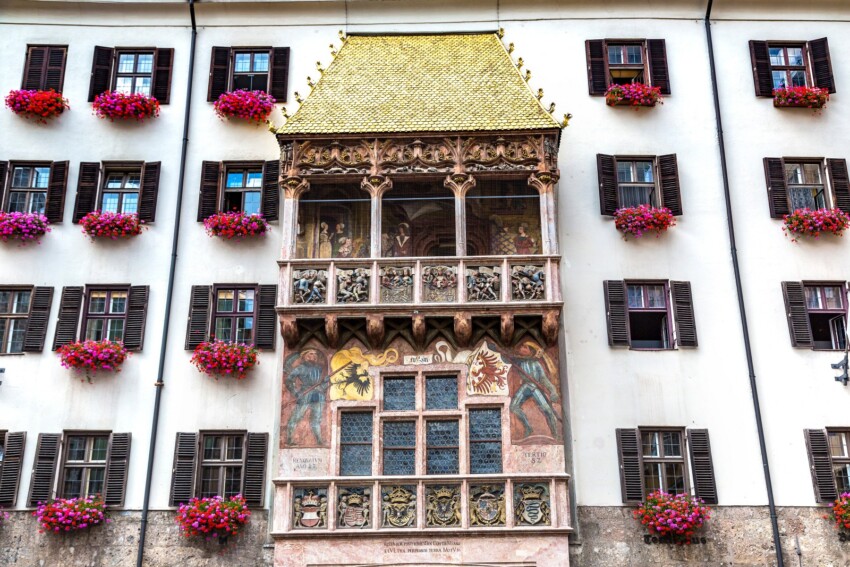
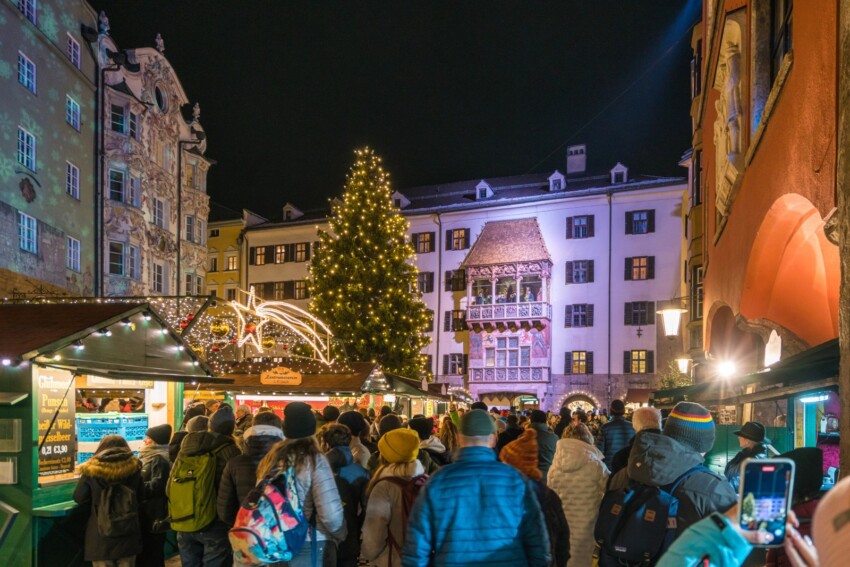
The symbol of Innsbruck is the Golden Roof, a loggia that Emperor Maximilian I had built so that he could watch the tournaments taking place on the square below.
The 2,657 tiles decorating the roof are not made of gold but of more humble copper, yet no one would dare argue with the name by which the building is known: the glitter of the sunlit roof could hardly be called anything other than ‘golden’, and it is no wonder that this is Innsbruck’s most famous image.
The museum housed inside the loggia will introduce you to the bizarre Emperor Maximilian I, customs of his time and the history of this magnificent building. During the visit you can imitate the nobleman Maximilian and admire the town square from above.
Court Church
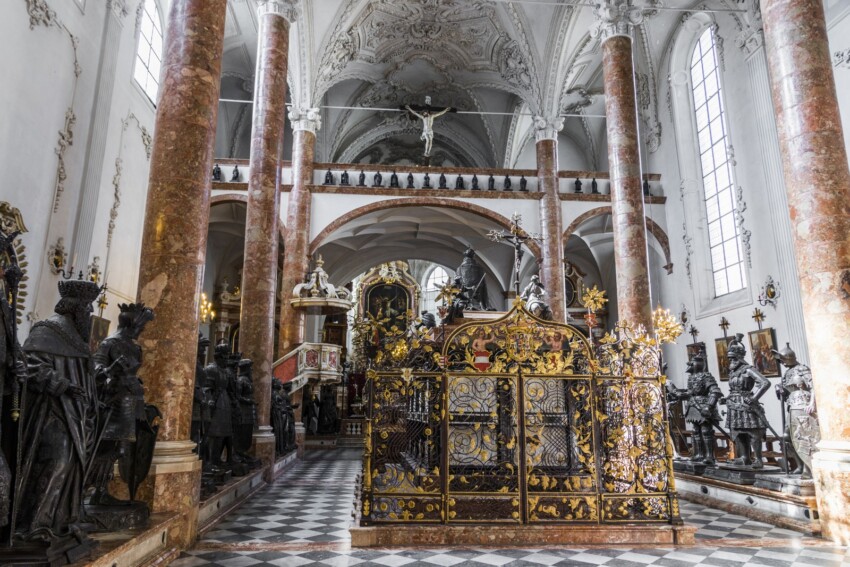
Another marvel of the Innsbruck of yesteryear is the Court Church, built in the 16th century to house the remains of Emperor Maximilian I, who died in 1519. It is the most monumental and somewhat useless imperial tomb in Europe: magnificent but empty (the emperor was buried in the Wiener Neustadt fortress).
It must be said that with so much pageantry before our eyes, the emperor is not missed 28 magnificent bronze statues, depicting ancestors and idols of Maximilian I, flank his tomb monument; the church holds other valuable art treasures including works by Albrecht Dürer, Alexander Colin and Peter Vischer the Elder.
Bergisel Olympic Ski Jump
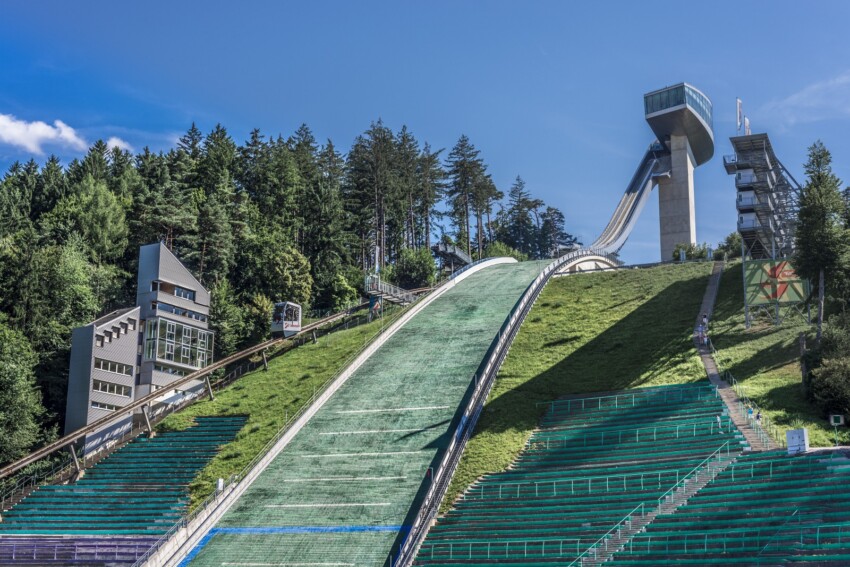
An unmissable attraction for lovers of sport, contemporary architecture and panoramic views is the Bergisel ski jump, an iconic construction designed by award-winning Iraqi architect Zaha Hadid that looks almost like a huge glass and steel staircase stretching towards the sky – to call it a ‘sports facility’ would sound reductive.
The trampoline is still used today for professional training sessions and international level competitions: it is possible to watch training sessions from May to July, while the highlight is held in January.
At any time of the year, tourists can take a lift up to the viewing terrace at the top of the 50-metre-high tower to enjoy a magnificent view of the city of Innsbruck and the surrounding mountains.
At the foot of the ski jump there is a small museum dedicated to the history of ski jumping and its legendary protagonists: admission to the museum is free with the ticket for the panoramic terrace.
Nordketten Bahnen
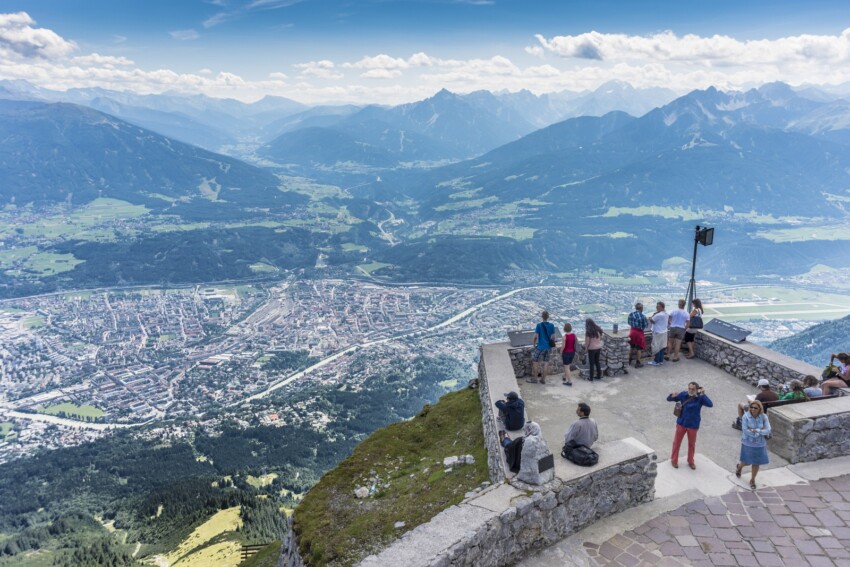
Thanks to the Nordkettenbahn cable car, you can reach an altitude of 2000 metres from the city of Innsbruck in only 20 minutes. This futuristic cable car was designed by Zaha Hadid, the same mind behind the impressive ski jump, and takes you to the top of one of the jewels of the Alps, the Nordketten mountain range.
You can choose to stop at Seegrube or climb another 300 metres up to Hafelekar; once at the top you can enjoy the breathtaking spectacle of the Alps and then choose from various walks, some short and within everyone’s reach, others more difficult. On Fridays, the cable car also operates in the evenings.
Innsbruck can also boast its own imperial palace, built as a castle by Archduke Sigismund the Wealthy in the 15th century and extended by Emperor Maximilian I in the following century. However, it was Maria Theresa in the 18th century who transformed it into the elegant palace we can admire today.
After careful restoration, the palace has returned to its original splendour and can be admired in all its glory. The room that most amazes visitors is the sumptuous Riesensall or Hall of Giants, adorned with portraits and frescoes of Maria Theresa’s children.
Just outside Innsbruck, perched on a hill, is the elegant Renaissance castle of Schloss Ambras, now a museum housing three highly original collections of art, historical artefacts and oddities put together by Tyrolean nobles over the centuries, starting with Archduke Ferdinand II in the 16th century.
The Armour Collection will catapult you back to the Middle Ages while visiting the Art and Wonders section you will see unique pieces such as… a petrified shark, a chair for trapping drunken guests and other oddities. After so many oddities, the Portrait Collection will seem like something you’ve seen before, but pay attention to it because it includes paintings by the likes of Titian, van Dyck and Vélazquez.
The well-kept gardens of Schloss Ambras, rich in old plants, are a popular Sunday excursion destination for families in the area.
Museums
In Innsbruck you can find a large number of interesting museums. Here are the ones not to be missed:
Ferdinandeum: founded almost 200 years ago, this museum was the third national museum for a very long time and is still one of the country’s most prestigious cultural institutions. Its valuable art collections retrace the history of the Tyrol and trace an outline of the Tyrolean identity, starting with the prehistoric and protohistoric collections, passing through the Stone Age, Bronze Age, Iron Age, Roman Age and the early Middle Ages.
Audioversum: a state-of-the-art interactive museum entirely dedicated to hearing and sound, also suitable for children.
Glassmayr Glockenmuseum: a romantic museum with a nostalgic touch exhibiting an extraordinary collection of bells put together by the Glassmayr family, founders of a historic bell foundry that has been in operation for over 400 years. You can admire historical bells, including some in the Romanesque and Gothic styles, watch them being produced and try your hand at recognising the various bell tones.
Aut. architektur und tirol: a cultural centre that organises exhibitions and events dedicated to architecture.
City Museum: recommended for those who want to learn more about the city’s history and local artists.
What to do in Innsbruck
For those who do not like to sit still, Innsbruck is the ideal destination: the possibilities for sports and activities in summer or winter are practically endless.
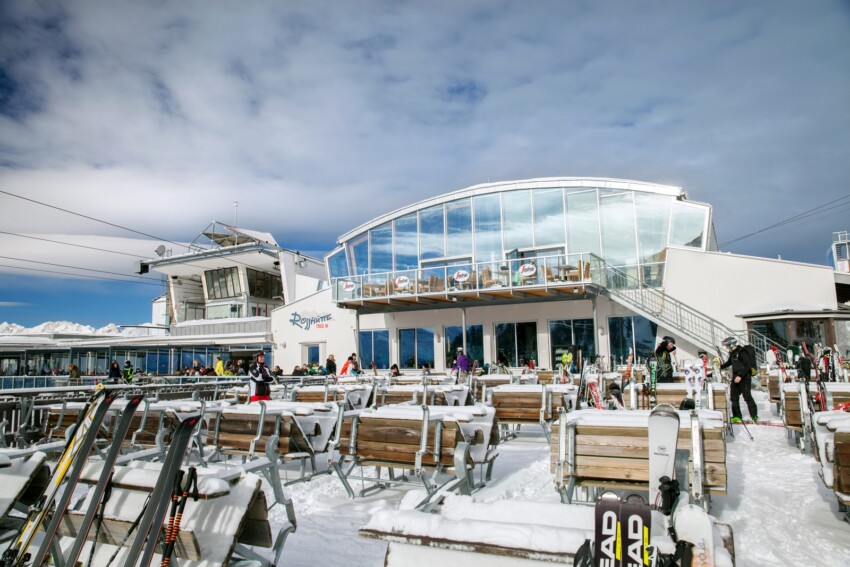
Skiing is certainly one of the most popular sports, and Innsbruck’s ski slopes are nothing short of legendary. You can enjoy classic downhill skiing as well as cross-country skiing and snowboarding, with hundreds of kilometres of slopes suitable for all levels.
Hiking enthusiasts can explore the beautiful mountains of the area with trekking; the more experienced can try their hand at challenging via ferratas and climbing.
Mountain bike tourism is also increasingly developing. There is a variety of mtb trails suitable for all levels, including the challenging Nordkette Singletrail downhill circuit that will test the most daring riders.
Other sports you can enjoy in Innsbruck are canyoning, rafting, paragliding and extreme sports. If you are a thrill-seeker, here are two experiences you absolutely must not miss.
The first is bungee jumping from the Europabrücke bridge: this is one of the scariest jumps you can do in Europe.
The other is to experience the thrill of boarding a bobsleigh in the company of a professional sportsman and whizzing along at 100 km/h on the Olympiabob-bahn, the Olympic bobsleigh track built for the 1976 Olympics: it is 800 metres long and has 10 dizzying curves.
Olympiaworld
Olympiaworld is the jewel in the crown of Innsbruck’s sports facilities: an ultra-modern complex spread over thousands of square metres where numerous sports can be practised in every season, with equipment suitable for all levels, from families to professional players.
Olympiaworld is also the venue for major events such as concerts and sports competitions.
From mid-November until Epiphany, the Aldstadt, the historical heart of Innsbruck, is festively decorated and the Marktplatz hosts the traditional Christmas market, where you can buy lovely Christmas decorations, taste Tyrolean delicacies and warm yourself with mulled wine.
The Krampus race
On December, the eve of St Nicholas, the traditional Krampus race takes place. Krampus are demon-goats equipped with chains and baskets who come out to hunt down naughty children and take them with them to hell. Children scream in terror, while adults have a great time watching these crazy masked men.
The Krampus is a typical Christmas figure in parts of northern Italy, Austria and Bavaria in southern Germany.
Events
Innsbruck is a very lively city with a busy calendar of events reflecting the many souls of the Tyrolean capital.
Of course, there is no shortage of major sporting events, such as the fun-filled Tobogganing World Cup and the Four Ski Jump Tournament in which the world’s best ski jumpers compete, but Innsbruck’s calendar also includes cultural events such as classical and baroque music festivals or dance parties for the young.
Excursions around Innsbruck
Innsbruck ‘s surroundings offer an extraordinary range of experiences from crystal-clear wonders to the most spectacular alpine landscapes in the Tyrol.
The Swarovski Crystal Worlds in Wattens, just 15 km from Innsbruck, are one of the most visited attractions in the Tyrol with over 25 million visitors since 1995. The underground museum, accessible through the mouth of a green giant carved into the hillside, houses 14 ‘Chambers of Wonder’ that showcase crystal through artistic installations and spectacular light displays. The surrounding garden and the company shop complete a unique experience in the world of luxury and craftsmanship.
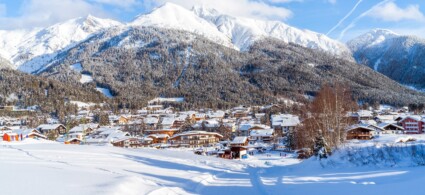
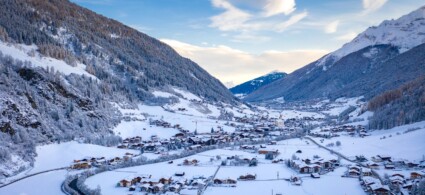
The Stubaital, a glacial valley 30 km from Innsbruck, offers the Stubai Glacier, which can be reached by modern ski lifts up to 3,210 metres, guaranteeing summer skiing and breathtaking Alpine panoramas all year round. Seefeld, an elegant resort at an altitude of 1,200 metres, combines Olympic traditions (venue for competitions in 1964 and 1976) with picture-postcard landscapes and Alpine spas.
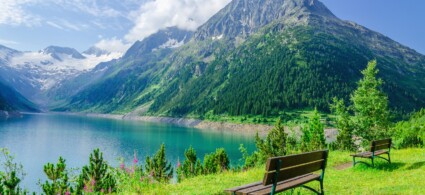
The Zillertal, one of the most famous valleys in the Tyrol, offers the Hintertux glacier open 365 days a year and picturesque villages such as Mayrhofen and Zell am Ziller. Neuschwanstein Castle in Bavaria, 100 km from Innsbruck, is a perfect day trip to admire King Ludwig II ‘s architectural fairytale in the Bavarian Alps.
Where to stay in Innsbruck
The old town is an ideal choice for immersing yourself in the Habsburg atmosphere, with charming hotels in historic buildings and boutique hotels within walking distance of the Golden Roof and the Imperial Palace. The area around Maria-Theresien-Straße offers superior accommodation with mountain views and refined amenities.
The central station area provides excellent train and airport connections, ideal for those arriving by public transport. Modern hotels and international chains offer high standards and business services at competitive rates. The university district, bustling with students and young people, offers hostels, family pensions and budget hotels perfect for low budgets, with a lively nightlife nearby.
The Hungerburg area, reached by Zaha Hadid’s funicular railway, offers panoramic hotels surrounded by nature with spectacular views of the city and valley. Luxury accommodations with spas and wellness centres take advantage of the privileged location to guarantee tranquillity and direct contact with the mountains. The surroundings of Ambras Castle offer elegant hotels surrounded by parks and gardens, ideal for those seeking relaxation and a romantic atmosphere, while the Olympiaworld area near the Bergisel ski jump combines modernity and functionality with sports hotels and family facilities.
We offer best rates If you find it cheaper we refund the price difference.
Free cancellation Most properties allow cancellation without penalty.
We're available 24 hours a day For any problem call Booking.com.
Innsbruck enjoys a strategic location in the heart of the Alps, 40 km from the Italian border and within easy reach of Munich (160 km), Vienna (450 km) and Zurich (230 km).Innsbruck-Kranebitten Airport is only 3.5 km from the centre and is connected by bus line F, which reaches the central station in 17 minutes.
The Innsbruck Hauptbahnhof central station is an important European railway hub on the Brenner line connecting Italy with northern Europe. Modern ÖBB Railjet trains connect Vienna to Innsbruck in 4 hours and 15 minutes, while connections to Munich take 1 hour and 45 minutes with Deutsche Bahn. Nightjet night trains connect Innsbruck with various European destinations, allowing you to travel comfortably at night. From the station centre, trams and city buses reach all parts of the city within minutes.
By car, Innsbruck can be reached via the A12 (Inntal Autobahn), which crosses Tyrol from east to west, connecting with the A13 (Brenner Autobahn) to Italy and the A14 to Vorarlberg and Switzerland. An Austrian motorway sticker is required to use the motorways. The city centre is a restricted traffic zone, but numerous multi-storey car parks offer safe parking.
By bus, FlixBus and other companies connect Innsbruck with many European cities at cheap rates.
Innsbruck Weather
What's the weather at Innsbruck? Below are the temperatures and the weather forecast at Innsbruck for the next few days.
Wednesday 11
5°
15°
Thursday 12
6°
11°
Friday 13
6°
15°
Saturday 14
3°
10°
Sunday 15
1°
6°
Monday 16
-1°
10°
Where is located Innsbruck
Innsbruck is located in the Inn Valley in western Tyrol, at 574m above sea level, surrounded by the Karwendel Alps to the north and the Central Alpine Range to the south.
How to save on transport and entrance fees
City Card allow you to save on public transport and / or on the entrances to the main tourist attractions.
 Hotel
Hotel  Budget accommodations
  Apartments
  Family Hotel
  Luxury Hotel