Hotel Central
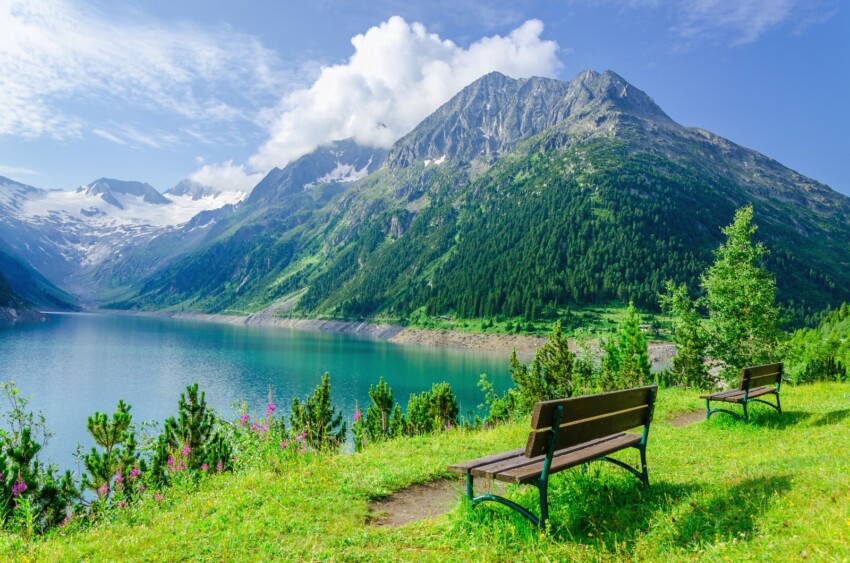
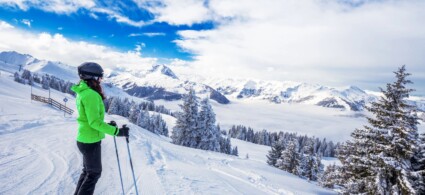
Tyrol is one of the most touristy regions in Austria, unquestionably one of the most beautiful. A holiday destination 365 days a year, with ski slopes for the winter and hiking and mountain biking trails for the summer, but also plenty of art, culture and beautiful villages that bring to mind the most typical Austrian stereotypes. A region that manages to captivate from the first glance, that enchants and amazes, but always with the discretion that characterises these parts of Europe.
Let yourself be captivated by the beautiful Innsbruck, its capital, and reach the summit of the region’s splendid mountains , such as the Bielerhohe, the Zugspitze and the Jakobskreuz. Some of Tyrol’s resorts have made modern skiing history, such as Kitzbühel, Solden or Mayrhofen, while those who like to have fun even after skiing should head straight for Ischgl, the European capital of snow fun.
But Tyrol is also art and culture: visit Ambras Castle, or the incredible Swarowski Kristallwelten, the factory-museum of the famous crystals. Then don’t miss the enormous Tratzberg castle, which covers 5000 square metres, or the Kufstein fortress on the German border. If you can, take a break in one of the small Tyrolean towns, such as Lienz, Hall in Tirol, Rattemberg or the aforementioned Kitzbühel; you will find warm atmospheres, beautifully decorated houses, open-air cafés and plenty of souvenir shops.
Tyrol proper is actually made up of two separate areas, called Nordtirol (North Tyrol) and Osttirol (East Tyrol), both mountainous and located entirely within the Eastern Alps.
Nordtirol is the larger of the two, and occupies a large part of the south-western part of Austria. It borders the Italian region of South Tyrol to the south, the German region of Bavaria to the north, while the eastern and western borders are with Vorarlberg and Salzburg, respectively. For a handful of kilometres to the south-east, it also borders Switzerland.
The small area of Osttirol , on the other hand, is an exclave of Tyrol, separated from Nordtirol by a piece of Salzburg and a piece of South Tyrol. Osttirol coincides entirely with the district of Lienz; the other eight districts of Tyrol are all in Nordtirol.
Tyrol is an ideal holiday destination, as it can be fully explored in one or two weeks, or savoured in a weekend. Winter or summer, here is a list of the most beautiful things to see in Tyrol, to enjoy this magnificent region of Austria at its best.
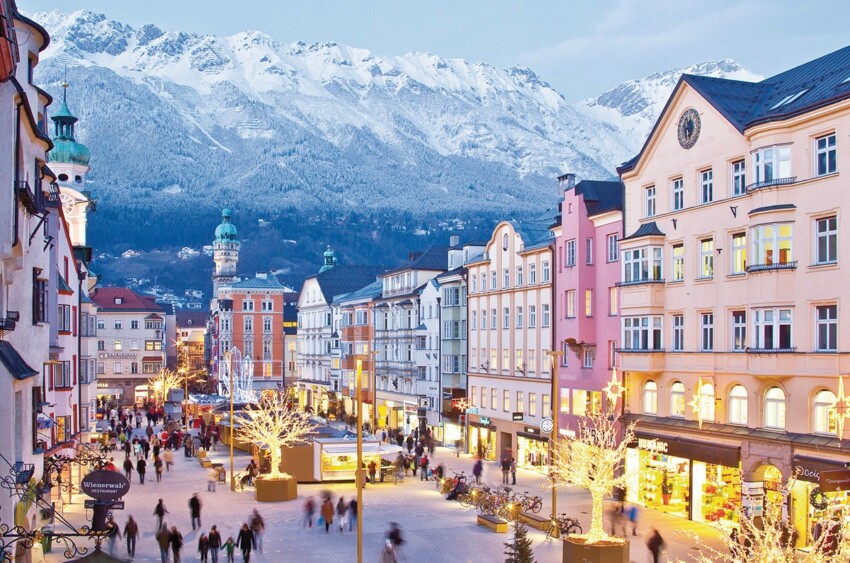
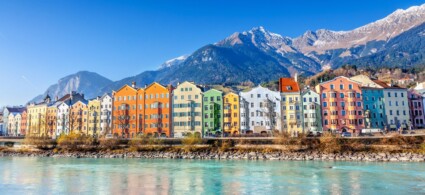
We begin our review of things to see in Tyrol with Innsbruck, its capital and Austria’s fifth largest city. Once you arrive at your destination, you will be amazed by the beauty of this city, which you can also elect as a base for visiting the whole of Tyrol on various day trips.
Start your tour of Innsbruck at the old bridge over the river Inn, which gives the city its name (‘bridge over the Inn’ translates as Innbrucke in German, from which Innsbruck derives), then stroll along Maria-Theresien-Straße until you reach the Annasäule, or St Anne’s Column, the city’s landmark. Wandering through the narrow streets and lanes of Innsbruck’s old town centre, you cannot fail to come across the town hall, the oldest in the whole of Tyrol, the Hofburg royal palace, the cathedral and the Goldenes Dachl, a curious house that has now become an icon of the city thanks to its 2657 golden tiles.
Then don’t miss the wonderful Ambras Castle, located on the city’s hills. It is one of Tyrol’s most important tourist attractions and dates back to the 16th century. Today, the castle is a prestigious museum, where you can visit the splendid 43-metre-long Spanish Hall, on the walls of which hang 27 life-size portraits of the princes of Tyrol, as well as the armoury, the portrait gallery of the Habsburgs, the Strasser glass and crystal collection, the collection of Gothic sculptures and also the beautiful St Nicholas Chapel.
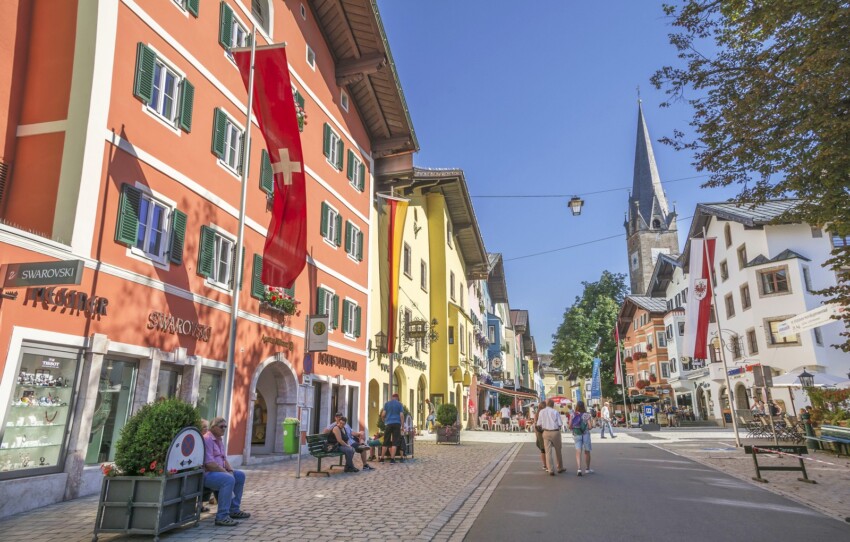
Kitzbühel is a beautiful town in Tyrol, known among winter sports enthusiasts as the home of the most exciting stage of the Alpine Ski World Cup. Every year, athletes from all over the world compete on the legendary Streif slope, accompanied by the roar of thousands of people waiting for them in the valley.
But even for non-skiers, Kitzbühel is an attractive destination. Its old town is characterised by typically Tyrolean houses with colourful façades and lots of charm. Then visit the Schwarzsee lake, at the foot of the Kitzbüheler Horn mountain, and devote yourself to the more than 500 kilometres of trails: you will certainly find some that suit you. For cycling enthusiasts, there are also 120 kilometres of mountain bike trails.
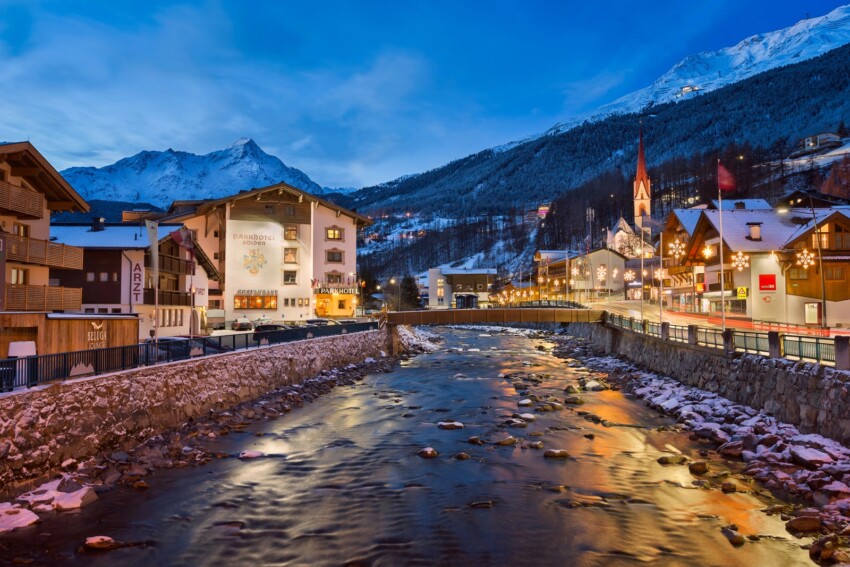
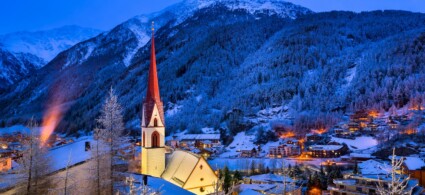
The Ötztal valley, which stretches 65 kilometres from the banks of the Inn river to the Italian border through landscapes ranging from orchards at the valley floor to perennial glaciers above 3,000 metres, is home to the most sensational archaeological site in the Alps: the discovery site of Ötzi, the Similaun Man, discovered in 1991 on the Similaun glaciers (3,210 m). This 5,300-year-old natural mummy, preserved in full equipment and clothing, revolutionised our knowledge of the Copper Age and life in the prehistoric Alps.
Sölden, the valley’s main tourist centre at an altitude of 1,368 metres, is home to Austria’s largest glacial ski area with pistes open from September to June on the Rettenbach and Tiefenbach glaciers, which rise to an altitude of 3,340 metres. The ski resort, made famous by the James Bond film ‘Spectre’ filmed in 2015, offers top-level summer skiing and hosts the opening of the World Cup season with the Rettenbachferner giant slalom every October.
During the summer, the valley offers more than 1,600 kilometres of hiking trails, including the Ötztal Trek, an eight-day high-mountain route through glaciers, alpine lakes and historic mountain huts to the South Tyrolean border.
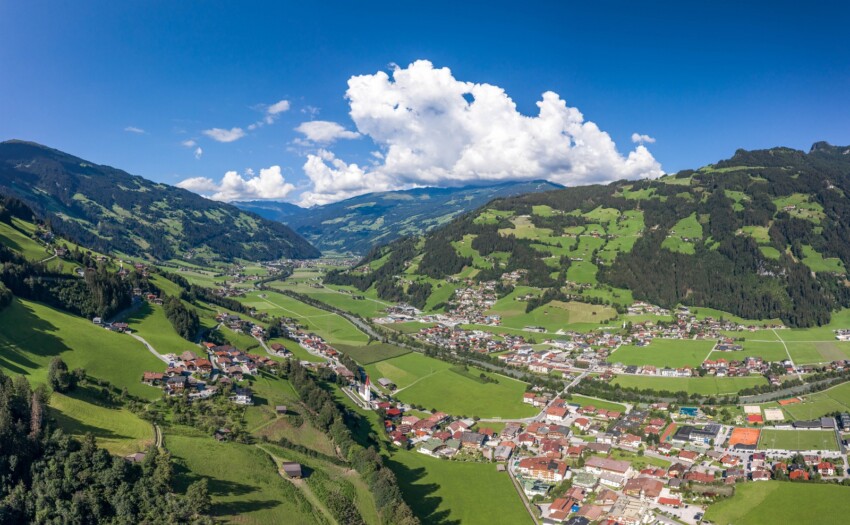
The Zillertal valley, nicknamed the ‘world’s most active valley’ for the variety of outdoor activities on offer, stretches 32 kilometres from the banks of the Inn river to the perennial glaciers of the Hintertuxer Gletscher (3,250 m), Austria’s only glacier open for skiing 365 days a year.
Mayrhofen, the valley’s main tourist centre with a population of 3,800, hosts the Snowbombing, the most famous electronic music festival on snow in the Alps, every April, while in summer it transforms into the ‘Ibiza of the Alps’ with clubs, festivals and concerts enlivening the mountain nightlife. The Penkenbahn cable car, completely renovated in 2019, reaches the 2,095-metre Penken, offering access to Austria’s largest bike park with 1,500 metres of altitude difference and slopes for all levels.
The Hintertux glacier, which can be reached via three consecutive cable cars over 1,800 metres of altitude difference, guarantees perfect skiing conditions even in the height of summer with daily groomed pistes and a glacier ski school that trains professional instructors and atloggers.
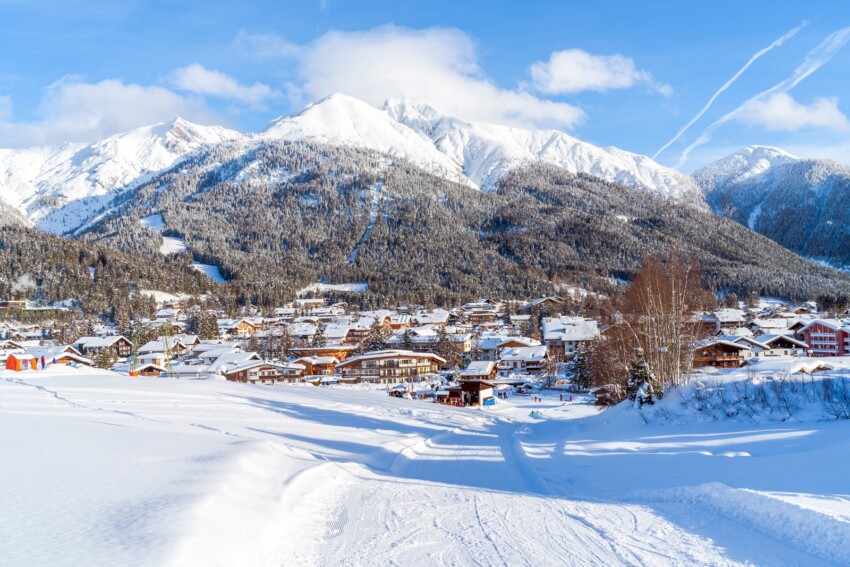
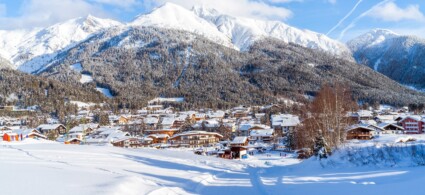
Seefeld in Tirol, an elegant tourist resort located at an altitude of 1,180 metres on the Olympic plateau of the same name, is one of the most renowned cross-country skiing destinations in the Alps, with 279 kilometres of groomed trails stretching through fir forests and snow-covered alpine meadows, creating one of the largest Nordic ski areas in Europe. The resort, which hosted the Nordic skiing competitions of the 1964 and 1976 Innsbruck Olympics, maintains Olympic-level sports facilities that are still used for international competitions.
The historic centre of Seefeld retains traditional Tyrolean architecture with its 18th century Baroque parish church and historic villas that testify to the tourist tradition that began as early as the 19th century when the resort was frequented by the Austro-Hungarian aristocracy for climatic cures. In summer, the high plateau offers over 650 kilometres of hiking trails, including the Seefelder Spitze (2,221 m) and the Möserer See and Lottensee alpine lakes, while the Wild Park Aurach allows visitors to observe alpine fauna in a protected natural environment with family-friendly educational trails.
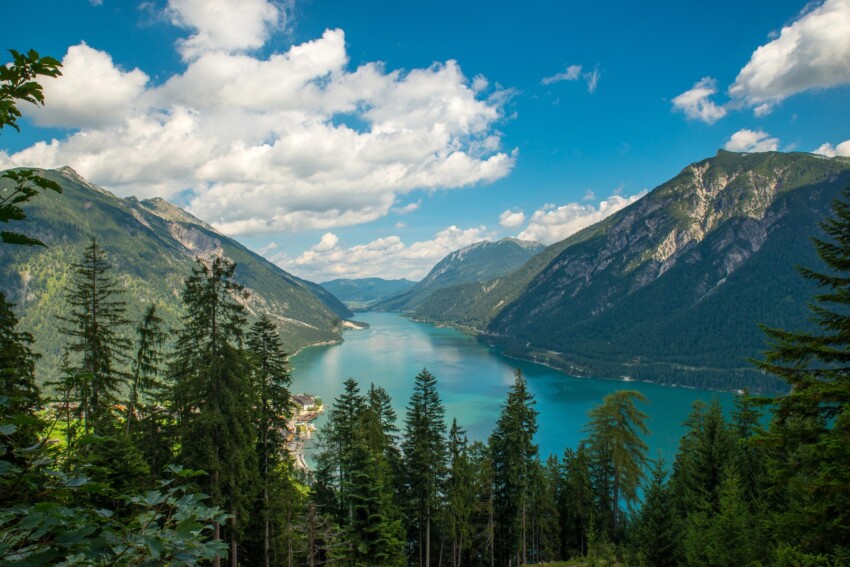
The Achensee, nicknamed the ‘fjord of the Tyrol’ due to its turquoise waters surrounded by mountains rising directly from its shores, is the largest lake in the Tyrol with a length of 6.8 kilometres and a maximum depth of 133 metres. Situated at an altitude of 929 metres between the Brandenberg and Stubai Alps, this lake of glacial origin maintains cool temperatures even in summer, offering ideal conditions for water sports thanks to constant thermal winds.
The historic navigation on the Achensee, active since 1887, still uses the MS Stadt Innsbruck steamboat, built in 1929 and perfectly preserved with period wood and brass interiors that retain the atmosphere of the Belle Époque. Pertisau, a picturesque village on the western shore of the lake, preserves traditional Tyrolean architecture and is home to the Achensee Museum documenting the history of lake navigation and local fishing traditions. The 6.8-kilometre-long Achensee cogwheel railway, built in 1889, connects Jenbach in the Inn Valley with the lake, overcoming a difference in altitude of 440 metres through spectacular alpine landscapes, making it one of the most fascinating historic tourist railways in Austria.
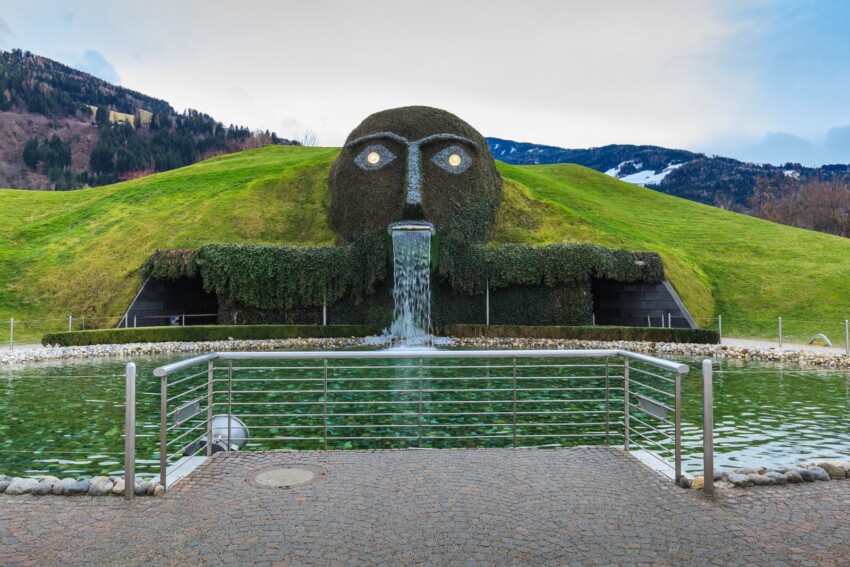
The Swarovski Kristallwelten (translatable as ‘Swarovski Crystal Worlds’) is one of the most interesting attractions in the Tyrol. Basically, it is a Swarovski theme park, which also houses an art museum, a shopping area and a restaurant. Opened in 1995 to celebrate Swarowski’s centenary, it is located in the town of Wattens, where the prestigious company was founded in 1895 and where it still has its headquarters today.
Among glittering crystals, incredible lighting effects and 17 wonder rooms, don’t miss the crystal cloud, with 800,000 hand-mounted crystals, and one of the largest Swarovski shops in the world. The visit also includes a museum, strongly desired by the Swarovski family, which traces the entire history of this important Austrian company.
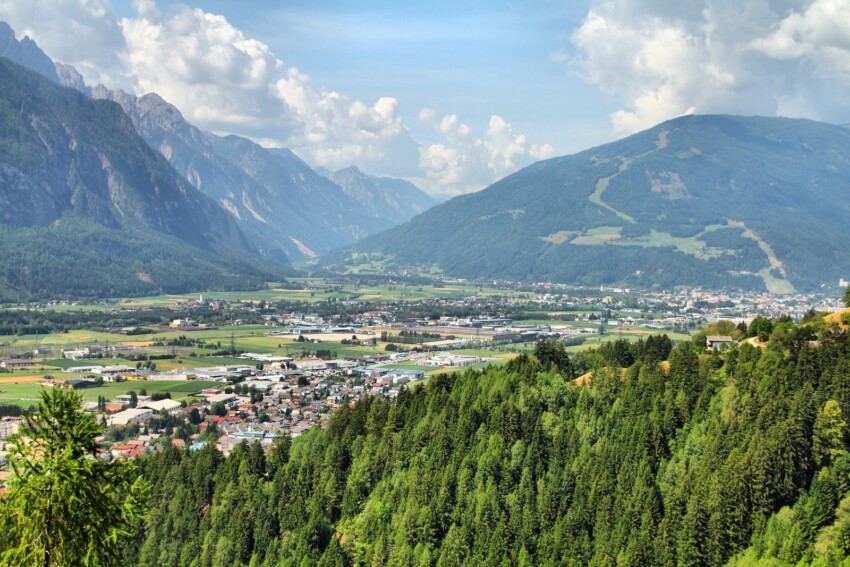
With its 12,000 inhabitants, Lienz is the largest town in the Osttirol, and is a destination not to be missed. It is nicknamed the ‘city of sunshine‘ because on average the sun shines for over 2000 hours a year, a rarity in Austria. Visit the central square, where Liebburg Castle, the symbol of the city, stands and don’t miss the nearby Bruck Castle, built by the Count of Gorizia over 750 years ago.
At weekends, the city market is held in the old town centre, where you can buy everything and taste many local gastronomic specialities. Lovers of outdoor sports, on the other hand, can enjoy the Bikepark on the Hochstein, with rides to suit all tastes. And if you are still not convinced, you might finally think about visiting Lienz for the Olala street festival or for the Dolomitenmann, a well-known extreme sports event.
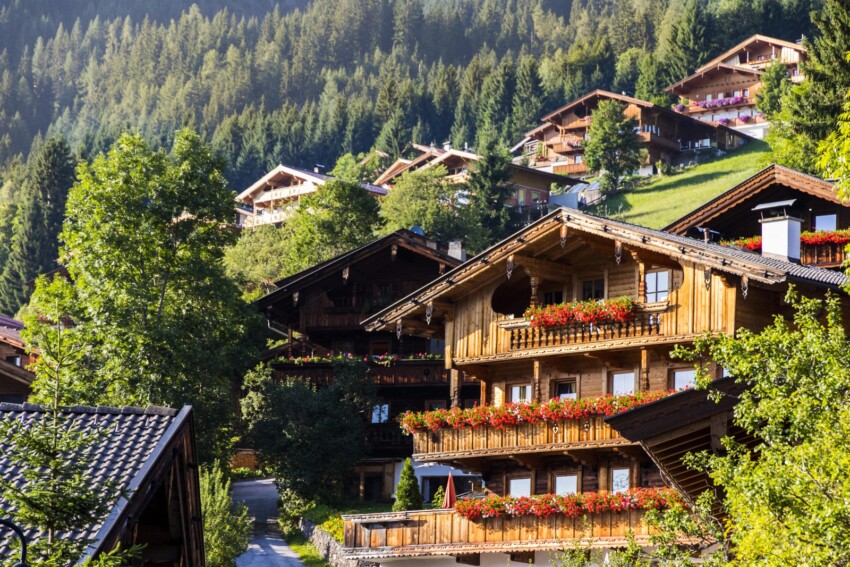
Alpbach was awarded the title of ‘Austria’s most beautiful village’ for its perfectly preserved traditional Tyrolean architecture, characterised by wooden and stone farmsteads with flower-filled balconies, larch roofs and traditional decorations that create a harmonious whole of exceptional scenic beauty. Since 1953, the village has implemented strict town planning regulations prohibiting modern constructions, preserving the authentic Alpine architectural identity.
Every August, Alpbach hosts the European Forum (European Forum Alpbach), a key international conference for European politics that brings together Nobel Prize winners, heads of state, intellectuals and young researchers from across the continent to debate economic, scientific and cultural issues.
The Alpbach-Wildschönau ski resort, linked by modern lifts, offers 109 kilometres of slopes for all levels, while in summer the Alpbacher Bergbahnen provides access to panoramic trails, alpine coaster and adventure parks that combine adrenaline and respect for the natural environment.
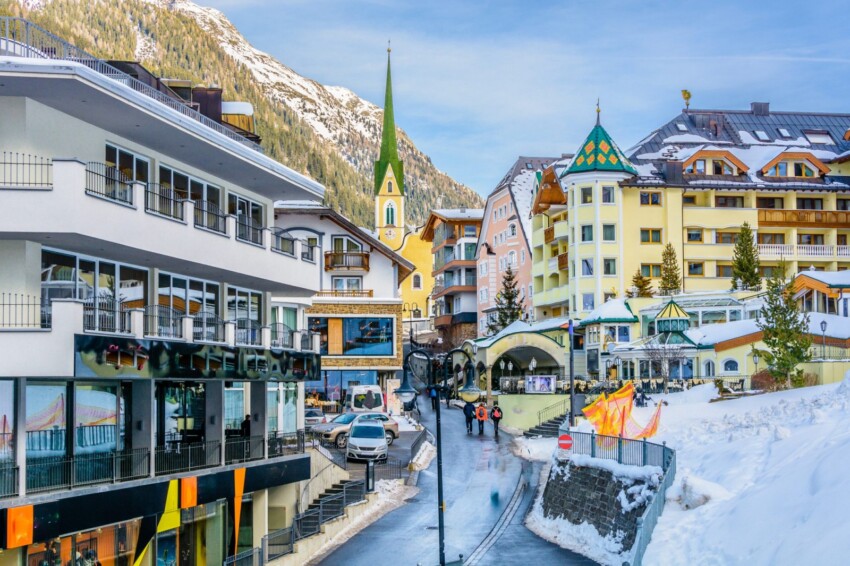
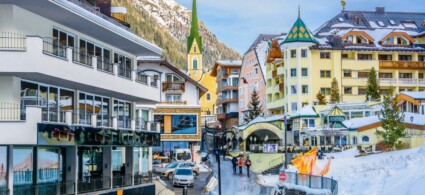
Ischgl, a ski resort of 1,600 inhabitants located at an altitude of 1,377 metres in the Paznaun valley on the Swiss border, is one of the most glamorous and innovative destinations in the Alps, famous for combining top-level skiing with spectacular music events that attract international celebrities and alpine party fans. The Silvretta Arena ski resort, shared with Samnaun in Switzerland, offers 239 kilometres of slopes between 1,400 and 2,872 metres above sea level, guaranteeing perfect snow from November to May.
Idalp, an intermediate station at 2,320 metres accessible by cable car from Ischgl, is home to high-altitude gourmet restaurants and clubs where international DJs perform, turning the ski slopes into stages for unique music events. The duty-free shopping in Samnaun, which can be reached directly by ski across the Swiss border, attracts visitors with reduced prices on perfumes, spirits, tobacco and luxury items, while Ischgl’s starred restaurants offer high Alpine gastronomy with panoramic views of the Piz Buin glaciers (3,312 m).
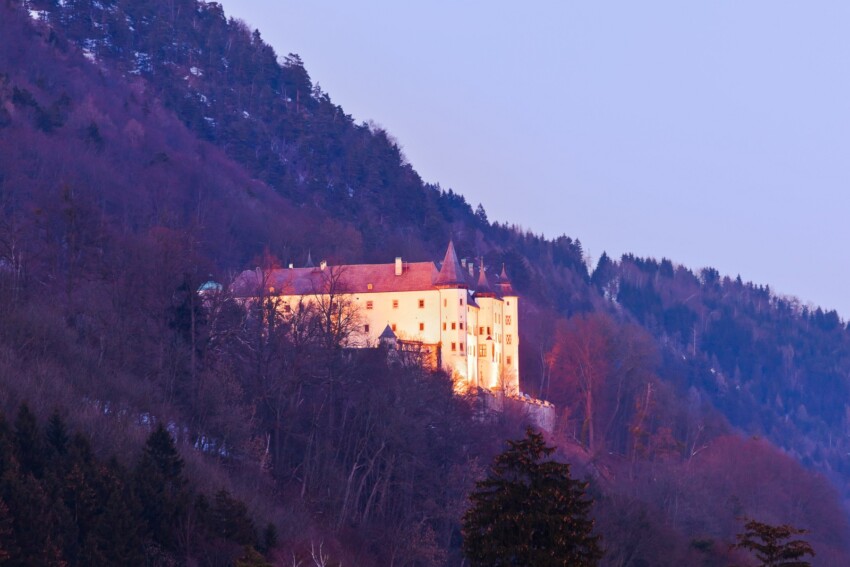
Schloss Tratzberg is one of the sights in Tyrol that will leave you breathless. First of all for its enormous size, a good 5000 square metres, and then for its beauty. The castle dates back to the 13th century and is located on the top of a slope. When you visit it, you cannot fail to be amazed by the richly decorated courtyard, the rooms with original furniture from the 16th century and the splendid halls, including the Frauenstüberl (women’s hall) and the Habsburgersaal (Habsburg Hall) with 148 portraits hanging on the walls.
Today, Schloss Tratzberg is a perfect example of Alpine Gothic-Renaissance style and still belongs to the descendants of Empress Maria Theresia. You can take part in a guided tour of the castle, which also includes a virtual journey to discover all 500 years of history of this fascinating building.

Among the multitude of Tyrolean towns and villages, we have chosen to mention Kufstein, thanks above all to its fortress, dating back to 1200, situated on a rocky spur overlooking the river, which can be reached on foot or by an impressive glass cable car. It resisted for 300 years before being conquered by Maximilian I in 1504, who enriched its defences by installing drawbridges and loopholes, and building tunnels and the great tower. Throughout its history, the Kufstein fortress has also served as a prison, while today, as the undisputed symbol of the town, it is a museum tracing its history, but is also used for exhibitions or concerts.
After visiting the fortress, walk through the historical centre of Kufstein, with its beautiful pedestrian streets, among which the Römerhofgasse stands out; in the central square, the Stadtplatz, you will find the splendid town hall. Don’t miss the St. Vitus Church, the oldest church in town, dating back to 1400 and built first in Gothic style, then converted to Baroque.
In the following map you can see the location of the main places of interest mentioned in this article.
Tyrol offers authentic alpine experiences in every season: winter turns the region into the snowsports capital of the world, while summer offers high-altitude hiking, mountaineering and mountain biking amidst the most spectacular scenery in the Alps. Autumn is ideal for hiking with the foliage of the larches, while spring offers spring skiing on glaciers and first hikes in the valley. A car is recommended for exploring the side valleys and reaching the ski lift departure points, while the Tyrolean public transport system includes tourist buses and integrated cable cars.
For a complete stay, check out our guide to where to stay in Austria to choose from luxury hotels in ski resorts, traditional alpine huts, wellness hotels and farmsteads offering authentic hospitality.
 Hotel
Hotel  Budget accommodations
  Apartments
  Family Hotel
  Luxury Hotel