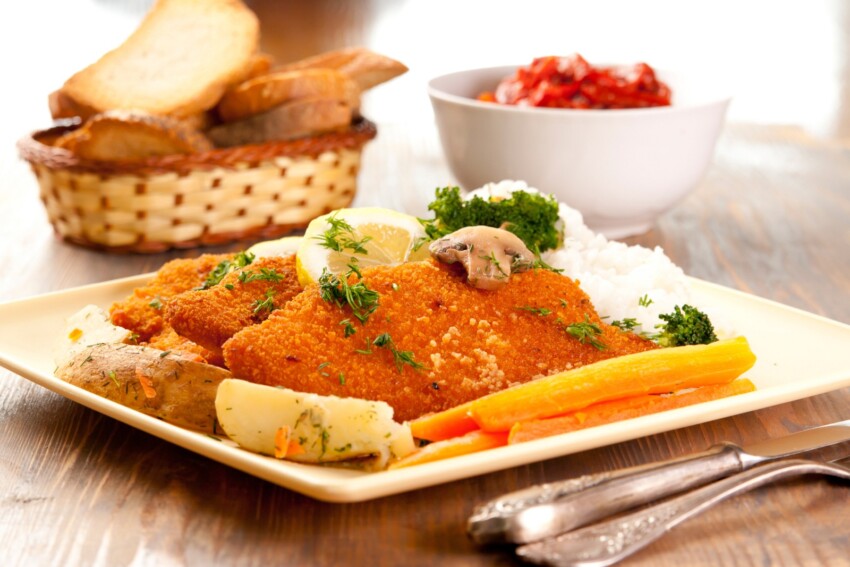
Austrian cuisine represents a fascinating crossroads of culinary traditions that reflect the rich cultural diversity of the Alpine regions. From Hungarian and Czech influences to German and Italian traditions, Austrian gastronomy has created a unique identity that goes far beyond the famous Wiener Schnitzel, offering a variety of authentic flavours ranging from hearty dishes to refined sweet specialities.
Visiting Austria means embarking on a culinary journey through Alpine regions rich in genuine products, from mountain cheeses to the smoked meats of Tyrol, from Viennese pastries to the rustic specialities of Carinthia. Mountain cuisine has left a legacy of hearty and tasty dishes, perfect for coping with the harsh Alpine winters, while urban traditions have developed more refined and elaborate preparations.
Traditional markets in Vienna, Salzburg and Innsbruck offer the opportunity to discover local ingredients of the highest quality: from Tyrolean speck to Alpine cheeses, from porcini mushrooms picked in Austrian forests to Styrian apples. Each region boasts unique specialities that reflect the territory and its climatic and geographical peculiarities.
Austrian gastronomic culture is distinguished by its focus on quality ingredients, traditional preparation techniques and the ability to transform simple dishes into memorable culinary experiences, always maintaining a perfect balance between substance and refinement.
The start of a traditional Austrian meal favours hearty soups and platters full of local specialities that open the appetite with authentic flavours.
Leberknödelsuppe is one of the most popular soups in Austrian cuisine, perfect to start a traditional meal. Liver dumplings are made with finely chopped calf’s liver mixed with stale bread, eggs, parsley and spices, then cooked in a clear, fragrant beef broth.
The secret of this soup lies in the preparation of the broth, which must simmer slowly for hours with beef bone, fresh vegetables and spices. The dumplings must have the right consistency: firm but not hard, tasty but not overly spicy. It is served steaming hot with freshly chopped chives and accompanied by rye bread.
Brettljause is the typical Austrian chopping board, perfect as an appetiser or light lunch. Local sausages such as Tyrolean bacon, smoked sausages, mature alpine cheese, pickles, radishes, raw onions and black rye bread are arranged on a wooden board.
Each region offers its own version: in Tyrol, speck and alpine cheese predominate, in Styria roasted pumpkin seeds and pumpkin seed oil are added, while in Upper Austria you will find specialities such as Verhackertes (raw minced meat seasoned with spices). The ideal accompaniment is a local beer or a glass of Austrian wine.
Frittatensuppe is a traditional soup prepared with a clear broth in which thin strips of omelette are served. The omelette, made with eggs, milk, flour and fresh herbs, is cooked until golden brown, cut into julienne strips and added to the boiling broth just before serving.
This soup is the perfect example of the Austrian culinary art of transforming simple ingredients into refined dishes. The contrast between the delicacy of the broth and the texture of the omelette creates a perfect balance. It is often enriched with fresh parsley and served with toasted bread croutons.
Austrian first courses are characterised by their substance and ability to satiate, using simple ingredients transformed into rich and satisfying preparations.
Knödel are Austrian dumplings, hearty dumplings that are one of the mainstays of traditional Alpine cuisine. Semmelknödel (bread dumplings) are the most classic version, made with stale bread cut into cubes, softened in warm milk and bound with eggs, chopped parsley and nutmeg.
There are countless variations: Speckknödel with diced crispy bacon, Spinatknödel with fresh spinach, Käseknödel filled with stringy cheese. The dough must have the perfect consistency to be moulded into balls that hold their shape when cooked in boiling salted water. They are served as a first course with melted butter and Parmesan cheese, or as a side dish for stews.
Spätzle are small, irregular dumplings typical of the Austrian Alpine regions. The dough, prepared from flour, eggs, milk and salt, is pressed through a special grater with large holes directly into boiling water, creating unique and characteristic shapes.
Preparation requires a certain dexterity: the dough must be of the right consistency, neither too liquid nor too thick. Once cooked, Spätzle are sautéed in butter with golden onions or served with melted cheese (Käsespätzle), creating a perfect comfort food dish for cold days. In more refined versions, they are accompanied by porcini mushrooms or fresh alpine herbs.
Gröstl is a traditional Tyrolean one-pot meal that originated as a recovery recipe to use up leftovers. Boiled potatoes, roast meat (usually pork or beef) and onions are diced and browned together in a pan until crispy on the outside and soft on the inside.
The perfect preparation requires a hot iron skillet and the patience to brown all the components well. It is often served with a fried egg on top and accompanied by fermented sauerkraut or green salad. Every Tyrolean family has its own version, adding ingredients such as bacon, cheese or mountain herbs.
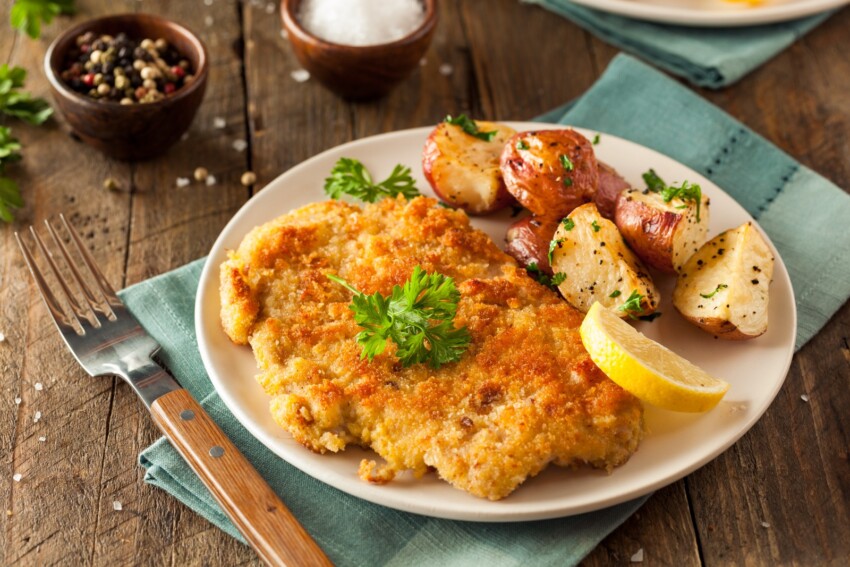
The Austrian tradition of main courses celebrates high-quality meats prepared using techniques perfected over centuries, from golden schnitzels to succulent roasts.
The Wiener Schnitzel is indisputably the most famous dish in Austrian cuisine. This thin slice of veal is beaten to a thickness of a few millimetres, breaded with eggs and very fine breadcrumbs, then fried in plenty of clarified butter until golden brown.
The authentic preparation requires a special technique: the meat must ‘swim’ in the boiling butter, and during cooking it must be moved gently to make the breadcrumbs swell, creating that characteristic ‘puff’ shape. The result must be a golden, crispy breadcrumbs encasing a tender, juicy meat.
It is served with lemon slices, warm potato salad dressed with vinegar and pumpkin seed oil, and cranberries. The best Viennese restaurants serve Schnitzel that completely covers the dish, keeping alive a tradition of culinary excellence.
Tafelspitz is considered Austria’s national dish par excellence. This prized cut of beef (the tip of the sirloin) is slowly boiled in an aromatic broth prepared with fresh vegetables, herbs and spices until it is extraordinarily tender.
The preparation requires at least three hours of slow cooking, during which the meat is immersed in a broth prepared with carrots, celery, leeks, parsley, thyme, bay leaves and juniper berries. The secret lies in the constant temperature and the foam that must be meticulously removed to obtain a crystal-clear broth.
It is served with three traditional sauces: chive sauce, grated horseradish with apples and dill sauce. The accompaniment includes boiled potatoes, spinach sautéed in butter and often a portion of the cooking broth served as an appetiser.
Austrian goulash is a beef stew that differs from the Hungarian version in its thicker consistency and milder flavour. The preparation starts with slowly browning onion, to which sweet Hungarian paprika is added, a key ingredient that gives it its characteristic red colour and distinctive aroma.
The beef, cut into regular cubes, is browned and then stewed for hours with tomato, cumin, marjoram and spicy paprika. The result is a rich and tasty dish, perfect for the winter months. It is served with Semmelknödel, boiled potatoes or Spätzle, often accompanied by mixed pickles that balance the richness of the dish.
Schweinsbraten is the quintessential Austrian pork roast, prepared with marinated leg of pork and slow-cooked until the meat is tender and has a golden, crispy crust. The marinade includes beer, onions, garlic, cumin and juniper berries, which add flavour and help to soften the meat.
Cooking takes place in the oven at a moderate temperature, frequently sprinkling the meat with its own cooking juices enriched with beer and stock. The rind should become crispy, creating a perfect contrast with the juicy meat underneath. It is served with braised sauerkraut, bread dumplings and sweet Austrian mustard.
Austrian side dishes are never mere accompaniments but real specialities that complement and balance the flavours of the main dishes.
Austrian Sauerkraut is a staple side dish in traditional cuisine, made from fermented white cabbage that is slowly braised with onions, juniper berries, caraway seeds and white wine. The natural fermentation of the cabbage creates a distinctive sour flavour that perfectly balances out richer meat dishes.
Traditional preparation involves slow cooking for at least an hour, during which time the sauerkraut absorbs all the flavours of the added ingredients. In more refined versions, chopped apples or smoked bacon are added for a more complex flavour. It is the perfect accompaniment for roasts, sausages and game dishes.
Rotkraut is braised red cabbage, a colourful and tasty side dish that is particularly popular during the autumn and winter months. The cabbage is finely chopped and slow-cooked with golden onions, apples, red wine vinegar and spices such as cinnamon, cloves and bay leaves.
The slow cooking allows the cabbage to absorb all the flavours, creating a sweet-savoury side dish that goes perfectly with roast meats and game. The deep purple-red colour also makes this dish very decorative on the table. It is often enriched with cranberries or currants for a touch of freshness.
The Austrian Erdäpfelsalat is very different from the German versions with mayonnaise: boiled potatoes are dressed while still warm with wine vinegar, pumpkin seed oil, finely chopped onion, fresh parsley and a pinch of sweet mustard. This preparation allows the potatoes to better absorb the seasoning.
The choice of potatoes is crucial: they must be firm varieties that retain their shape after cooking. The seasoning must be balanced between the acidity of the vinegar and the sweetness of the pumpkin seed oil, a typical Styrian product. It is served as a side dish for Schnitzel, roasts and meat dishes in general.
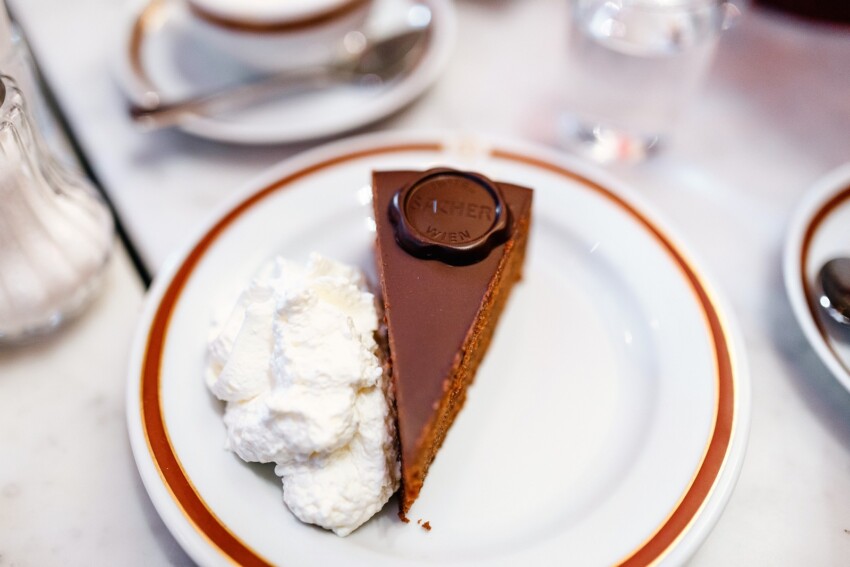
Austrian confectionery represents one of the finest chapters of European gastronomy, with desserts combining traditional craftsmanship and top-quality ingredients.
Sachertorte is probably the most famous Austrian dessert in the world, a chocolate cake that represents the apogee of Viennese confectionery art. Two layers of chocolate sponge cake are separated by a thin layer of apricot jam, all covered with a glossy, perfectly smooth dark chocolate icing.
The preparation requires the highest quality ingredients: dark chocolate, Austrian butter, fresh eggs and apricot jam without pieces. True Sachertorte must ‘rest’ for at least 24 hours before serving, allowing the flavours to meld perfectly. It is served with unsweetened whipped cream and a glass of fresh water.
Apfelstrudel represents the art of pulled pastry brought to perfection, a speciality requiring extraordinary technical skill. The wafer-thin dough encloses a filling of apples, sultanas, pine nuts and aromatic spices. The dough has to be kneaded until it is so thin that it can be read through a newspaper.
The filling uses thinly sliced Reinette apples, mixed with sugar, cinnamon, sultanas softened in rum, toasted pine nuts and breadcrumbs toasted in butter. The latter ingredient is essential to absorb the juices of the apples during cooking. It is served warm with vanilla sauce, vanilla ice cream or whipped cream.
Kaiserschmarrn is a rustic dessert that is the perfect example of how popular cuisine can become refined. The crêpe-like dough, enriched with beaten egg whites, is cooked in a pan with butter, turned and then ‘torn’ into irregular pieces with two forks.
During the final baking, it is caramelised with icing sugar, creating a golden, crispy surface that contrasts with the soft interior. It is presented with a dusting of icing sugar and accompanied with plum jam or cranberry sauce. In the alpine pastures, it is prepared with local ingredients of the highest quality.
The Linzer Torte is a tart made with a dough rich in ground almonds, cinnamon and cloves, filled with redcurrant jam and decorated with the characteristic twisted pastry that allows the red of the jam to shine through.
The preparation requires special care in kneading the dough, which must be crumbly but not crumbly. Baking must be even to obtain a golden, crispy base. The contrast between the sweetness of the almond dough and the acidity of the currants creates a perfect balance. It is served at room temperature, often accompanied by Viennese coffee.
Palatschinken are Austria’s thin and versatile crêpes. The most classic sweet version has an apricot jam filling, sprinkled with icing sugar and often flambéed with rum. The dough must be smooth and lump-free, rolled out in hot pans to obtain uniformly thin crêpes.
The preparation technique requires experience: the batter must rest at least 30 minutes before use, and the temperature of the pan must be just right to prevent sticking or burning. They are served hot, folded into quarters and decorated with icing sugar. In historic cafés they are still freshly prepared, keeping alive a tradition of excellence.
Austria has a thousand-year-old wine tradition and a deeply rooted beer culture that offers perfect pairings for every dish of traditional cuisine. Austrian wines are distinguished by their elegance and freshness, with indigenous varieties such as Grüner Veltliner and Riesling pairing wonderfully with fish and vegetable dishes, while reds such as Zweigelt and Blaufränkisch perfectly accompany meat and game.
Austrian beers represent internationally recognised excellence, from light Märzen to robust Weissbier, perfect with sausages and hearty dishes. Brands such as Gösser, Ottakringer and Stiegl produce beers of the highest quality that reflect different regional traditions. Don’t forget to try the local craft beers, which are increasingly popular in Austrian pubs and restaurants.
Viennese coffee deserves a separate chapter: from the classic Melange (similar to cappuccino) to the Wiener Mélange with whipped cream to the Kleiner Brauner (espresso with milk). Each coffee has its own rules of preparation and service, unfailingly accompanied by a glass of fresh water. To round off a meal, don’t miss the Austrian fruit distillates, true artisanal delicacies made from pears, apples, apricots and plums that grow in Alpine orchards.
 Hotel
Hotel  Budget accommodations
  Apartments
  Family Hotel
  Luxury Hotel