Vignette Austria, how much does it cost and where to buy the motorway sticker
For tolls on Austrian motorways, it is necessary to buy a vignette, a sticker to stick on the windscreen. Here is all the useful information.
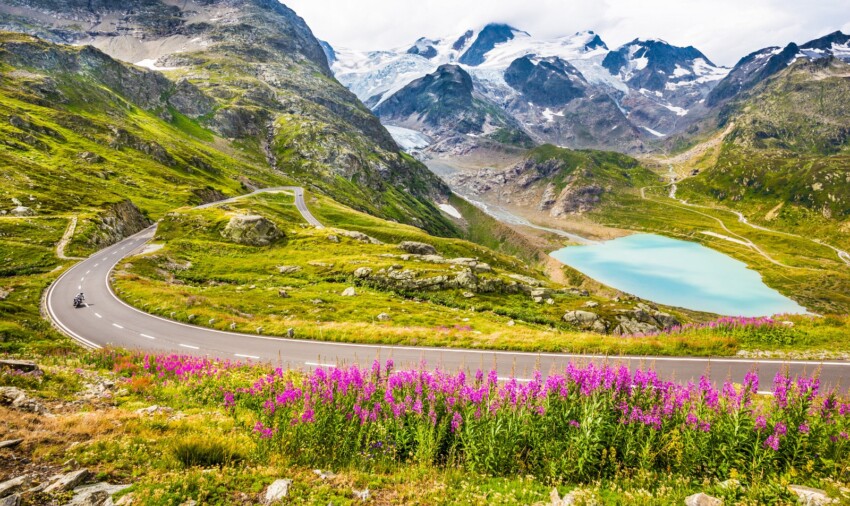
Whether you have arrived in Austria with your own car or you have rented a car on arrival, you will have to deal with the Austrian road code and its rules.
Driving in Austria is made quite easy by traffic regulations that are very similar to those in Europe and by generally very good road conditions.
One small difference that could cause some confusion is in the traffic light signs. In Austria there is, for a few seconds, a red-yellow traffic light between red and green: always wait for the green light before driving.
You do not need any special documents to drive in Austria, only those that are also required in the rest of Europe, i.e. your driving licence, vehicle registration card and insurance certificate. If you drive a car that does not belong to you, obtain a written authorisation from the owner authorising you to use it.
The permitted blood alcohol limit is 0.5 mg/ml (0.05%), but drops to 0.01% for novice drivers with less than 2 years’ experience and drivers of commercial vehicles.
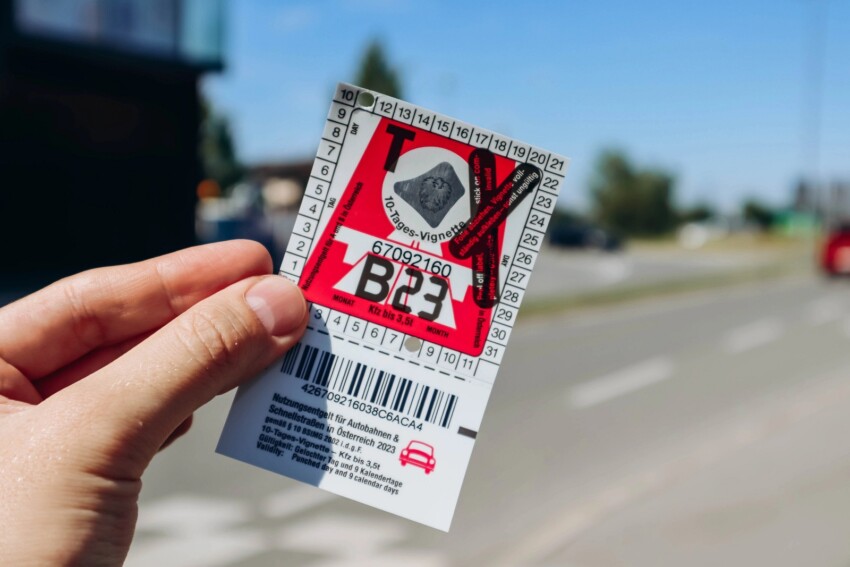
Austrian motorways are toll-free, but unlike in many other European countries, payment is not calculated at the exit toll booth on the basis of kilometres driven.
It is necessary to obtain a motorway sticker (also called a ‘vignette‘, or ‘toll’), which is obligatory for all motorways and motorways. The vignette changes colour every year and is available in different modes:
Prices for motorbikes are always lower than for cars.
Important: The 1- and 10-day digital sticker is valid immediately if purchased online, whereas for 2-month and annual stickers there is an 18-day waiting period for consumer protection.
For all information, costs and how to purchase please refer to the detailed information on the Austrian motorway sticker.
The speed limits that apply in Austria are:
Watch out for speed limits in case of snow: with snow chains the maximum speed allowed is 50 km/h; the limit for cars with snow tyres is 100 km/h on motorways and 80 km/h on other roads.
Austria has introduced very severe penalties for speeding:
It is mandatory to have on board at all times
From 1 November to 15 April,winter equipment is mandatory: M+S winter tyres with a minimum depth of 4 mm on all four wheels, or snow chains on at least two drive wheels.
During the winter months, dipped headlights must also be switched on during the day if visibility is poor due to rain, snow or fog.

Travelling in Austria is easy thanks to the efficient and extensive motorway network, which comprises 26 motorways totalling more than 1,100 kilometres.
The most important motorways include:
Special tolls: On some Alpine routes (A9, A10, A11, A13 and S16) there is an additional toll in addition to the vignette due to high construction and maintenance costs.
Parking in the blue stripes is chargeable and allowed for a duration ranging from 30 minutes to 3 hours, the maximum time is indicated in the vicinity of the stripes.
Paying time slots are usually Monday to Friday, from 08:00/09:00 until 19:00/22:00. In some cities you also pay on Saturdays. On Sundays you can usually park for free unless otherwise indicated.
The major international agencies (Hertz, Avis, Europcar, Sixt) have offices at major airports and in cities. For car rental in Vienna, the airport offers the largest selection of vehicles and often the most competitive rates.
Always compare prices including insurance, vignette and mandatory equipment. Many local Austrian agencies offer competitive rates and personalised service. Book in advance, especially during the peak ski season and summer months when demand is high.
To rent a car in Austria we always recommend comparing the rates of all companies with DiscoverCars because in our opinion it offers the best prices, allows cancellation up to 48 hours before rental and offers a very cheap comprehensive insurance policy.
In Austria, the number of green zones where only environmentally friendly and low-emission vehicles may drive increases every year. Breaking the rules in these zones will result in a fine for anyone without an environmental sticker.
The Austrian police are very strict and can demand immediate payment of the fine of up to EUR 90. For higher amounts they can ask for a deposit and the balance must be paid within two weeks.
Anyone caught without a valid vignette must pay a replacement toll of:
In the case of a manipulated vignette (including changing the validity date) the replacement toll doubles. In case of refusal to pay, the fine can be up to EUR 3,000.
In case of emergency:

 Hotel
Hotel  Budget accommodations
  Apartments
  Family Hotel
  Luxury Hotel