arte Hotel Wien Stadthalle
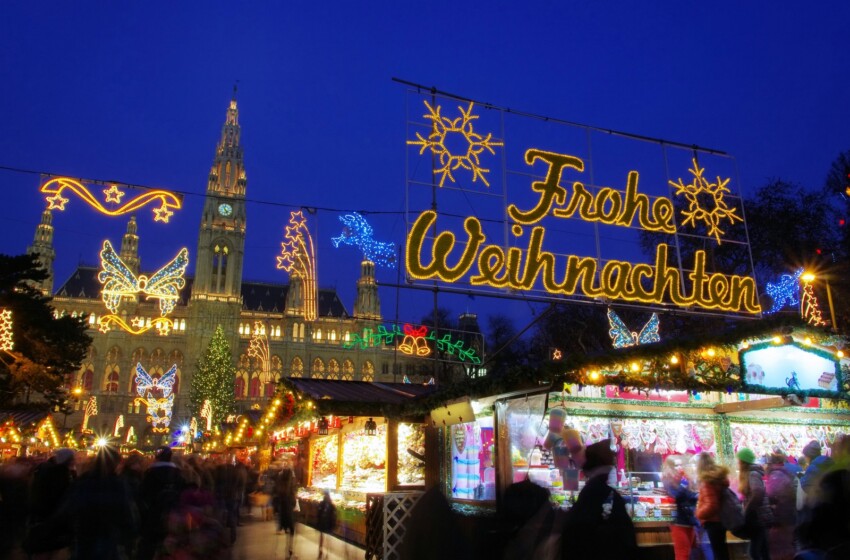
Austria transforms its historic cities into fairytale settings during the Christmas season, creating some of the most atmospheric Christmas markets in Europe. The mediaeval squares of Vienna, Salzburg and Innsbruck are filled with little wooden houses emanating the scent of cinnamon and mulled wine, while Christmas melodies resound among imperial palaces and baroque churches.
Austrian markets boast a tradition dating back to the 14th century, when the first ‘Christkindlmärkte’ began to animate the cities of the Habsburg Empire. Each market retains unique characteristics, from the elegant Schönbrunn Market to the traditional stalls on Salzburg’s Dom Platz, where Mozart himself walked during the Christmas holidays.
Quality craftsmanship distinguishes Austrian markets from those in other European destinations. Stands offer handmade Christmas decorations, traditional Tyrolean carved wooden toys and culinary delicacies following recipes handed down through generations. The little wooden houses smell of apple strudel, spiced lebkuchen and traditional Austrian punch.
The atmosphere reaches its peak during Advent, when classical music concerts and gospel choirs resound in the historic squares. The Austrian markets offer an authentic Central European Christmas experience, where tradition and imperial elegance come together in a unique celebration of the festivities.

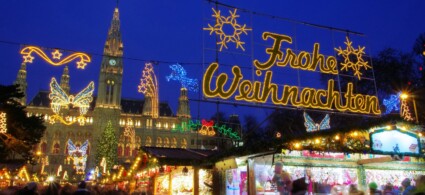
Vienna is home to over twenty Christmas markets, turning the Austrian capital into the ultimate Christmas destination. The most iconic market takes place in front of the City Hall (Rathaus), where over 150 stalls surround the majestic neo-Gothic structure illuminated by thousands of golden lights.
The Schönbrunn Market offers a unique royal experience, with stalls set up in the courtyard of the imperial palace. This market, open from mid-November until 26 December, offers high-quality handicrafts and classical music concerts in the palace halls. The atmosphere is especially magical during winter evenings, when the palace is illuminated to create a golden setting for the celebrations.
The Art and Antiques Market at the Am Hof is a fine alternative for those looking for unique items. Here you will find hand-painted ceramics, vintage jewellery and antique books in one of Vienna’s best-preserved medieval squares. The proximity to the Church of the Nine Angelic Choirs adds a spiritual touch to the Christmas shopping experience.
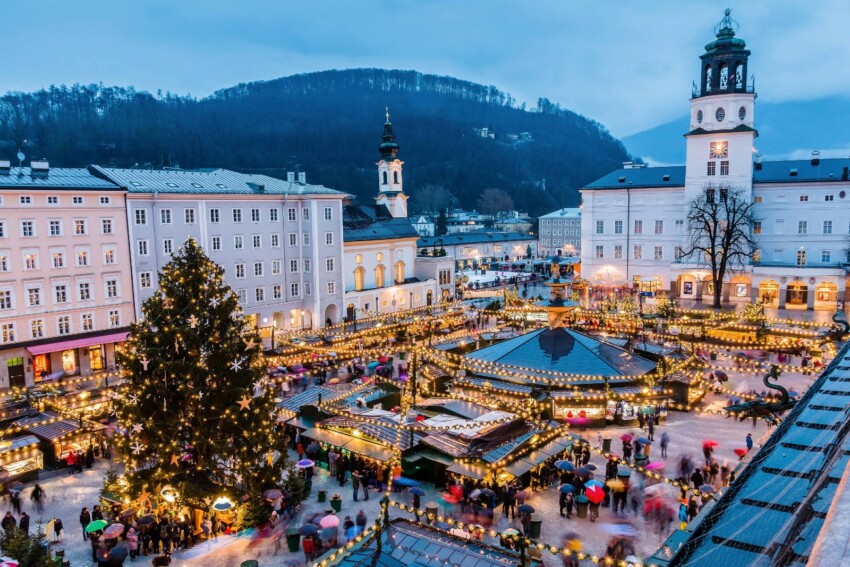
Salzburg celebrates Christmas with a special solemnity, being the birthplace of ‘Stille Nacht, Heilige Nacht’ (Star of Heaven). The main market on the Dom Platz takes place in the shadow of the magnificent Baroque cathedral, where Mozart was baptised in 1756.
The Fortress Market (Festung Hohensalzburg) offers a unique perspective on the city below. Accessible by historical funicular railway, this medieval market offers typical Salzburg handicrafts while enjoying panoramic views of the snow-covered Alps. Small wooden houses sell local specialities such as Hallein’s pink salt and the famous Mozart sweets.
The Residenzplatz hosts a more intimate market, dominated by the baroque Residenzbrunnen fountain. The atmosphere here is particularly atmospheric on December evenings, when Christmas choirs perform on the steps of the cathedral. The market features daily concerts of sacred music and representations of the living nativity scene.
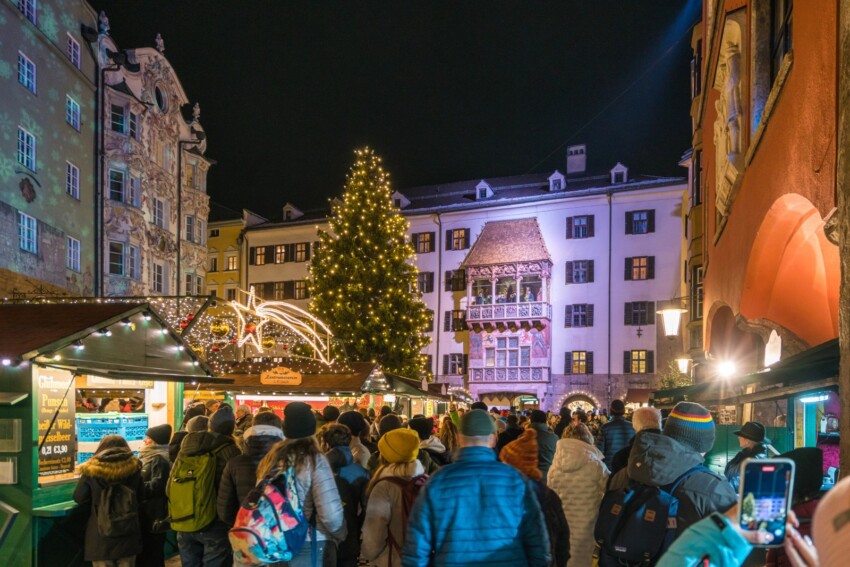
Innsbruck combines Tyrolean authenticity with the splendour of the Alps, creating Christmas markets of extraordinary beauty. The main market in the Altstadt (Old Town) is spread out along characteristic houses with colourful roofs, with the snow-capped mountains providing a natural backdrop.
The Marktplatz market is famous for authentic Tyrolean handicrafts. Stands sell carved wooden Christmas decorations, traditional textiles and characteristic Alpine hats. The location at the foot of the Nordkette offers a unique mountain backdrop, where you can admire the snow-capped peaks while enjoying the traditional Feuerzangenbowle.
The Imperial Palace Market (Hofburg) adds a touch of Habsburg nobility to the Christmas celebrations. Located in the courtyard of the palace that was once the residence of Empress Maria Theresia, this market offers luxury goods and chamber music concerts. The golden illumination of the palace creates a fairy-tale atmosphere, which is particularly impressive during the evening snowfall.
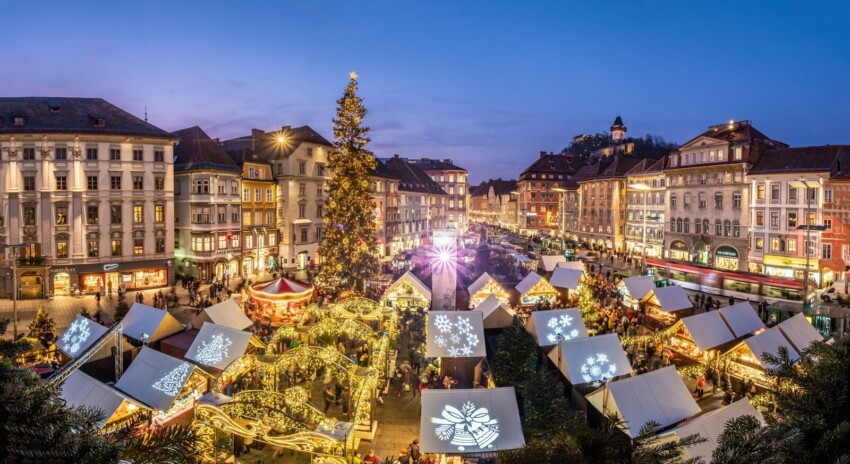
Graz surprises with Christmas markets that combine Styrian tradition and modernity. The main market atHauptplatz is dominated by the historic clock tower (Uhrturm), the city’s landmark, illuminated for the Christmas holidays.
The Graz Advent Market offers a curated selection of local handicrafts, with a focus on eco-friendly products. Small wooden houses sell decorations made from recycled materials, natural cosmetics produced in Styria and organic food specialities. The contemporary approach does not compromise the traditional festive atmosphere.
The Eggenberg Castle Market offers a unique Baroque experience. Located in the gardens of the UNESCO heritage building, this market features concerts of early music and demonstrations of 17th century arts and crafts. The respectful lighting of the historical architecture creates memorable settings for Christmas celebrations.
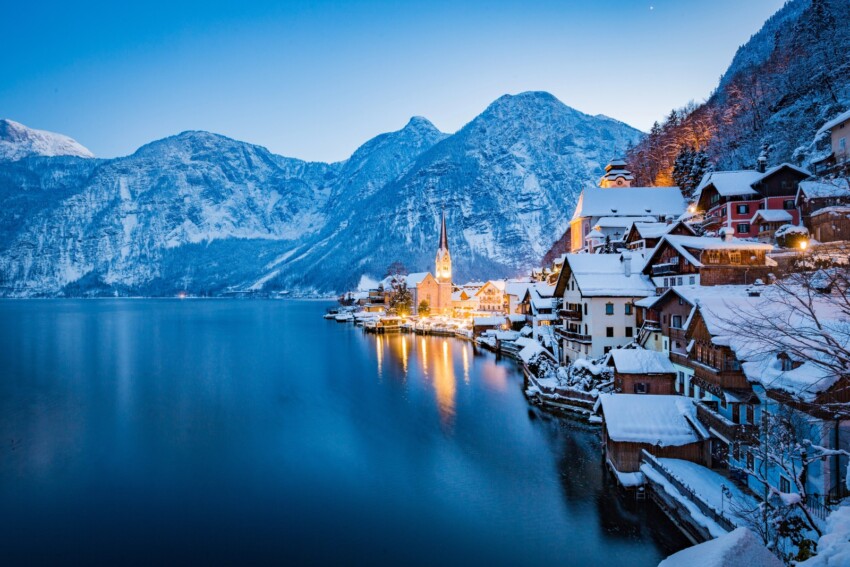
Hallstatt, the jewel of the Salzkammergut, offers one of the most romantic Christmas markets in Austria. The little wooden houses are reflected in the crystal-clear waters of the lake, while the surrounding mountains create a natural amphitheatre covered in snow.
The market takes place on the small Marktplatz, where every stall is carefully designed to preserve the authenticity of the village. The products reflect Hallstatt’s mining tradition: you will find decorations made from salt crystals, silver jewellery crafted according to local techniques and gastronomic specialities made from lake fish.
The atmosphere reaches its peak during Christmas concerts in the evangelical church, where the notes of the organ drift over the frozen surface of the lake. The Hallstatt Christmas market is open on weekends in December, keeping the size small to preserve the intimate character of the UNESCO heritage village.
Linz, the cultural capital of Upper Austria, transforms its historic centre into a state-of-the-art Christmas stage. The main market at Hauptplatz is characterised by innovative artistic lighting that transforms baroque façades into contemporary light installations, creating a unique dialogue between past and future.
The Linz Castle Market occupies the courtyard of the medieval fortress overlooking the Danube. From this elevated position, you can admire the entire city lit up for the festivities as you explore stalls offering contemporary Austrian art and innovative design. Small wooden houses host young local artists who reinterpret Christmas traditions with modern languages.
The market on Landstraße, the main pedestrian street, stretches over 500 metres, creating a magical path between historic shops and light installations. Here you will find Upper Austrian specialities such as the original Linzer Torte, made according to a recipe from 1653, and innovative mulled wine flavoured with local ingredients. The Pöstlingberg, a hill above Linz, is home to a smaller but atmospheric market, reached by Europe’s steepest historic cogwheel railway.
Austrian markets are famous for culinary delicacies that reflect regional traditions. The Austrian Glühwein (mulled wine) is characterised by the use of local wines spiced with cinnamon, cloves and orange peel. Each market offers its own recipe, served in commemorative mugs that become coveted souvenirs.
Christmas sweets represent the excellence of Austrian confectionery. Lebkuchen are spiced biscuits decorated with coloured icing, while Austrian Stollen contain local candied fruit and almonds from the Alpine valleys. Geröstete Mandeln (roasted almonds) smell of vanilla and caramelised sugar, prepared according to 19th century recipes.
Savoury specialities include homemade bratwurst, käsekrainer (sausages with cheese) and the traditional kaiserschmarrn served warm with plum jam. The markets also offer matured Alpine cheeses, bacon smoked according to traditional Tyrolean methods and rye bread from the mountain valleys.
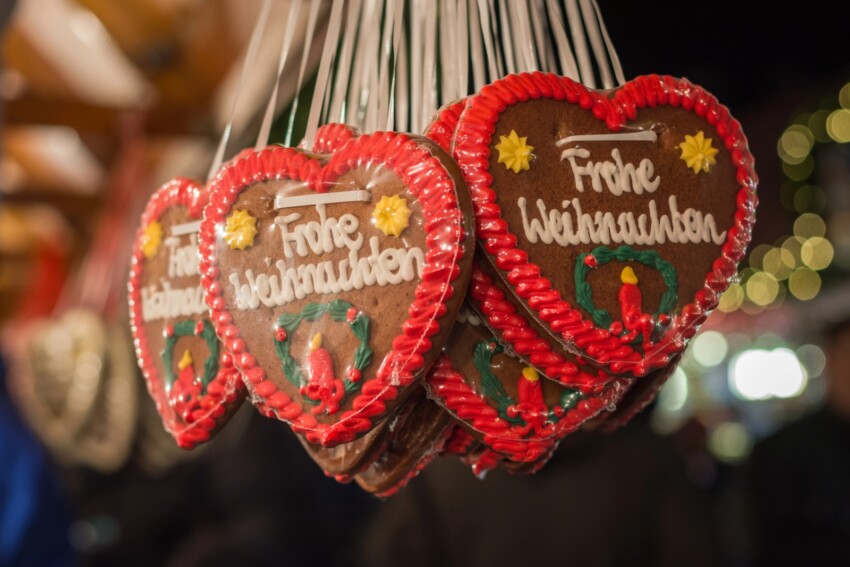
Austrian handicrafts at Christmas markets represent centuries of Alpine tradition. The carved wooden decorations come from the Tyrolean valleys, where families of craftsmen have been handing down techniques for generations. Wooden angels, hand-carved nativity scenes and Christmas figures follow distinctive regional styles.
Traditional textiles include embroidered tablecloths with alpine motifs, merino wool blankets and folkloric clothes (Dirndl and Lederhosen) made using historical tailoring techniques. Hand-painted ceramics reproduce floral motifs typical of the different Austrian regions, from Salzburg cobalt blue to Styrian geometric patterns.
Traditional jewellery includes silver brooches with Swarovski crystals, rings with stones from the Eastern Alps and bracelets decorated with Habsburg motifs. Austrian goldsmithing in the markets maintains high quality standards, offering unique pieces made by local master goldsmiths.
Austrian markets generally open from the end of November to 24 December, with extended opening hours during Advent weekends. Vienna offers the most markets with extended hours until 10pm, while smaller centres generally close at 8pm. Consult the official websites for specific times, as some markets observe special closures.
The best time to visit the markets is the second and third week of December, when all are open but crowds have not yet reached their pre-Christmas peaks. Midweek evenings offer a quieter atmosphere, ideal for enjoying the ambience without hurrying. Snowfall makes the experience even more magical, so monitor the weather forecast.
For intercity travel, use the train, which effectively connects Vienna, Salzburg and Innsbruck. Car hire in Austria allows you to explore the markets in smaller towns such as Hallstatt or the markets in the Alpine valleys. Book accommodation in advance, especially on Advent weekends when demand reaches seasonal peaks.
 Hotel
Hotel  Budget accommodations
  Apartments
  Family Hotel
  Luxury Hotel