Boutique Hotel Goldenes Lamm Villach
Villach - Hauptplatz 1
Book now
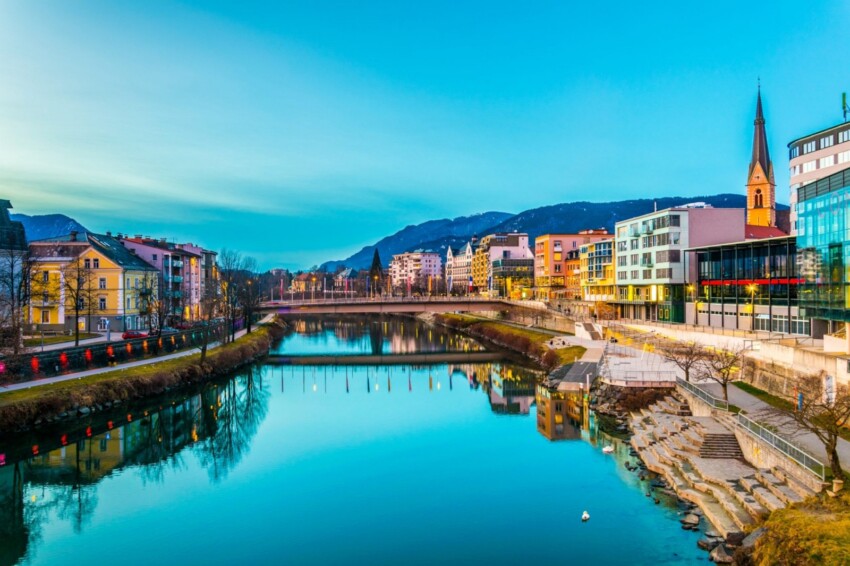
Villach is a popular Austrian tourist resort in the Carinthia region, ideal for active holidaymakers. The possibilities for outdoor activities such as hiking, mountain biking and skiing in a spectacular natural setting are almost endless.
The town itself is certainly not the most charming in Austria, but it is lively and equipped with all amenities, so it is well suited as a base for exploring the surrounding area at all times of the year.
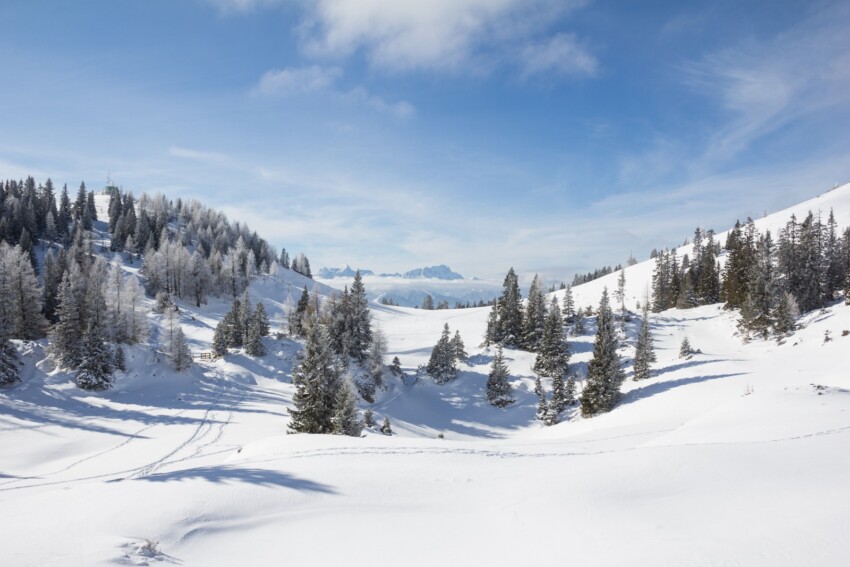
Villach is a lively tourist resort in all seasons of the year and there is no better time to visit.
A summer holiday in Villach is above all about greenery, walking, mountain biking and swimming in the lake. In winter, Villach is an ideal destination for skiing, bathing in a heated swimming pool with a view of the mountains or the lake and peeking at the Christmas markets, which are smaller than those in Vienna, Salzburg and Innsbruck but not without charm. Spring and autumn are two ideal seasons for hiking.
Keep in mind that Villach hosts the Carinthischen Sommer, one of Austria’s most prestigious music festivals, from mid-July to the end of August. The festival days are a peak season for tourism in Villach, so if you plan to come here during the festival, it is a good idea to book well in advance.
Are you passing through Villach and want to stop off in town or are you planning a holiday in the area? Here are the most interesting sights in and around the town centre.
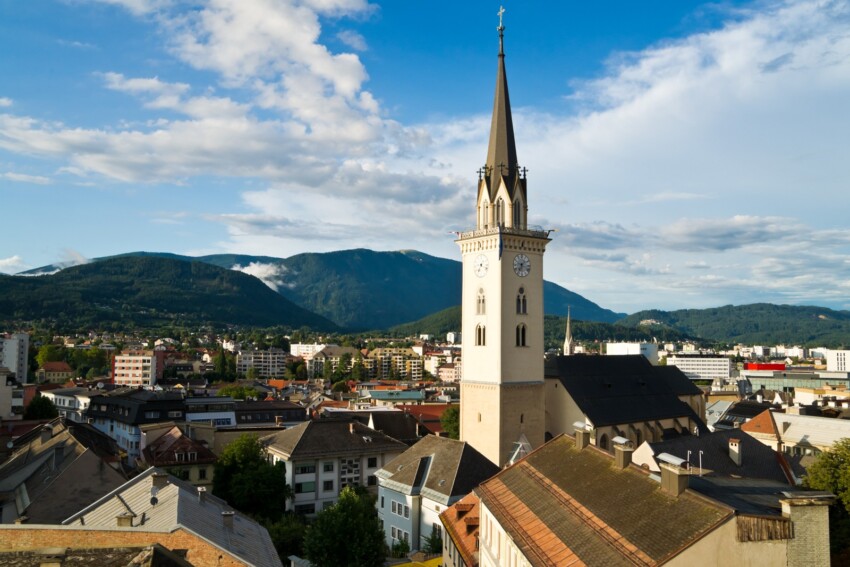
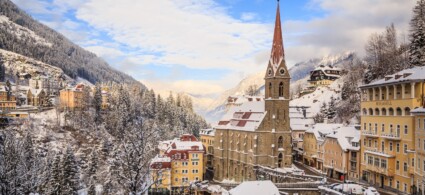
St. Jakob’ s Church is the undisputed symbol of Villach and an essential stop for anyone visiting the town. This majestic Gothic building, erected from 1360, enshrines centuries of history and art in the heart of the old town. The current building stands on the remains of a Romanesque basilica dating back to 1136, which was destroyed by an earthquake and subsequently rebuilt through several stylistic eras.
The 94-metre-high bell tower is the highest in Carinthia and offers an extraordinary panoramic view of the city and the surrounding mountains. You have to climb over 150 steps to reach it, but the effort is repaid by one of the most beautiful views in southern Austria. The interior of the church impresses with its splendid cross vaults, the Renaissance chalice-shaped pulpit from 1555 and the monumental Rococo high altar from 1740. Fascinating details include the funeral chapel with the tomb of the Khevenhüller family and a late Gothic fresco depicting St. Christopher.
The church has a special religious history: during the Protestant Reformation, it became the first Protestant church in Carinthia and Austria, before returning to Catholic worship with the Counter-Reformation. Today it is still the city’s main Catholic place of worship and a crossing point on the Camino de Santiago.
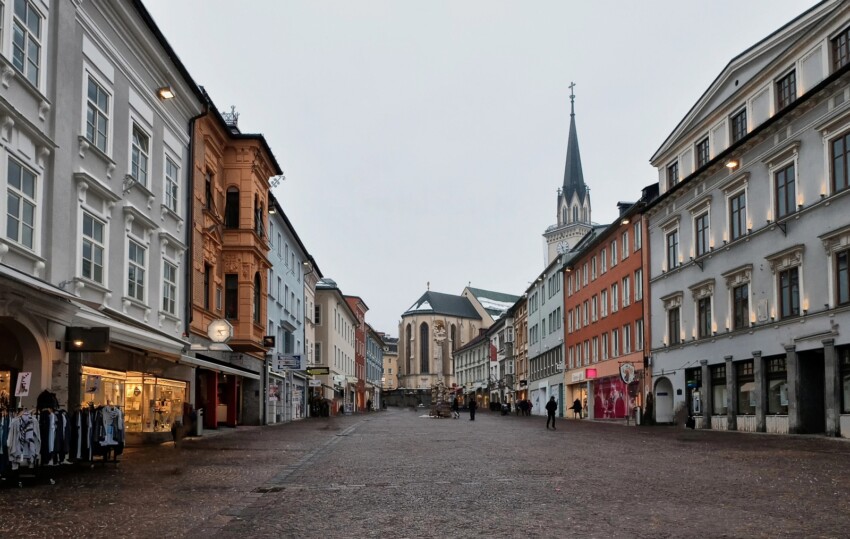
Villach’s Hauptplatz is not a traditional square, but rather an elegant, elongated pedestrian street that is the beating heart of the town. This urban space, the scene of markets, cultural events and seasonal celebrations, is surrounded by buildings that tell the story of Villach through different architectural styles.
In the centre of the square stands the Trinity Column, dating from 1739, surrounded by statues of Mary, St. Florian and St. Roch. Among the historical buildings that survived the bombing of the war is the Grottenegghaus, a medieval building from the 14th century that bears witness to the town’s former mercantile wealth. Particularly noteworthy is the Hotel Post, a former palace of the Khevenhüller family, which in 1552 sheltered Emperor Charles V for weeks as he fled from General Hermann Moritz von Sachsen.
Strolling around the square, you can admire the Paracelsus-Haus, former home of the famous physician and alchemist Paracelsus, and discover numerous boutiques, historic cafés and restaurants that keep alive the commercial atmosphere that has characterised this place for centuries. During Advent, Hauptplatz is transformed into the scene of Christmas markets, while in summer it hosts the famous Villacher Kirchtag, one of Carinthia’s most popular festivals.
Widmanngasse is one of the oldest and most atmospheric streets in Villach, once the commercial heart of the town where the first town markets, including the cattle market (Rindermarkt) and the salt market (Salzgasse), were located. Since 1879, the street has borne the name of the Widmann family, consisting of aristocrats and merchants prominent in local history.
Walking up this historic street, one reaches Hans Gasser Square, where a monument dedicated to the Austrian sculptor of the same name stands out. Here you will find sumptuous houses from the late 19th century and a small hidden treasure: the only remaining section of the ancient city wall dating back to 1233. This segment of medieval fortification is a valuable testimony to the defence system that once protected Villach.
The area also contains the characteristic rose garden located right in the centre of the town, a green oasis inviting you to stop and relax. Along Widmanngasse, you can admire some of the best-preserved examples of medieval merchant architecture, with inner courtyards that tell of the economic prosperity Villach enjoyed in the heyday of transalpine trade.
Founded in 1873, the Stadtmuseum Villach is housed in the former Crusiz Palace in Widmanngasse and is one of the largest and oldest municipal museums in Austria. Its collections offer a fascinating journey through the history of the region, from prehistoric to modern times, with a focus on the archaeological and artistic aspects that have characterised Villach’s evolution.
Highlights of the collection include Neolithic artefacts from the Kanzianiberg settlements, objects from Roman times testifying to the strategic importance of ancient Santicum, and early medieval grave finds from Judendorf and Völkendorf. The medieval section houses valuable sacred art and artefacts illustrating Carinthian daily life and craft traditions.
The museum regularly organises temporary exhibitions on specific topics of local history and offers educational tours for different audiences. The Kärnten Card allows free admission, making the visit even more convenient for those wishing to learn more about the Carinthian region during their stay in Villach.
The Schillerpark is the green lung of the town centre and is home to one of Villach’s most distinctive attractions: the famous Relief von Kärnten. This extraordinary model, with an area of 182 square metres, reproduces the whole of Carinthia on a horizontal scale of 1:10,000 and a vertical scale of 1:5,000, making it the largest landscape model in Europe.
Made in 1891 by teachers and students from the Villach Technical School, the model reproduces the topography of the region with extreme precision, from Alpine peaks to lakes, from valleys to towns. Housed in a historic building from 1913, the relief has recently been enhanced with sound, visual and lighting effects that enhance the three-dimensional effect and make the experience even more immersive.
The surrounding park, adorned with flower beds and sculptural busts, offers a relaxing setting for a break from the city tour. The numerous benches invite you to take a break, while the tree-lined avenues are perfect for a rejuvenating stroll. During the summer months, the Schillerpark often hosts cultural events and open-air concerts that further enliven this green corner of the old town.
What draws tourists to Villach is certainly the beautiful natural scenery in which the town is embedded and the numerous opportunities for outdoor sports.
Just a few kilometres from the town centre are the two lakes of the Villach region, Lake Faaker and Lake Ossiacher, the former to the east and the latter to the northeast. They are ideal for an afternoon or an entire holiday of pure relaxation, sunbathing in one of the bathing establishments, renting a boat or taking a vigorous swim.
Against the backdrop of the Ossiacher See towers the magnificent Gerlitzen mountain, which reaches a height of 1900 metres; in winter it is a very popular ski resort.
For mountain bikers and hikers, we recommend Dobratsch, an area about 12 km from Villach with numerous hiking and biking trails; in winter, it is a popular destination for cross-country skiers.
The most popular attractions around Villach for children are Adler Flugschau and Affenberg, two parks dedicated to animals that are difficult to see in everyday life.
Adler Flugschau is a care and breeding centre for birds of prey housed in the former castle of Burg Landskron, a hamlet to the north-east of the centre. Here your children can admire 20 different species of birds including griffon vultures, hawks, owls and golden eagles and watch a 40-minute show in which these magnificent specimens engage in hunting actions.
On the slopes of Landskron is Affenberg, the monkey mountain, where 150 Japanese macaques have been brought in on the initiative of a private individual and now live here free. They are friendly and curious animals, so keep your rucksacks tightly closed or they might steal something from you!
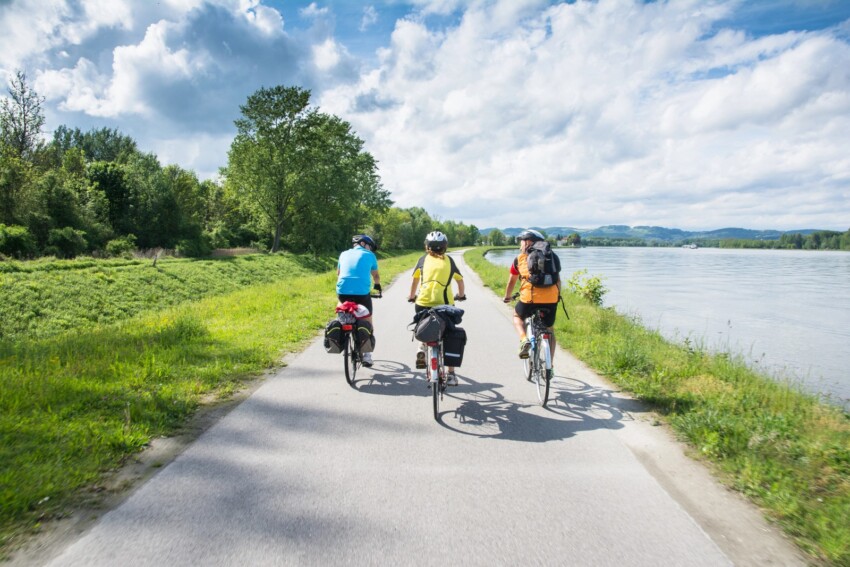
The town of Villach is located along one of Europe’s most attractive cycle paths, the Drau cycle path (in German Drauradweg). This is a cycling route along the Drau River that starts at its source in Toblach in the province of Bolzano and ends in the town of Maribor in Slovenia.
More than 300 km long, the Drava cycle path crosses three countries (Italy, Austria, Slovenia): for cycling enthusiasts it is an experience not to be missed.
You arrive in Villach at the end of the 39 km fourth stage starting in Spittal, a fairly easy and well-marked section. The fifth stage starts in Villach and finishes in Ferlach after 51 km.
If you are not the sporty type, you can admire Carinthia’s beautiful mountain panorama from the comfort of your car: drive along the Villacher Alpenstrasse, one of the five most important mountain roads in Austria.
It is a beautiful 16.5-kilometre mountain road with seven hairpin bends, 116 curves and a maximum height of 1,200 metres, along which you can enjoy breathtakingly beautiful panoramic views of the town of Villach, Villach, the Julian Alps and the Karawanken. The road is open all year round; a ticket must be paid to drive it.
The route starts in the district of Villach-Möltschach and ends in Rosstratte, from where you can admire the Dobratsch peak.
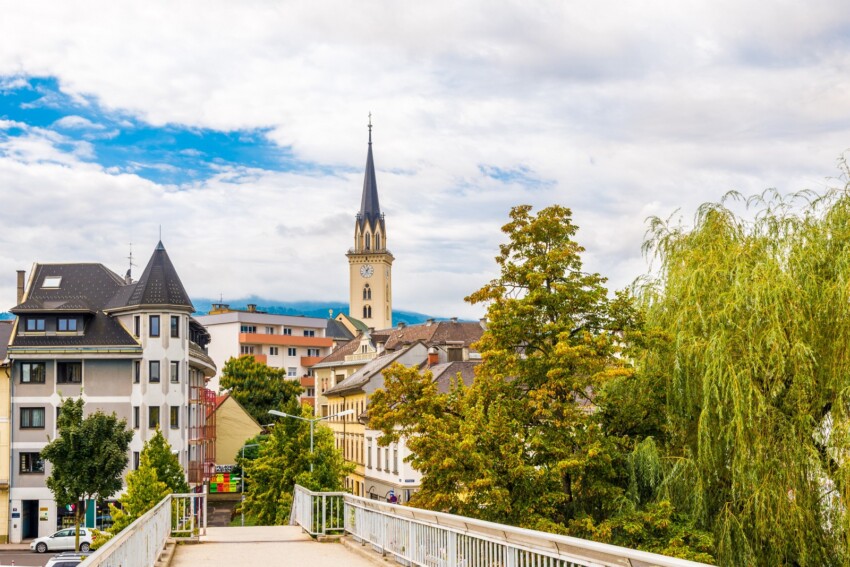
Villach offers a wide range of accommodation options for every type of traveller, from charming establishments in the old town to wellness hotels in the spa areas. The town has a well-established hotel tradition that combines Carinthian hospitality with modern services and high standards of comfort.
The old town is the ideal choice for those who want to be in the heart of the city, with boutique hotels and historic guesthouses that preserve the charm of traditional Austrian architecture. Many of these establishments are housed in lovingly restored period buildings, offering elegant rooms and personalised service within walking distance of the Hauptplatz and the main attractions.
The Warmbad spa area attracts those seeking the ultimate in relaxation and wellness, with resorts and spa hotels offering direct access to the famous KärntenTherme. These facilities often have private wellness centres, heated pools and comprehensive wellness programmes, perfect for a holiday dedicated to physical and mental regeneration.
Villach enjoys an exceptional strategic location, making it easily accessible from all over Europe. The town lies at the crossroads of important communication routes connecting Western Europe with Central and Eastern Europe, benefiting from efficient road and rail connections.
By car, Villach can be reached via the Austrian A2 motorway, which connects it directly to Vienna (280 kilometres), Salzburg (230 kilometres) and Graz (200 kilometres). For those coming from neighbouring countries, the town is about 90 kilometres from Klagenfurt, 150 kilometres from Ljubljana and 180 kilometres from Trieste. It is necessary to purchase the Austrian motorway vignette, which is available online or at petrol stations.
Good news for those who find travelling by train fascinating: rail connections are excellent thanks to Villach’s position as an important junction of the Austrian and European railways. The main station offers direct connections to the major European capitals: Vienna (4 hours), Munich (6 hours), Zurich (7 hours) and Budapest (8 hours). Numerous regional trains also connect Villach with Salzburg and Innsbruck.
What's the weather at Villach? Below are the temperatures and the weather forecast at Villach for the next few days.
Villach is located in the heart of Carinthia, Austria's southernmost region, in the valley of the Drava River, 501 metres above sea level, surrounded by the spectacular peaks of the Carnic and Karawanken Alps.
Villach's strategic location is evident from its proximity to three national borders: it is only 30 kilometres from Slovenia, 50 kilometres from Italy and 90 kilometres from Klagenfurt, the capital of Carinthia.
 Hotel
Hotel  Budget accommodations
  Apartments
  Family Hotel
  Luxury Hotel