Das Seepark Wörthersee Resort
Klagenfurt - Universitätsstraße 104
Book now
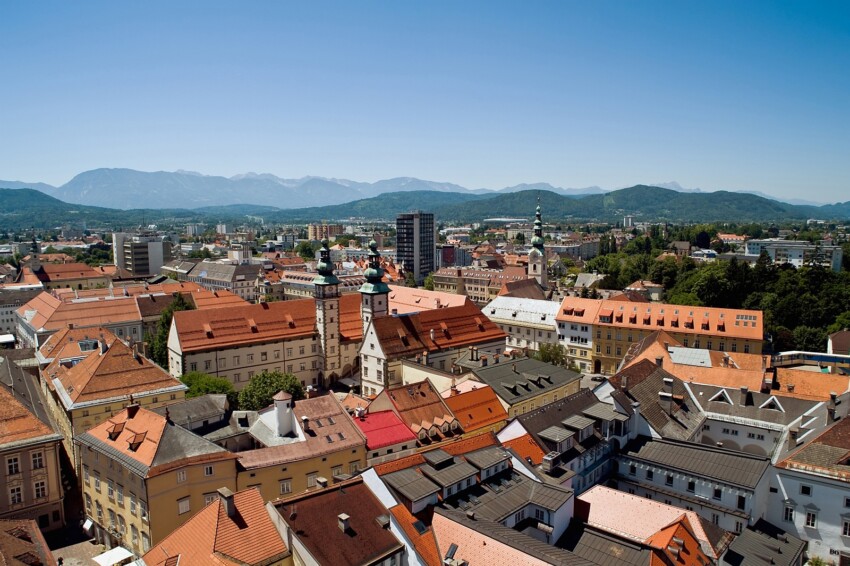
Klagenfurt, the capital of the Carinthia region in southern Austria, could not boast a better location. Lying along the shores of Lake Worthesee, it is only a few kilometres away from the Italian and Slovenian borders and this fortunate position has led to the development of a lively international tourism industry.
It is a perfect town for a weekend away from the stresses of everyday life, with a pretty town centre that, while not boasting any famous attractions, will keep you busy for a day or two.
The theme parks in the area and the opportunity to spend hours relaxing and playing on the beach make it an ideal destination for a family holiday, while couples will appreciate the more romantic views of the lake that has captivated many intellectuals and artists over the centuries, including the composer Johannes Brahms.
We said that Klagenfurt is perfect for a weekend, but no one is stopping you from staying longer!
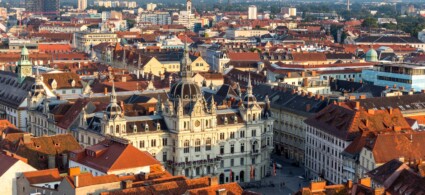
Klagenfurt’s old town reveals itself like an open book on European history, where every palace, every square and every church recounts centuries of art, culture and tradition. Between Renaissance fountains, prestigious museums and architecture ranging from Gothic to Baroque, the city offers an extraordinarily rich artistic heritage.
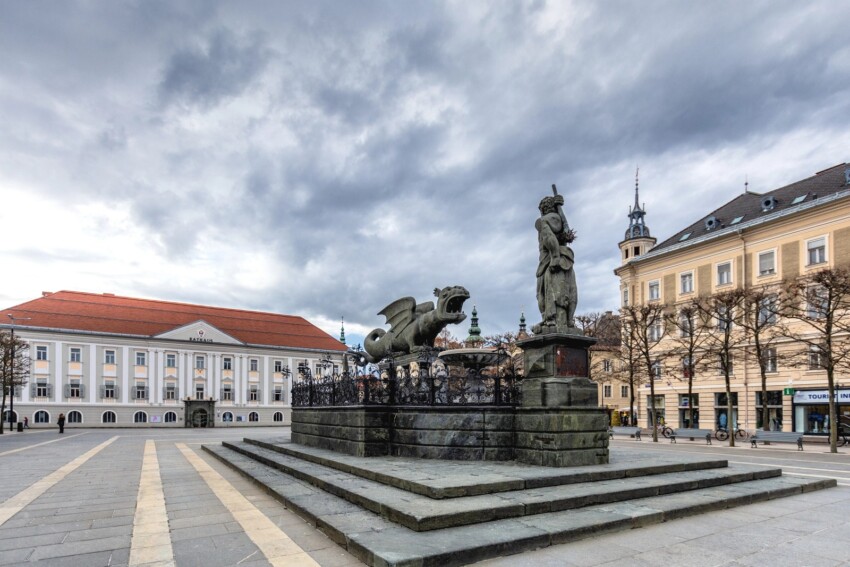
At the heart of Neuer Platz stands the undisputed symbol of Klagenfurt: the Lindwurm Fountain (Lindwurmbrunnen), an extraordinary 16th-century slate sculpture that tells the legend of the founding of the city. Made in 1593, this imposing fountain depicts the winged dragon that, according to tradition, terrorised the marshes where Klagenfurt stands, before being defeated by three brave farmers.
The statue of the Lindwurm, with its two mighty legs and menacing appearance, eternally confronts the figure of Hercules in front of it, creating a dynamic and striking composition. The work, commissioned by the Duke of Carinthia, uses as its model the fossilised skull of a woolly rhinoceros found in the 16th century and now preserved in the Landesmuseum Rudolfinum. The fountain is not only an artistic masterpiece, but also represents the zero point of the city, the place from which all the main streets of the old town radiate.
The area surrounding the fountain was renovated in 2008 according to the design of architect Boris Podrecca, who created a chequerboard pavement that further enhances the monument’s majesty. The square regularly hosts cultural events, seasonal markets and events that enliven the beating heart of Klagenfurt.
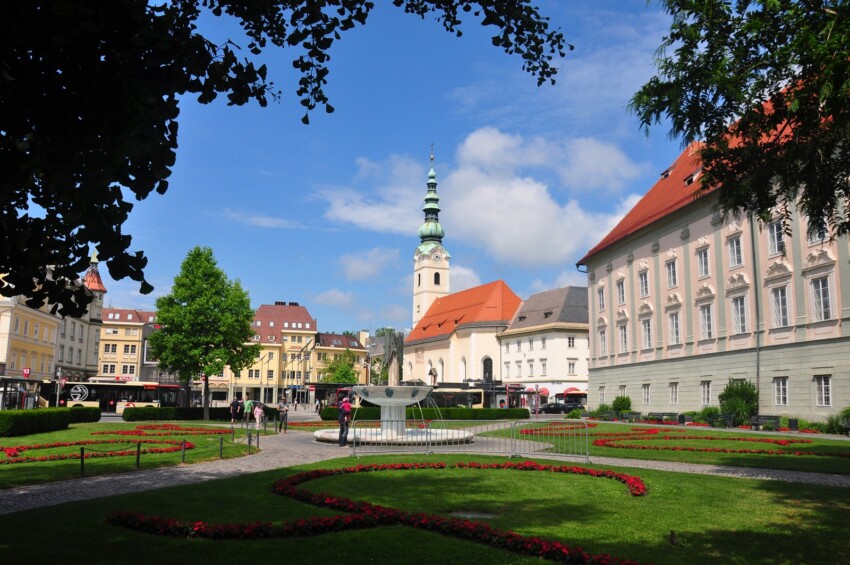
The Landhaus is one of the most outstanding examples of Renaissance architecture in southern Austria. Built between 1574 and 1594 on the site of a former ducal castle with moat, this imposing building impresses with its twin towers with onion domes and the magnificent two-storey arcaded courtyard that bears witness to the influence of Italian architecture of the time.
The jewel of the Landhaus is undoubtedly the Großer Wappensaal (Great Hall of Coats of Arms), built in 1740 after a fire had devastated the building. Josef Ferdinand Fromiller, Carinthia’s most important Baroque painter, created an absolute masterpiece in this room: 665 coats of arms belonging to Carinthia’s aristocratic families cover the entire walls, accompanied by frescoes celebrating the power and influence of the regional noble classes.
Particularly significant is the fresco depicting the investiture of the Duke of Carinthia at the Fürstenstein in Karnburg, a ceremony that marked the political history of the region for centuries. The Fromiller ceiling painting, depicting the states paying homage to Emperor Charles VI (1728), completes a decorative ensemble of rare beauty and historical importance. The Kleine Wappensaal (Small Coat of Arms Room) houses a further 298 coats of arms, making the Landhaus a veritable heraldic archive of the Carinthian aristocracy.
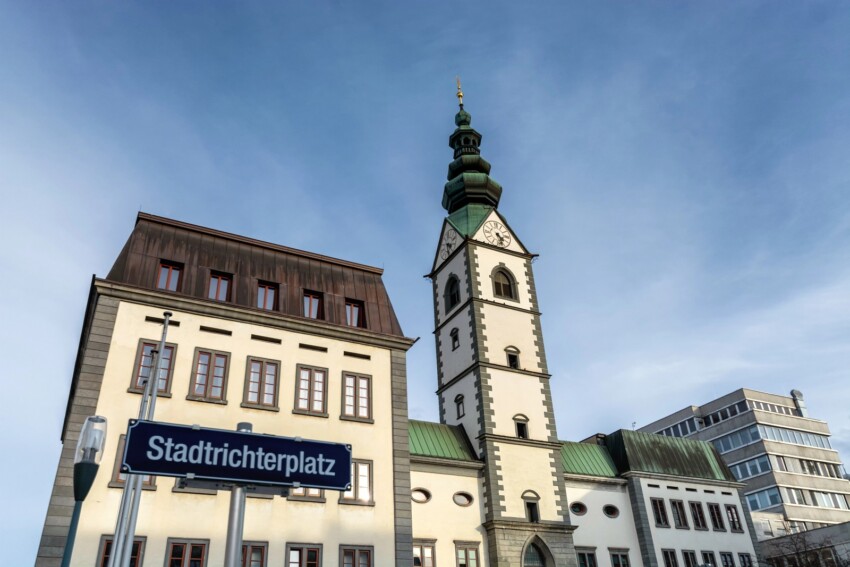
Klagenfurt Cathedral, dedicated to Saints Peter and Paul, stands in the heart of the old town and is one of the most significant examples of religious architecture in the city. Built between 1578 and 1591 as a Protestant church during the Reformation, it became the cathedral of the Prince-Bishop of Gurk in 1787, acquiring the rank of cathedral that it still retains today.
The sober, linear exterior conceals an extraordinarily rich Baroque interior, characterised by three wide galleries that define the space with architectural elegance. The 18th-century stucco decoration, wall and ceiling paintings create a solemn and cosy atmosphere, while the imposing pulpit from 1726 and the 18th-century painting by Daniel Gran on the high altar are the focal points of the sacred furnishings.
The side chapels hold valuable marble details and works of art, while the Gurk Diocesan Museum, housed in the adjacent building, exhibits sacred vestments, religious art and altarpieces of inestimable value. Among the museum’s treasures is the stained glass window of Mary Mag dalene (Magdalenenscheibe) from 1170, considered the oldest stained glass window in Austria and a valuable testimony to medieval glass art.
The Alter Platz forms the oldest core of Klagenfurt and is a fascinating journey through the city’s urban history. This long street, now entirely pedestrianised and considered Austria’s first pedestrian zone (opened in 1961), is surrounded by perfectly preserved historical Baroque buildings that testify to the economic prosperity the city achieved in past centuries.
Among the most significant buildings is the Altes Rathaus (Old Town Hall), a bright yellow 17th century building that dominates the square with its elegant and symmetrical façade. Particularly fascinating is the Haus zur Goldenen Gans (House of the Golden Goose), a splendid historic residence dating back to around 1500, which preserves intact the features of late-Gothic merchant architecture.
The area is enriched by a series of ancient arcades that create evocative, shady spaces, perfect for strolling and discovering the numerous boutiques, art galleries and historic cafés that enliven the centre’s commercial life. The Dreifaltigkeitssäule (Holy Trinity Column), erected in 1680 at the end of a severe plague epidemic, is an important votive monument and historical landmark of the square.
The Stadtpfarrkirche St. Egid (Parish Church of St. Egidius) is one of Klagenfurt’s most outstanding architectural and artistic gems. This 17th-century building dominates the northern end of Alter Platz with its 91-metre-high tower, from the top of which you can enjoy a spectacular panoramic view of the city, Wörthersee and the surrounding mountains. The ascent requires climbing 225 steps, but the effort is amply rewarded by the breathtaking view.
The interior of the church holds valuable artistic treasures, including historical tombstones, a spectacular painted ceiling and a huge mural depicting the life of the patron saint. But the real gem is the FuchsKapelle, a side chapel that is one of the masterpieces of contemporary Austrian art.
Ernst Fuchs, a famous painter of Austrian fantastic realism, dedicated 20 years of his life (from 1988 to 2008) to the creation of this extraordinary cycle of frescoes depicting the Apocalypse of St. John. Covering an area of about 160 square metres between walls and ceilings, Fuchs has created a visionary universe of brilliant colours and maniacal detail, transforming the chapel into a sort of “Sistine Chapel with pop and psychedelic tones”. The work, characterised by three-dimensional scenes and extreme attention to detail, is a unique and deeply involving artistic experience.
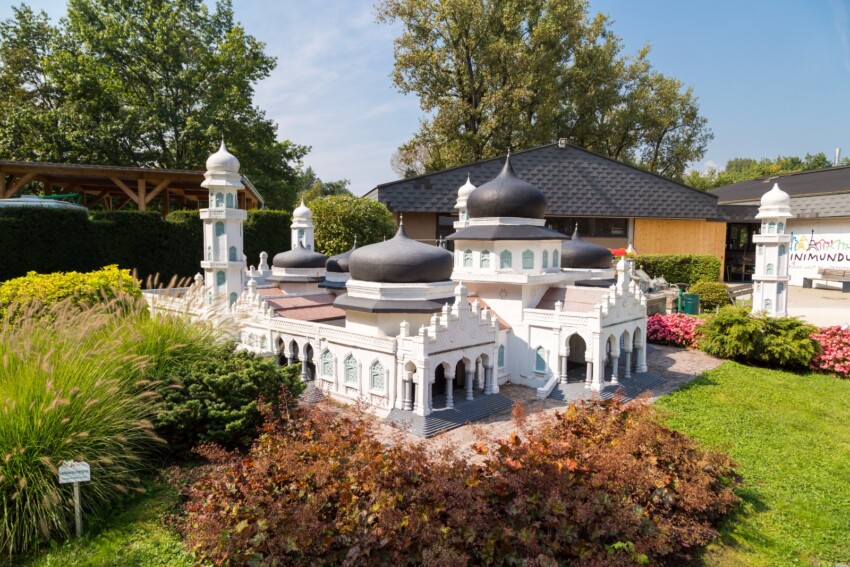
The most visited attraction is Minimundus, a larger-scale version of the classic theme park with famous miniature attractions, which will take you around the world in one day! You can walk alongside 156 of the world’s most famous buildings perfectly reproduced with 1:25 scale models in lava basalt, marble, sandstone and other original materials.
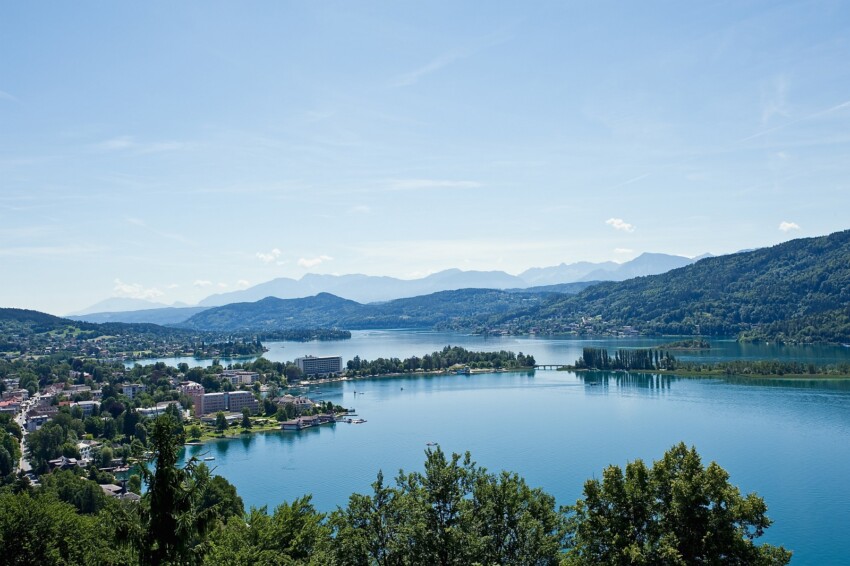
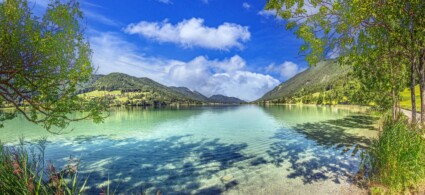
Here is Klagenfurt’s main attraction: the Lake Woerthesee, a blue lake surrounded by greenery, just a few kilometres from the city centre. If you don’t have a car, you can reach it by bus or by bicycle along a cycle path beside the Lendl Canal.
In the past the lake was a source of inspiration for poets and musicians, today it is taken by storm by Austrian families looking for a place in the sun. Its waters are calm and quite warm, which makes it pleasantly swimmable, much to the delight of those who enjoy swimming or boating.
The lake area is equipped with all amenities: you will find bathing establishments that rent deckchairs and umbrellas, piers, bars and restaurants. The busiest beach, but also the one with the most facilities, is Strandbad.
Klagenfurt offers an excellent variety of accommodation that reflects the cosmopolitan and welcoming character of the city. The Carinthian hotel tradition, established through decades of international tourism, guarantees high standards of hospitality and service for every type of traveller.
The old town is the preferred choice for those who wish to experience the authentic atmosphere of the Renaissance city. Boutique hotels and historic guesthouses are often housed in carefully renovated period buildings, where the elegance of traditional architecture blends with modern comforts and personalised services. The proximity to Neuer Platz, Alter Platz and the main cultural attractions makes this area ideal for exploring Klagenfurt on foot.
The Wörthersee area attracts lovers of relaxation and water sports, with resorts and spa hotels offering direct access to the lakeshore and bathing facilities. Many of these facilities have private wellness centres, panoramic swimming pools and water activity programmes, perfect for a holiday of wellness and physical regeneration.
By car, Klagenfurt can be reached via the Austrian A2 motorway, which connects it directly to Vienna (320 kilometres, 3 hours), Salzburg (280 kilometres, 2 hours 45 minutes) and Graz (200 kilometres, 2 hours). For those coming from neighbouring countries, the city is about 150 kilometres from Ljubljana, 180 kilometres from Trieste and 90 kilometres from Villach.
Rail connections are excellent thanks to Klagenfurt’s position as an important junction of the Austrian and European railways. The main station offers direct connections to the major capitals: Vienna (4 hours), Munich (6 hours), Zurich (7 hours) and Budapest (8 hours). Regional services connect Klagenfurt with Villach (1 hour), Salzburg (3 hours) and Innsbruck (5 hours).
Klagenfurt Airport (IATA: KLU) is 4 kilometres from the city centre and offers connections to several European destinations, mainly during the summer season. Bus connections every 30 minutes ensure a quick transfer to the city centre.
What's the weather at Klagenfurt? Below are the temperatures and the weather forecast at Klagenfurt for the next few days.
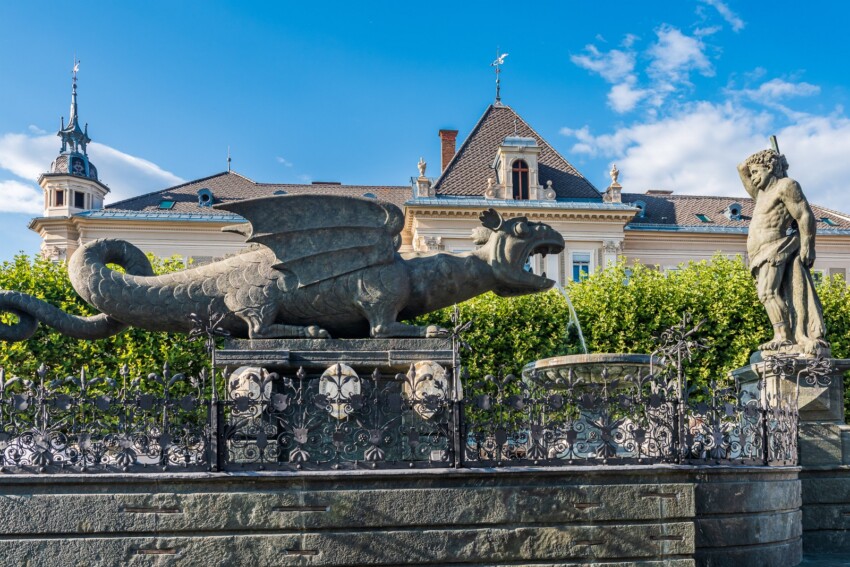
The original core of Klagenfurt stood on marshy ground where, according to legend, a dragon lived and terrorised the local farmers. Tired of the terror in their land, three boys decided to confront the dragon using a lamb as bait. They succeeded in killing it and received as a gift a castle of which only a tower remains today… in the town’s coat of arms.
Klagenfurt is located in the heart of Carinthia, Austria's southernmost region, in a geographical position that makes it a natural meeting point of Germanic, Romanic and Slavic cultures. The city lies in the Lendkanal valley, 446 metres above sea level, on the eastern shores of the magnificent Wörthersee lake.
Its strategic location is underlined by its proximity to three national borders: it is 80 kilometres from Slovenia, 150 kilometres from Italy and 280 kilometres from Vienna.
 Hotel
Hotel  Budget accommodations
  Apartments
  Family Hotel
  Luxury Hotel