Das Seepark Wörthersee Resort
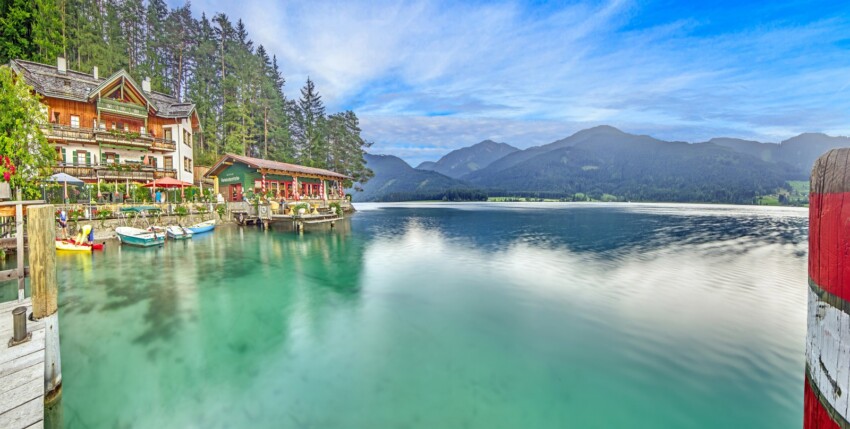
Carinthia, or Kärnten in German, is a region waiting to be discovered. Halfway between Italy and Slovenia, it tries to take the best things from both countries, often succeeding. From its capital Klagenfurt to the beautiful spa town of Villach, from the high, steep gorges to Austria’s highest mountain, the Großglockner, visiting Carinthia you will find everything you are looking for from an active mountain holiday.
Don’t underestimate the beauty of the Nockberge mountains, declared a UNESCO biosphere park, with their placid, rounded, grass-covered appearance, which can be reached on foot or by bike along pleasant trails. To get there, you will follow the 34-kilometre-long Nockalmstraße alpine road through a huge forest of spruce and larch. Speaking of alpine roads, two hours from Klagenfurt is the Großglockner alpine road, Austria’s most famous road.
Carinthia is also a land of museums: don’t miss the MMKK, the region’s museum of modern art, located in Klagenfurt Castle. But also worth a visit are the Liaunig Museum, located in Neuhaus, and the Notsch Museum, where you can admire the main works of the painters of this region. And what about the abbeys, such as those in Millstatt, Ossiach and S. Paul im Lavanttal, or the fortified castles typical of the region, such as those in Hochosterwitz, Landskron and Porcia, the latter being recognised as one of the most important Renaissance buildings north of the Alps.
Carinthia is the southernmost state in Austria. It has an elongated shape, with 180 kilometres in an east-west direction and 70 kilometres in a north-south direction.
The international borders, with Italy in the south-west and Slovenia in the south-east, are marked by mountains, the Carnic and Karawanken Alps respectively. Other mountains separate Carinthia from the Austrian regions, in particular the Hohe Tauern with Salzburg in the north-west, and the Packsattel pass with Styria in the north-east.
The capital of Carinthia is Klagenfurt am Wörthersee, with about 100,000 inhabitants, while the second most important city in the region is Villach, with about 60,000 inhabitants. Despite the existence of numerous microclimates, due to the heights, valleys and reliefs, Carinthia’s sunshine hours are the highest of all Austrian regions.
Mountains, lakes, unspoilt nature, but also dynamic and trendy cities full of art and culture. In Carinthia you can find all this and much more. Here are the most beautiful things to see in the region, so that you don’t miss a single one and enjoy your holiday to the fullest.
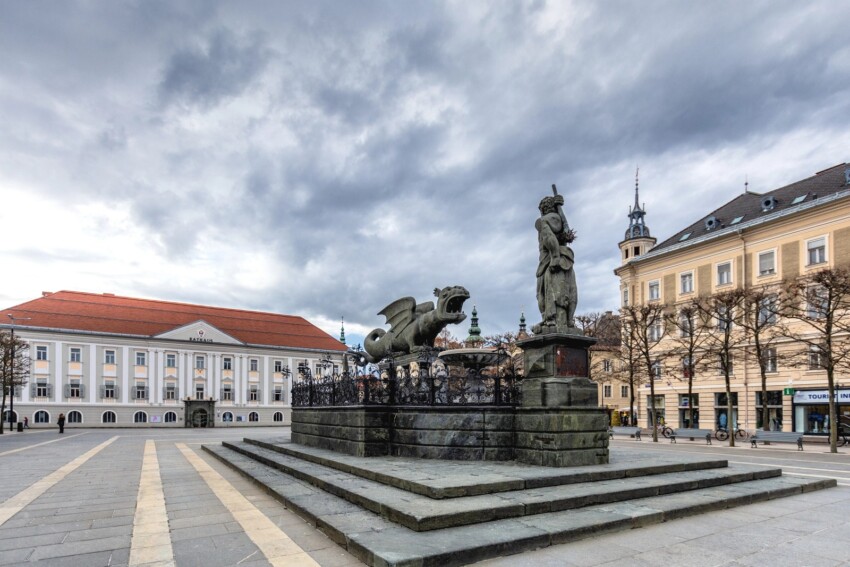
Klagenfurt am Wörthersee, for everyone simply Klagenfurt, is the capital of Carinthia and a must-see for all visitors. It is impossible not to be captivated from the first glance, thanks to the many sights, starting with the old town, which revolves around the Alter Platz, its main square, and the numerous Italian-inspired Renaissance and Art Nouveau buildings.
Then visit the Landhauspark, where you will find the Der Gesang fountain, the work of Kiki Kogelnik, the world-famous pop-art artist. If you want to explore further, head to the MMKK, Carinthia’s museum of modern art, one of the most important collections of its kind in Austria. Finally, for a relaxing day in the fresh air, don’t miss Klagenfurt’s Wörthersee, the warmest alpine lake in the world and home to Europe’s largest non-marine beach, frequented by more than 10,000 people every summer day.
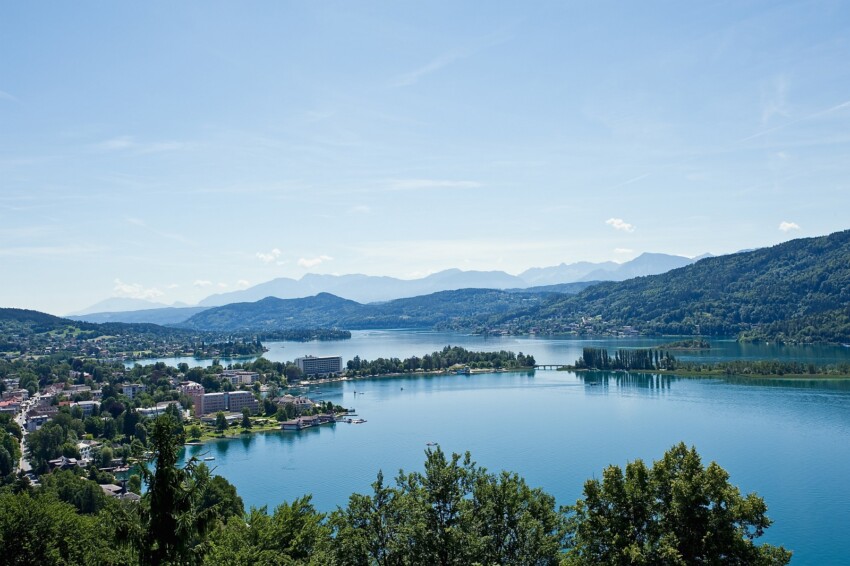
The Wörthersee, 19.4 kilometres long and up to 1.8 kilometres wide, is the most famous lake in Carinthia and one of the most exclusive bathing destinations in Austria. Its turquoise waters reach temperatures of 28 °C in summer due to its sheltered location and southern exposure, attracting international tourists since the Belle Époque when the Austro-Hungarian aristocracy built sumptuous Art Nouveau villas here, which today characterise the shores of the lake.
Velden am Wörthersee, nicknamed the ‘Austrian Monte Carlo’, is famous for its casino and for hosting the filming of the TV series ‘Ein Schloss am Wörthersee’ in the 1990s. The Grand Hotel Schloss Velden, built in 1590 and converted into a luxury hotel, dominates the town with its Italian-style gardens and historic ballrooms. The Pyramidenkogel, a 100-metre-high wooden viewing tower opened in 2013, offers a spectacular 360-degree view of the entire lake and the Carinthian Alps, with a lift reaching the viewing platform in just 30 seconds.
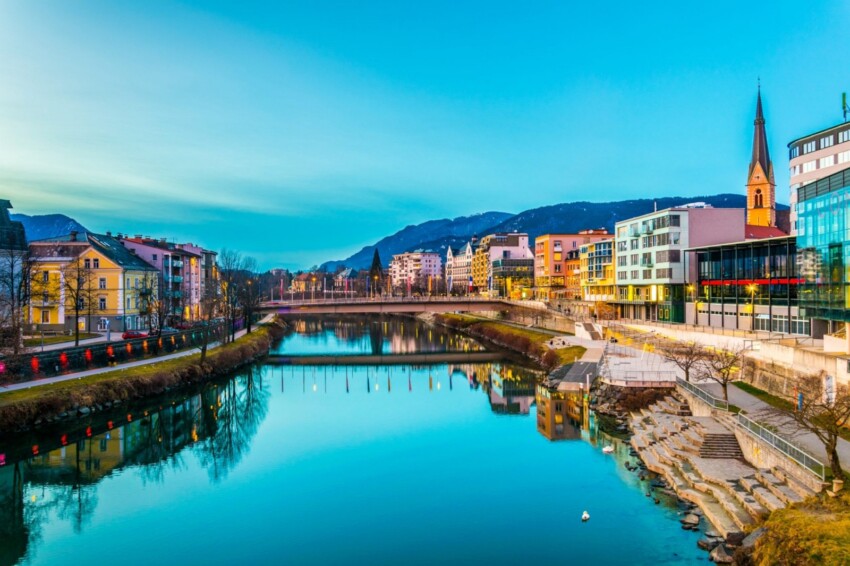
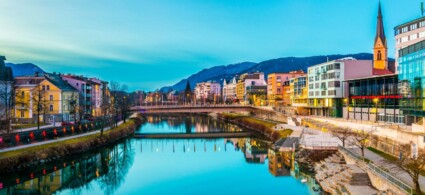
Villach is the second largest city in Carinthia, but retains the unique charm of an Alpine village. It is located on the Drau River, which runs through its centre, and is a lively spa town crossed by a major cycling route, the Drau cycle path, making it an ideal destination for an outdoor holiday.
Visit the beautiful Landskron Castle in the surrounding area, and the Warmbad Villach area, with the Karnten Therme and the Thermal Urquellenbad swimming pool. Finally, if you can, come to Villach during the carnival, a veritable explosion of colours, or during the Villacher Kirchtag, the largest folklore event in Austria.
The Millstätter See, Carinthia’s second largest lake with a length of 11.5 kilometres and a maximum depth of 141 metres, is one of the region’s most unspoilt natural gems, surrounded by mountains of over 2,000 metres and fir and beech forests reflected in the crystal-clear water. The quality of the lake’s drinking water is so high that it is used directly for the water supply of local communities without the need for treatment.
Millstatt Abbey, founded in 1070 by the Benedictines, is one of the most important Romanesque monastic complexes in Austria with its 12th-century cloister decorated with carved capitals depicting biblical and mythological scenes. The monastic library holds more than 30,000 ancient volumes including illuminated medieval manuscripts, while the abbey church hosts the Millstatt International Concerts every summer, a classical music festival that attracts world-renowned performers. The Abbey Museum documents a thousand years of monastic history through sacred art, liturgical vestments and a unique collection of Romanesque reliquaries.
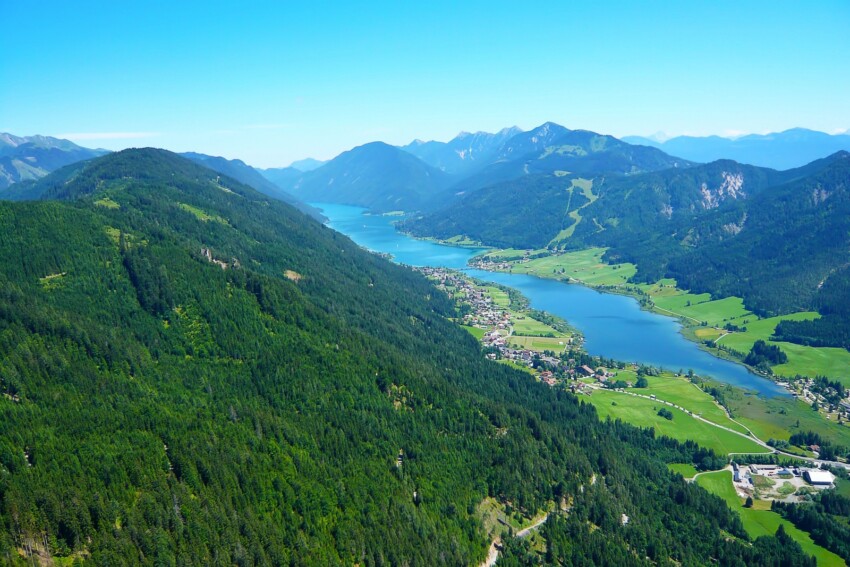
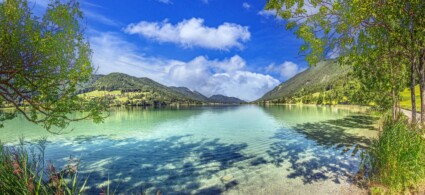
The Weissensee, situated at an altitude of 930 metres in the Carnic Alps, is Carinthia’s highest and most pristine natural lake, 11.6 kilometres long and up to 99 metres deep, surrounded by mountains reaching up to 2,300 metres in height. The particularity of this lake lies in the fact that only one third of its shores are accessible and inhabitable, while the rest remains completely wild and protected, guaranteeing a practically virgin lake ecosystem.
During the winter, the Weissensee transforms into one of Europe’s largest natural ice rinks with an ice surface of more than 6.2 square kilometres, hosting the Alternative Weissensee Saison each year, a series of ice sports events including skating marathons, ice hockey and even outdoor concerts. The quality of the natural ice, which reaches thicknesses of 40-50 centimetres, is so perfect that it attracts professional skaters from all over Europe for training and competitions. In summer, the lake offers crystal-clear water for swimming and diving, with visibility underwater of up to 10 metres.
Gurk, a small town of 1,300 inhabitants in the valley of the same name, houses one of the most precious treasures of European Romanesque art: the Gurk Cathedral, consecrated in 1200 and considered the most important Romanesque religious building in Austria. This architectural masterpiece, built at the behest of Blessed Emma of Gurk in the 11th century, features a 44-metre-high twin-towered façade and an interior decorated with Romanesque and Gothic frescoes covering more than 1,000 square metres.
The cathedral crypt, supported by 100 columns with carved capitals all different from each other, holds the sarcophagus of Blessed Emma and is one of the purest examples of 11th century Romanesque architecture. The Baroque high altar, the work of Michael Hönel from 1740, houses the Gurk treasury with medieval sacred vestments, gold reliquaries and the famous 12th-century Gurk chalice decorated with cloisonné enamels. The Diocesan Museum exhibits one of the richest collections of medieval sacred art in Austria, while the bishop’s palace adjacent to the cathedral houses historic frescoed rooms and a library with illuminated manuscripts from the 13th-15th centuries.
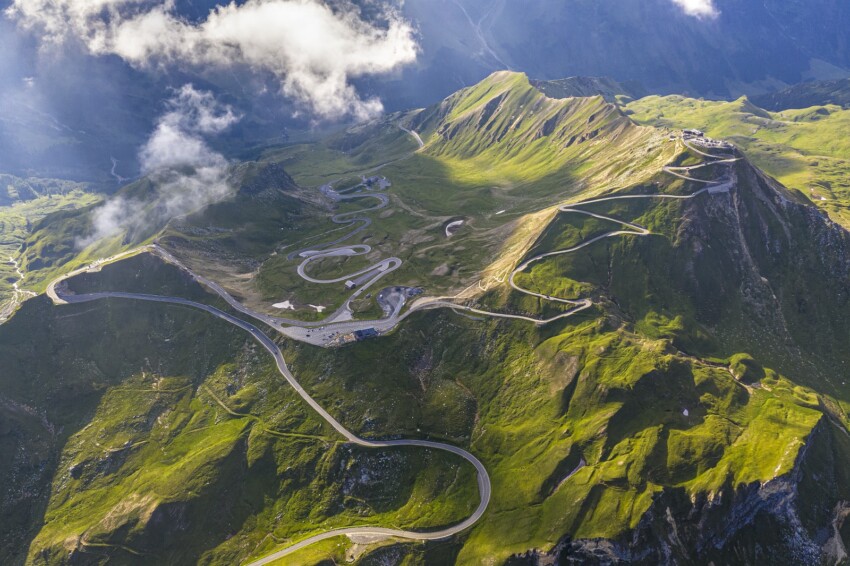
The Carinthian portion of the Hohe Tauern National Park, which covers 1,856 square kilometres between Austria, South Tyrol and Salzburg, contains some of Europe’s most spectacular Alpine landscapes with 342 peaks over 3,000 metres and more than 550 glaciers. The Grossglockner (3,798 m), the highest mountain in Austria, dominates this wilderness along with the 8.4-kilometre-long Pasterze glacier, the largest in the eastern Alps.
The Grossglockner High Alpine Road (Grossglockner Hochalpenstraße), one of the most spectacular panoramic roads in the world, winds 48 kilometres through the park, reaching the 2,504-metre Edelweiss Pass and offering 36 well-equipped viewpoints. The Mallnitz Visitor Centre documents the park’s biodiversity through interactive exhibitions on alpine fauna, which includes 15,000 animal species including ibexes, chamois, golden eagles and the endemic alpine salamander. The park’s nature trails, covering over 4,000 kilometres, offer excursions for all levels from family walks to high-altitude alpine treks, always accompanied by educational signposts illustrating Alpine geology, flora and fauna.
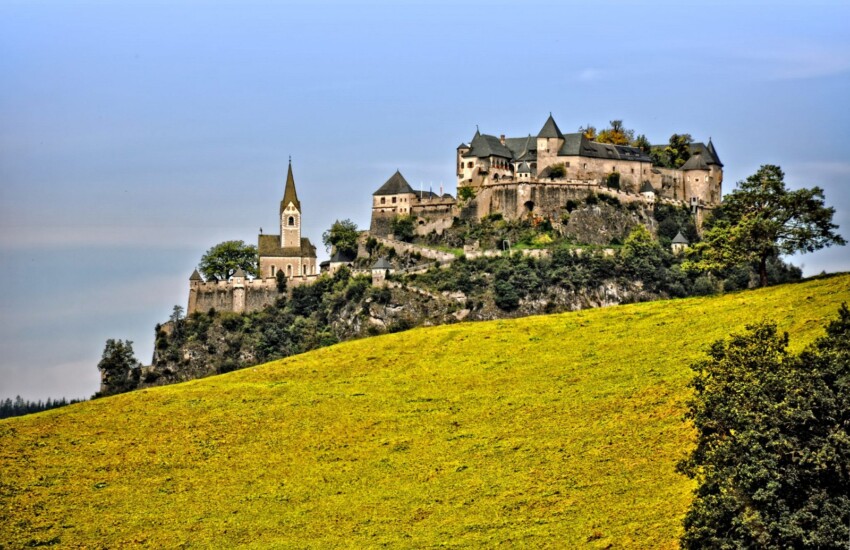
Among the most representative medieval castles in Austria, Hochosterwitz Castle is certainly one of the most interesting things to see in Carinthia. It is located on a rocky outcrop near the town of Sankt Georgen am Längsee, and was built in the year 860 by the Osterwitz family.
After the last major renovation in the 16th century, Hochosterwitz Castle has kept more or less the same appearance. Some areas are open to tourists during the summer season from Easter to the end of October: in particular, it is possible to walk the 620-metre walkway through the 14 gates, and to visit some rooms housing collections of prehistoric objects, paintings, weapons and armour.
Friesach, with its 5,200 inhabitants, boasts the title of the oldest town in Carinthia (attested since 860 A.D.) and is the best-preserved example of a medieval settlement in southern Austria, with the old town centre surrounded by almost completely intact 12th-century city walls for a perimeter of 1.8 kilometres. The town retains its original medieval urban layout with the Hauptplatz surrounded by Gothic and Renaissance houses, many of which retain their characteristic arched arcades and medieval inner courtyards.
Petersberg Castle, built by the Salzburg bishops in the 12th century on a hill overlooking the city, houses the City Museum with archaeological collections, sacred art and reconstructions of medieval life. The 12th-century Romanesque parish church preserves Gothic frescoes and a precious carved wooden altar, while the Dominican women’s convent founded in 1217 maintains thousand-year-old monastic traditions. The experimental archaeology project in Friesach is reconstructing a medieval castle using only techniques and tools of the time, offering visitors the unique opportunity to witness the creation of a medieval fortress using authentic 13th century methods.
Bad Kleinkirchheim, an elegant spa and ski resort located at an altitude of 1,100 metres in the heart of the Nockberge Mountains, is one of the most renowned wellness destinations in the Eastern Alps, famous for its thermal waters that gush out at 36 °C from natural springs rich in healing minerals discovered in 1834. The modern Therme Römerbad and Therme St. Kathrein offer panoramic thermal pools with mountain views, Alpine saunas and innovative wellness treatments combining Alpine traditions and modern technology.
During the winter, Bad Kleinkirchheim transforms itself into an internationally renowned ski resort with 103 kilometres of slopes served by 25 lifts, regularly hosting Alpine Ski World Cup competitions on the legendary Kärnten slope, one of the most technical slopes on the women’s circuit. The resort is also a starting point for hikes in the Nockberge Biosphere Park, which is recognised by UNESCO for its gentle glacier-modelled landscapes and rich biodiversity that includes more than 2,000 plant species. The Nockalm-Straße, a scenic road that runs through the park for 35 kilometres, offers 52 curves and 8 vantage points with views of the Carinthian Alps and lakes in the region.
In the following map you can see the location of the main places of interest mentioned in this article.
Carinthia is at its best from May to September for lake and mountain activities, while winter is ideal for snow sports and spas. The bathing lakes reach their best temperatures from June to August, while the autumn foliage of September-October offers spectacular scenery. Car hire is particularly recommended for exploring the many lakes and reaching the mountain resorts, considering the distances between the main attractions.
For a complete stay, check out our guide to where to stay in Austria to choose from lake hotels, mountain huts and thermal spas. To reach Carinthia: Klagenfurt Airport offers direct connections to major European cities, while the A2 motorway connects the region to Vienna in 4 hours through spectacular Alpine landscapes.
 Hotel
Hotel  Budget accommodations
  Apartments
  Family Hotel
  Luxury Hotel