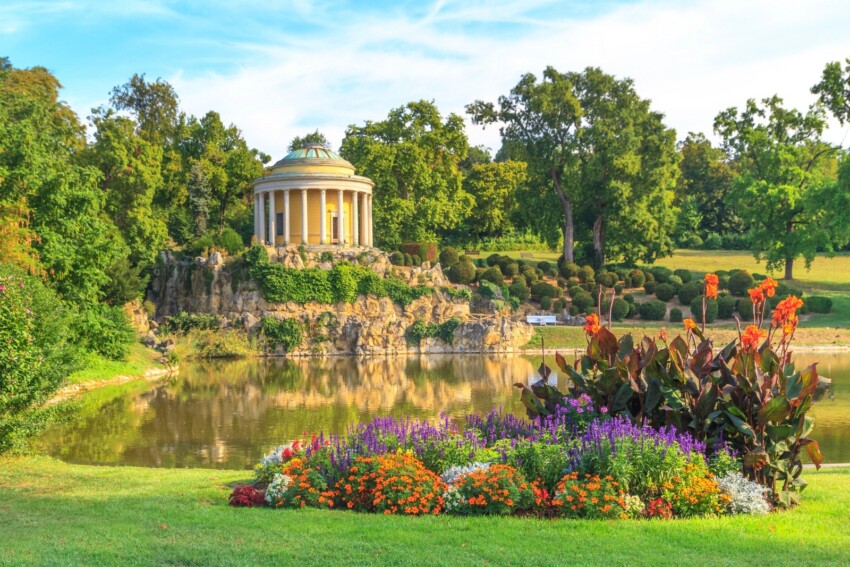
Between plains, hills, rivers and a marshy lake, Burgenland seems light years away from Austria ‘s typical scenery of snow-capped peaks and Alpine valleys. But a visit to this region on the border with Hungary, to which it is very close both scenically and culturally, will reveal a wide range of sights, including splendid castles, sumptuous palaces and, of course, a series of medieval villages and fortresses: Burgenland in fact translates as ‘land of fortresses’.
Its compact size makes it possible to visit the whole of Burgenland in just a few days. The castles include Gussing, dating back to 1157, Lockenhaus, the abandoned fortress of Landsee and, above all, Forchtenstein. A visit to the main town of Eisenstadt, with its beautiful Esterházy Palace , where the composer Joseph Haydn lived for a long time, is also worthwhile. Two open-air museums are worth mentioning: Gerersdorf and Bad Tatzmannsdorf, where you can admire the typical farmhouses of the past.
Finally, nature deserves a special mention. Burgenland represents the western border of the Pannonian plain, with which it shares the flat landscape. But it is well worth exploring the wine-growing area and stopping to taste wine in the numerous wine cellars, and then setting off to Lake Neusiedler, a UNESCO World Heritage Site since 2001, at the centre of a perfect ecosystem for migratory birds.
For those wishing to explore other Austrian destinations as well, Burgenland is conveniently located only 50 kilometres away from Vienna, while to the south there is easy access to Styria and its alpine attractions, creating tourist itineraries that combine nature, culture and gastronomy in an area that is small in size but rich in infinite riches.
Burgenland is a narrow strip of land that runs along the entire border between Austria and Hungary, representing, in fact, the easternmost region of the country. At the northern end it borders Slovakia for a few kilometres, at the southern end for a few kilometres with Slovenia.
In the east, Burgenland borders two Austrian provinces, Lower Austria and Styria. The region is newly established, so much so that in the time of the Austro-Hungarian Empire it belonged to the Hungarian crown.
Geographically, the similarities withHungary are not lacking either. In the northern part there is a large plain and the marshy lake Neusiedler, while the mountains are few and not very high: the highest elevation is the Geschriebenstein, at only 884 metres.
The small Burgenland hides within it a number of really interesting sights, including nature, palaces and towns. Here are the best ones, so you don’t miss a single one.
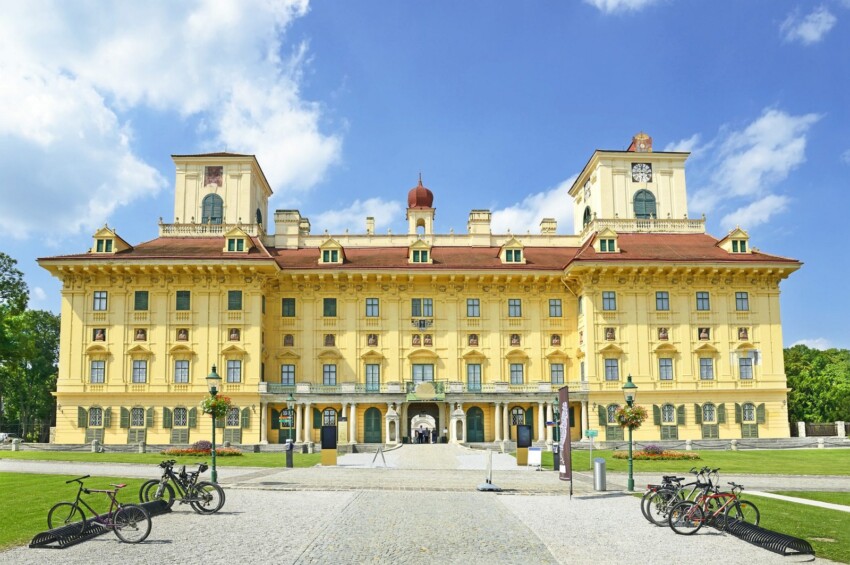
Pretty Eisenstadt is the capital of Burgenland, and with its 14,000 inhabitants it is also its most populous town. It is very pleasant to visit, with its beautiful late-Gothic cathedral, Jewish quarter and a number of interesting civic buildings and museums. Also visit the Bergkirche, inside which is the tomb of composer Joseph Haydn, who lived part of his life here.
But the main attraction in Eisenstadt is the Esterházy Palace, dating back to the late 13th century and converted into a Baroque castle at the turn of the 18th century. It is a magnificent residence with a huge garden surrounding it, and during the tour you can enter several rooms, in which antique furniture and various works of art are on display. The highlight of the Esterházy Palace tour is the Haydnsaal, a large, beautifully frescoed concert hall, dedicated to the composer Joseph Haydn, who worked for more than 40 years in the service of the Esterházy family, who owned the palace.
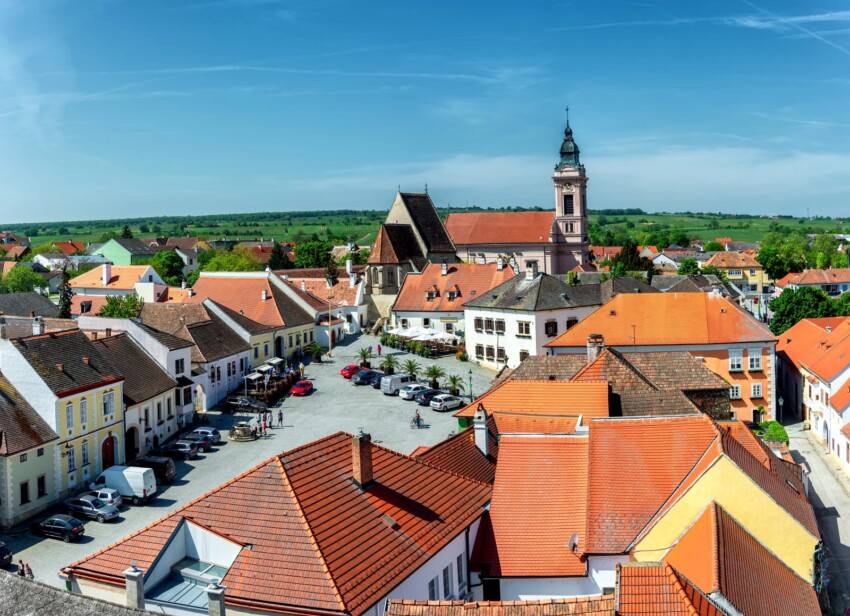
Rust, with its 1,900 inhabitants, holds the record of being the only Free City in Burgenland, a status confirmed by Emperor Ferdinand II in 1681 and still maintained today as an administrative curiosity. This picturesque town on the shores of Lake Neusiedl is world-famous for the production of Ruster Ausbruch, a sweet wine of international prestige made from grapes affected by noble rot (Botrytis cinerea), which concentrates the grape’s natural sugars.
The historic centre of Rust is characterised by typical colourful houses with arched arcades and inner courtyards, many of which house historic wine cellars (Heuriger) where local wines can be tasted accompanied by regional gastronomic specialities. The 14th-century Gothic parish church houses a valuable wooden altar, while over 40 pairs of white storks nest on the roofs and chimneys of the town, a symbol of Rust and a nature attraction that attracts thousands of visitors every year. The Wine Museum documents the region’s thousand-year-old winemaking tradition through ancient tools, historic barrels and guided tastings in underground cellars carved into the tuff.
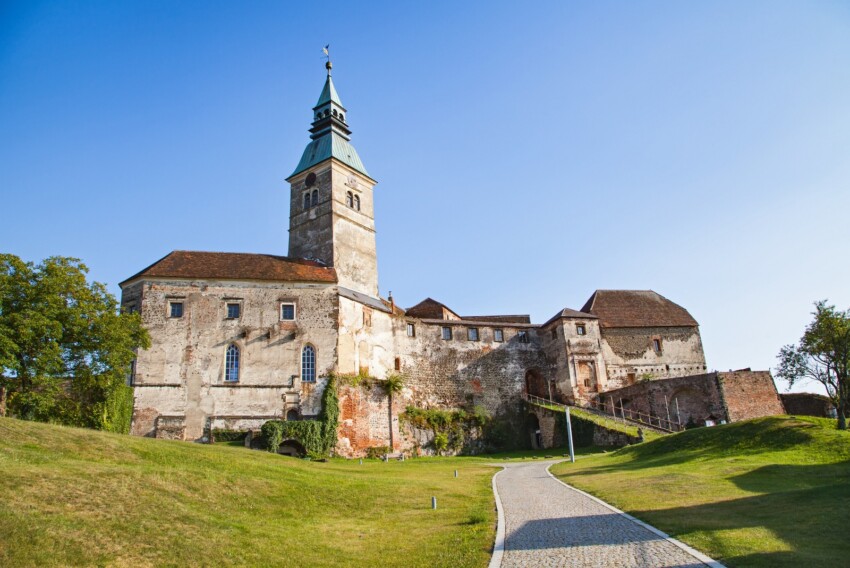
Güssing is the oldest castle in Burgenland, dating back to 1157. Over the centuries it was expanded several times, and in the 17th century it became a walled fortress. Situated on the top of a hill, it can also be reached by a modern funicular railway, which reaches the top in just two minutes.
Inside Gussing Castle is an exhibition displaying over 5,000 magnificent art treasures in 20 exhibition rooms. A lot of space is given to the Batthyány family, the historical owners of the castle: you can admire porcelain plates and trays, Baroque art collections and a large section devoted to sacred art, which the Batthyàny loved to surround themselves with. Also noteworthy is the collection of iron objects, the largest of its kind in Austria with over 800 exhibits.
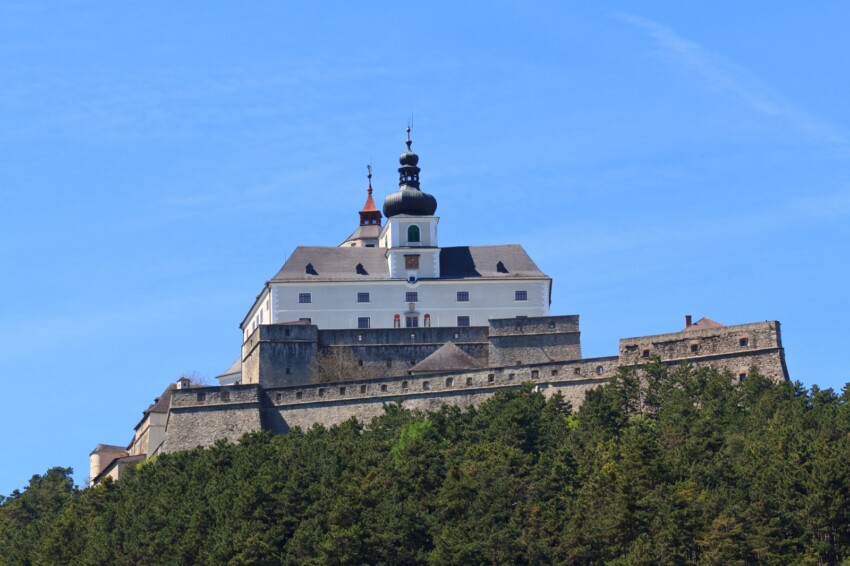
At the foot of the Rosaliengebirge mountain range stands Forchtenstein Castle, one of the most beautiful in the whole of Burgenland. It can boast being the only fortress in the region that was never conquered during the wars against the Ottoman Turks. For this reason, the castle was the ‘treasure room‘ of the Esterházy family, in which all the family’s valuables were secured.
Even today, the highlight of the Forchtenstein castle are the collections and treasures of the rich family. Not to be missed is the Arms Hall, one of the largest private collections of rifles, pistols and armaments in Europe, which bears witness to the military tradition of the family, a loyal ally of the Habsburgs. Also not to be missed are the Treasury Room and the ‘Ancestor’s Gallery‘, in which a rich series of Baroque portraits from the 17th century can be admired.
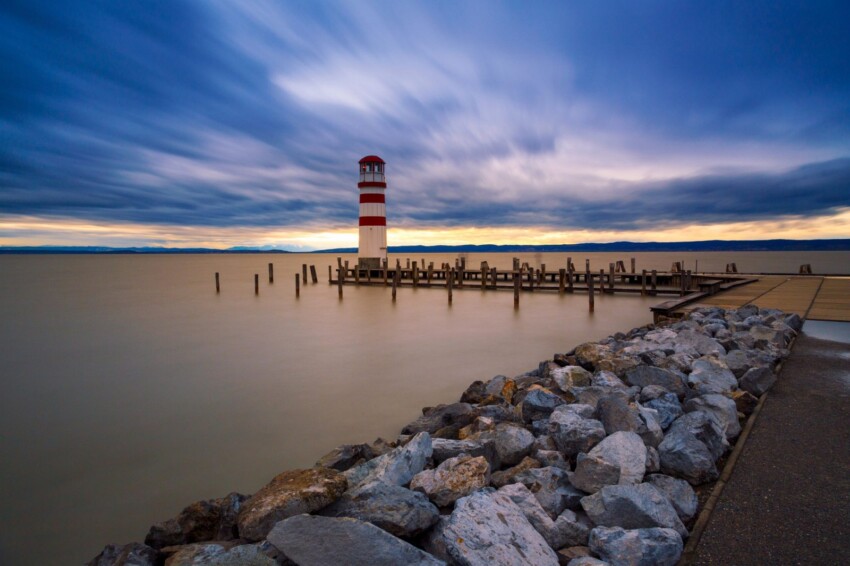
Lake Neusiedler is one of the most interesting nature destinations in Burgenland and beyond. A UNESCO World Heritage Site since 2001, this large body of marshy water lies within the Neusiedler See – Seewinkel National Park, established in 1993. Unique flora and fauna can be admired here: reed beds, brackish ponds and small beaches provide habitats for migratory birds and large mammals.
The lake is located on the Hungarian border and has an area of 380 square kilometres, 180 of which are reed beds. It is 36 kilometres long and 14 kilometres wide; its maximum depth is only 1.8 metres. It is possible to take part in guided tours and excursions of about three hours, which take place at fixed dates and times, walking along safe paths that start from the information centre, which can also be accessed to visit temporary exhibitions or video installations.
Bad Tatzmannsdorf is the main thermal spa in southern Burgenland, famous for its healing waters rich in carbon dioxide, iron and minerals that flow from natural springs at a constant temperature of 38°C. This elegant wellness centre, nestled in the green hills of Burgenland, was officially recognised as a spa resort in 1977 and attracts thousands of guests every year for specialised cures and treatments.
Terme AVITA offers a modern complex with indoor and outdoor thermal pools, Finnish saunas, steam baths and an extensive wellness area with Ayurvedic treatments and innovative therapies. The 35-hectare thermal park includes fitness trails, relaxation areas and a therapeutic pond for natural outdoor cures. The resort is particularly renowned for rehabilitative cardiology treatments and cures for circulatory disorders, thanks to the beneficial properties of the carbonic waters that stimulate blood circulation and have positive effects on the cardiovascular system.
The small village of Lockenhaus, with a population of 1,200, is dominated by the 13th century medieval castle of the same name, which hosts the prestigious International Chamber Music Festival every summer, founded in 1981 by violinist Gidon Kremer. This top-class musical event attracts world-class performers who perform in the evocative setting of the castle’s historic halls, creating a unique atmosphere that blends art and history.
Lockenhaus Castle, which belonged to the Order of the Templars in the 14th century, preserves intact the medieval structures with its Gothic chapel, ballroom and knightly lodgings. The castle also houses a Lipizzaner stud farm and offers riding courses and equestrian shows that perpetuate the ancient knightly traditions of the region. The castle’s dungeons conceal Templar legends and house a collection of medieval torture instruments, while the romantic park surrounding the fortress offers nature trails among centuries-old oak trees and Italian gardens restored according to the original 18th-century design.
In the following map you can see the location of the main places of interest mentioned in this article.
Burgenland is ideally visited from April to October to make the most of outdoor activities at Lake Neusiedl and in the nature areas. The summer months are perfect for birdwatching in the Seewinkel, while September and October offer the opportunity to participate in grape harvests in the local vineyards. Car hire is recommended for convenient exploration of small towns and rural areas, as public transport has limited frequencies.
For a complete stay, check out our guide to where to stay in Austria for accommodation ranging from wine farms to spa hotels. From Vienna, Burgenland is easily accessible by car in less than an hour via the A4 motorway.
 Hotel
Hotel  Budget accommodations
  Apartments
  Family Hotel
  Luxury Hotel