Only 60 kilometres separate Bratislava from Vienna, the two closest European capitals excluding Rome and the Vatican City. So much so that Bratislava is a perfect destination for a day trip from Vienna, to visit another city with different customs and to immerse oneself in a completely different reality.
Slovakia‘s beautiful capital also lies on the banks of the Danube, and as the crow flies it is only 5 kilometres from the Austrian border. It has a population of about half a million, which compared to Vienna’s more than 2 million inhabitants makes it look more than it actually is. It is a city on a human scale, with a compact but very pleasant historic centre to visit, low prices and excellent food. A perfect combination you absolutely must try!
Bratislava’s perfectly preserved and almost entirely pedestrianised medieval old town tells over a thousand years of history through its Gothic, Baroque and Art Nouveau architecture. The city has retained the charm of former Pressburg, when it was the capital of the Kingdom of Hungary and an important centre of power of the Austro-Hungarian Empire.
Bratislava Castle, dominating the city from its four white towers, and the Blue Church of St Elizabeth, a masterpiece of European Art Nouveau, are just some of the wonders awaiting visitors.
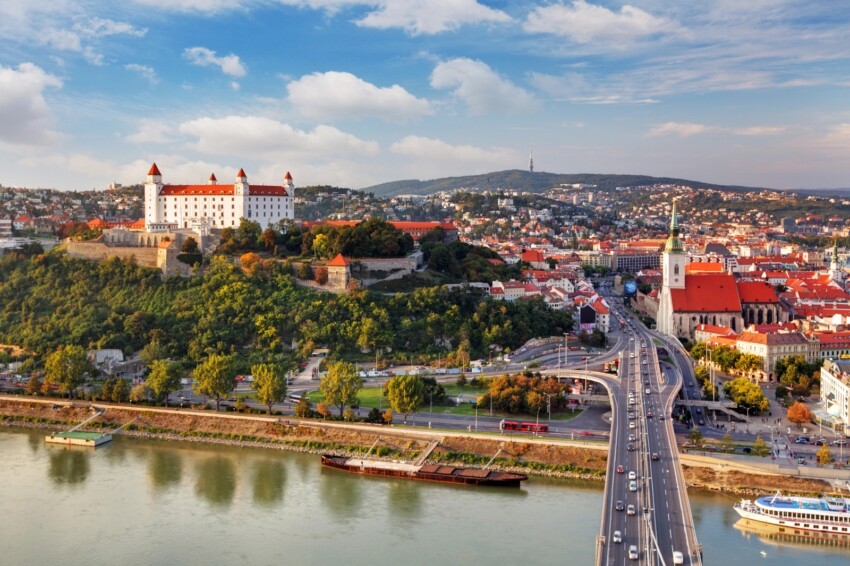
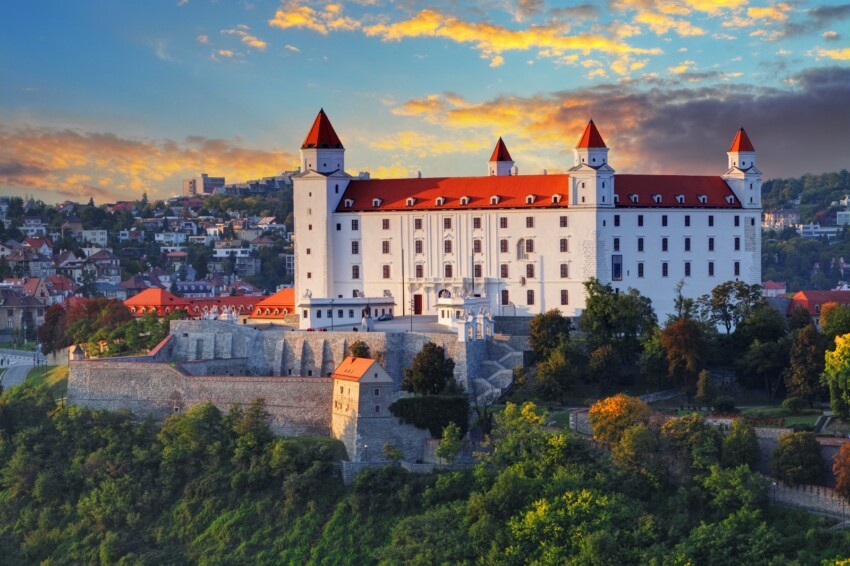
Bratislava Castle (Bratislavský hrad) is the undisputed symbol of the Slovak capital and majestically dominates the city from an 85-metre high rocky hill. This imposing white fortress with its four characteristic corner towers is so iconic that it is depicted on Slovak 10, 20 and 50 cent coins.
The present Baroque structure was rebuilt in the 18th century on the remains of earlier fortifications dating back to the 9th century. The Crown Tower, located in the south-west corner, is the tallest and most imposing of the four and is so called because it once guarded the Hungarian crown jewels. The inner courtyard houses an 80-metre-deep well, while the walls still preserve Gothic and Renaissance fragments.
Today the castle houses the Slovak National Museum and some rooms of the Parliament of the Slovak Republic. Among the most valuable collections is the Treasury Room, which houses the Venus of Moravany, a mammoth ivory statuette dated around 22,800 BC. The castle terrace offers a spectacular panoramic view of Bratislava, the Danube and, on a clear day, you can see Vienna in the distance.
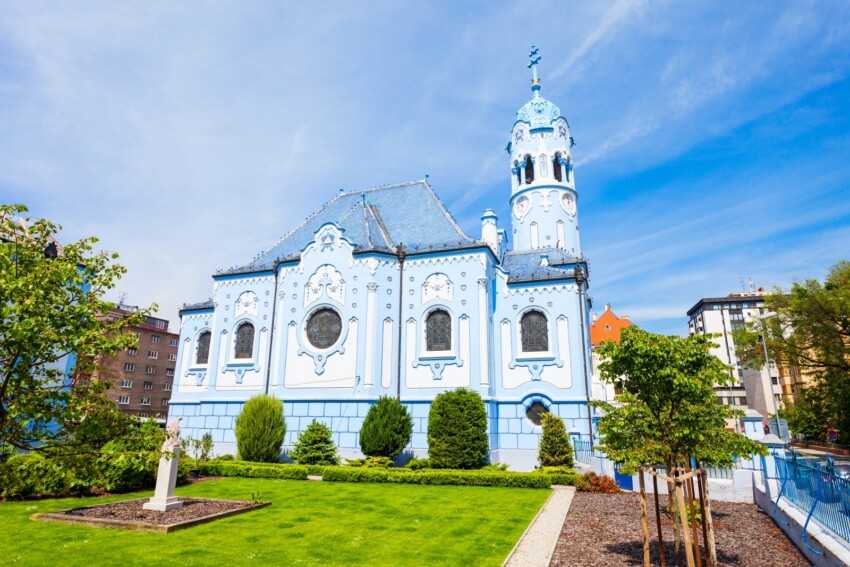
The Church of St Elizabeth of Hungary, universally known as the Blue Church (Modrý kostolík), is one of the masterpieces of European Art Nouveau and one of Bratislava’s most photographed attractions. Built between 1907 and 1913 to a design by Hungarian architect Ödön Lechner, considered the “Gaudí of Eastern Europe”, this church is an outstanding example of the Hungarian Secessionist style.
The building is immediately recognisable by its pastel blue colour that completely covers the exterior walls, roof and decorations. The 36-metre high cylindrical bell tower is surmounted by an enamelled polygonal dome, while the main façade is embellished with a large rose window depicting St. Elizabeth of Hungary. The bright blue majolica tiles and mosaics decorating the exterior create an almost fairytale-like visual effect.
The interior, also characterised by the blue and white tones, has a single nave with a barrel vault. The church is dedicated to St Elizabeth of Hungary, who was born in 1207 and grew up in Bratislava Castle, the patron saint of the poor and needy.
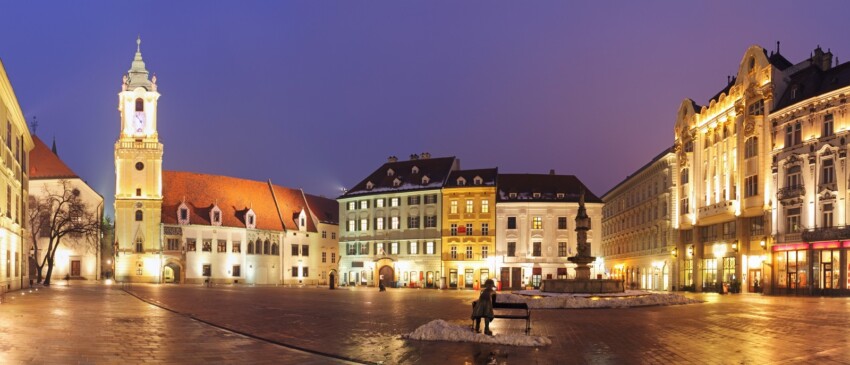
The historical centre of Bratislava (Staré Mesto) is the beating heart of the Slovak capital, a maze of cobbled streets and historical squares that retain their medieval charm. Perfectly preserved and entirely pedestrianised, it gathers around the Main Square (Hlavné namestie) where markets, revolts and executions have taken place over the centuries.
The Main Square (Hlavné Námestie) is the nerve centre of city life, dominated by the magnificent Town Hall with its medieval tower and surrounded by elegant buildings in pastel tones with an Austrian flavour. In the centre of the square is Maximilian’s Fountain, dedicated to the first Hungarian emperor crowned in Bratislava. According to a local legend, the statue of Maximilian II turns around and starts walking backwards on certain nights.
The Old Town Hall (Stará Radnica) is worth a thorough visit as it is the oldest building in the city and the first town hall in Slovakia (1421). Its structure comprises several buildings ranging from medieval to rococo, joined to form a unique architectural complex. Today, it houses the Bratislava City Museum, which tells the story of the city’s history through exhibits dedicated to the feudal justice system, with torture instruments, dungeons and ancient weapons.
The bronze statues scattered around the historical centre are one of the most popular attractions for tourists. The most famous is Čumil, the man emerging from a manhole in the pavement, whose name means ‘vigilante’ in Slovak. His origin is shrouded in mystery and touching his head is said to bring good luck. Other statues include a Napoleonic soldier leaning on a bench and the ‘Paparazzo’ watching passers-by.
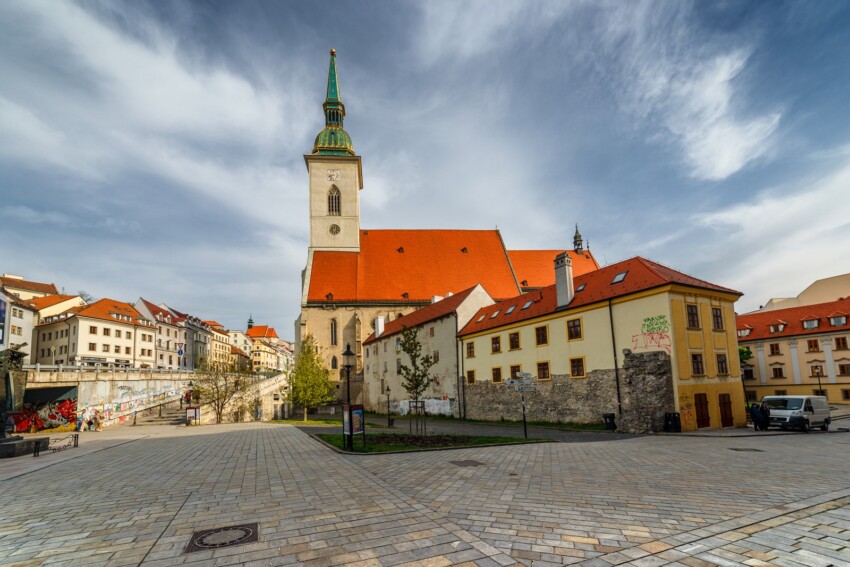
St Martin's Cathedral
4Rudnayovo námestie 1, 811 01 Bratislava-Staré Mesto, Slovakia
The beautiful St Martin’s Cathedral (Dóm svätého Martina) is located just below Bratislava Castle, and not far from the banks of the Danube. Built in the 13th century on Romanesque remains with Renaissance influences, this Gothic cathedral has been the coronation place of many kings and queens of Hungary, hosting 19 coronation ceremonies between 1563 and 1830.
The current structure is the result of several architectural interventions over the centuries. The bell tower has a troubled history: it was damaged by lightning in 1760, rebuilt in Baroque style and destroyed by fire in 1835. During the reconstruction in 1847, a gold-plated reproduction of the Crown of St. Stephen, the first Christian king of Hungary, was added to the tip.
The interior of the cathedral, with its soaring cross vaults, conveys a solemn and regal atmosphere. The side altars house valuable works of sacred art, while the crypt holds the tombs of historical personalities connected with Hungarian and Slovak history. The cathedral also houses the remains of St. Stephen of Hungary, adding a further element of sacredness to this place of worship.
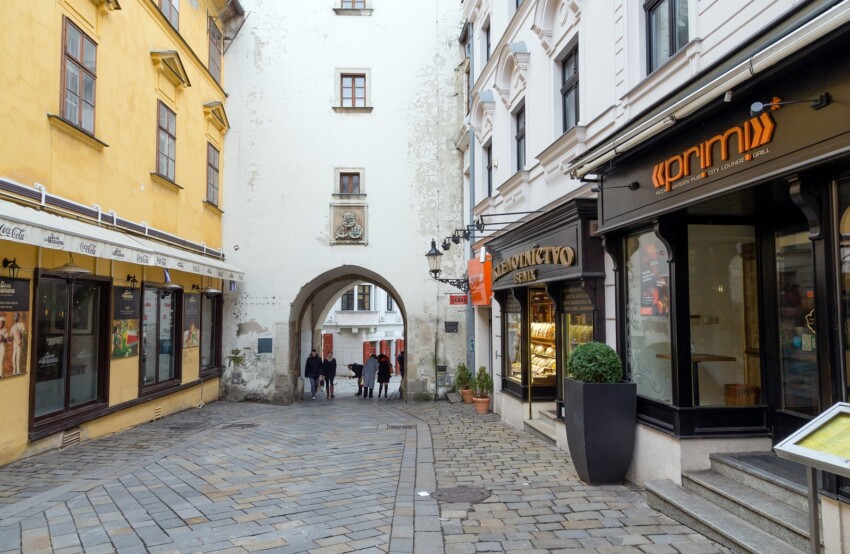
St. Michael’s Gate (Michalská brána) is the last remaining vestige of the four medieval gates that provided access to the fortified city of Pressburg. It is one of the oldest attractions in Bratislava, dating back to the Middle Ages, but over time it underwent several alterations until its almost complete demolition in the 18th century.
The gate is named after the church of the same name that once stood in front of it but was destroyed in the 16th century during Turkish sieges. The current structure, rebuilt in Baroque style in 1758, is topped by a 51-metre-high tower that offers one of the most beautiful views of the entire city.
You can climb to the top of the tower by purchasing tickets at the Pharmacy Museum ‘Il Gambero Rosso’. The tower houses the Weapons Exhibition of the Bratislava City Museum. From the top you can see the castle hill, roofs and towers of the old city in a unique perspective.
At the foot of the tower is the narrowest house in Bratislava, and probably in Europe: house No. 15, to the right of St. Michael’s Tower, which is only 1.3 metres wide. Under the arch of the door is the so-called ‘zero kilometre’, a golden circle with cardinal points indicating Bratislava’s distance from the world’s major cities.
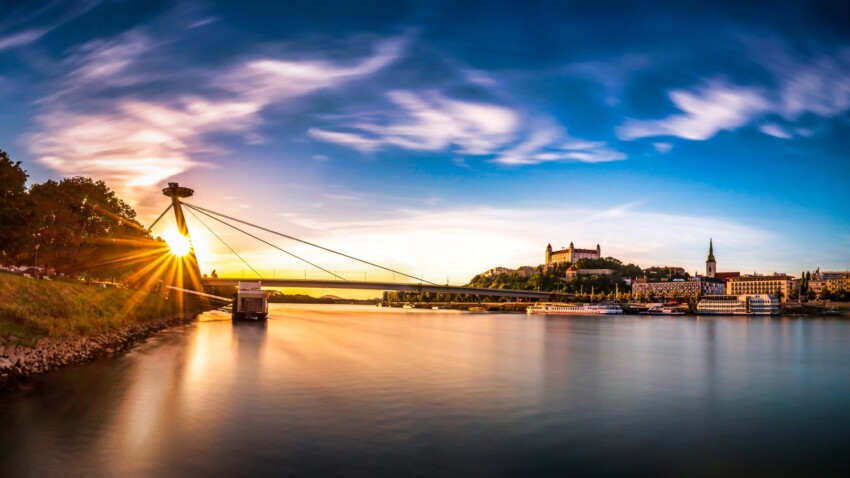
The SNP bridge, an acronym for Slovenského národného povstania (which translates as ‘Slovak national uprising’) or Novy Most, meaning ‘new bridge’, is the bridge that crosses the Danube in Bratislava, connecting the Old Town with the working-class district of Petržalka. A controversial design dating back to the late 1960s, the SNP bridge has a bold asymmetrical architecture, with the supporting tower located on the right bank of the Danube. At 430 metres long, it was built on the orders of the communist regime to show itself to the world.
The UFO Tower, located on top of the pylon at a height of 95 metres, is the real attraction of the bridge. This disc-shaped structure houses a panoramic restaurant and a spectacular belvedere. Despite a height of almost 100 metres, it is possible to reach the top in only 45 seconds thanks to a very fast lift.
From the belvedere, there is a spectacular 360-degree view of Bratislava, the Danube and the surrounding area. On particularly clear days, it is possible to see Vienna and the foothills of the Little Carpathians. The UFO Tower is open daily and is a must-see for sunset views of the Slovak capital.
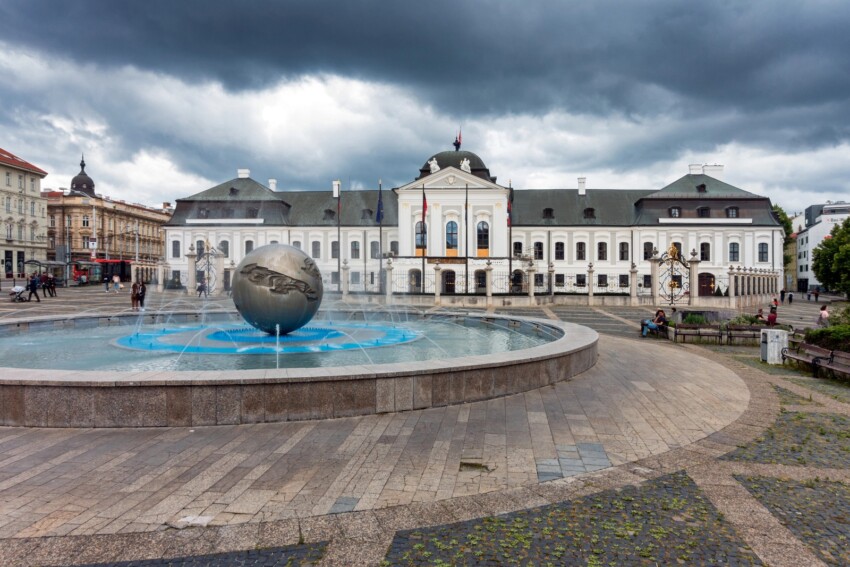
Grasalkovič Palace
7Hodžovo námestie 2978/1, 811 06 Bratislava-Staré Mesto, Slovakia
The Grasalkovič Palace is one of the most elegant examples of Rococo architecture in Slovakia and currently serves as the official residence of the President of the Slovak Republic. Built in 1760 for the President of the Hungarian Chamber of Rayl, the palace was a sought-after venue for events in aristocratic society.
The building, designed by Hungarian architect Antal Mayerhoffer, features a symmetrical façade with decorative elements typical of the mature Rococo style. The recently restored gardens surrounding the palace offer an oasis of tranquillity in the centre of the city and are freely accessible to the public during the day
Primatial Palace
8Primaciálne námestie 2, 811 01 Bratislava, Slovakia
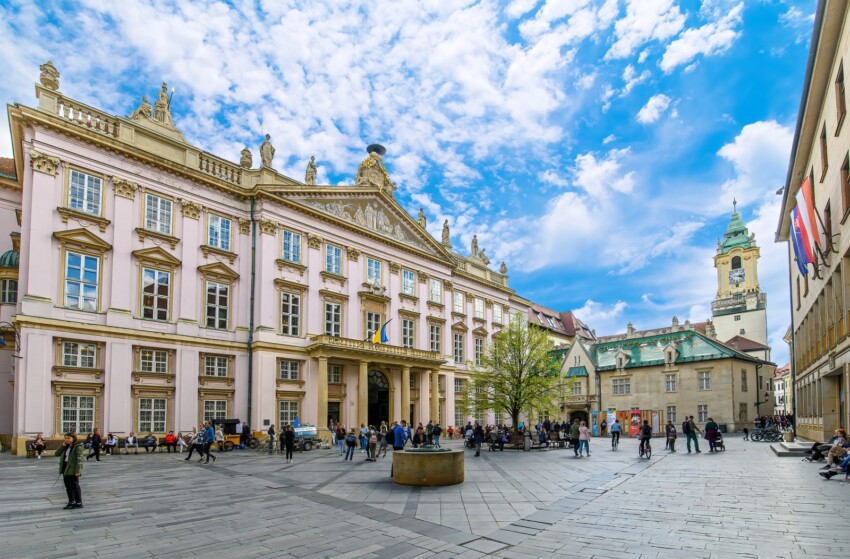
The Primatial Palace (Primaciálny palác) is one of the most beautiful examples of neoclassical architecture in Slovakia and is of great historical importance for Europe. Inside is a gallery with a unique collection of tapestries from the 17th and 18th centuries and paintings of Slovak rulers.
Built between 1778 and 1781 for Cardinal József Batthyány, Archbishop of Esztergom and Primate of Hungary, the palace has an austere but elegant neoclassical façade. The Hall of Mirrors on the first floor is particularly famous for hosting the signing of the Treaty of Presburg in 1805, which ended the Third Coalition war between Napoleon Bonaparte and Austria.
Hviezdoslav Square (Hviezdoslavovovo námestie) is one of the two main Baroque squares in the Old Town and is the heart of Bratislava’s cultural life. Besides the inevitable bars and restaurants, the square is home to the National Theatre and the Philharmonic Theatre. In winter it becomes a giant ice rink and in summer a giant chessboard.
The Slovak National Theatre (Slovenské Národné Divadlo) dominates the eastern side of the square with its elegant architecture. Created by Viennese theatre designers Hermann Helmer and Ferdinand Fellner, the SND was completed in 1886 at a time when the Habsburg Austro-Hungarian Empire was flourishing. Its elaborate columned façade is studded with busts of playwrights such as Shakespeare and Goethe.
Map
In the following map you can see the location of the main places of interest mentioned in this article.
Guided tours of Bratislava
Discover Bratislava through the eyes of expert guides who will take you on a tour of the city's hidden treasures. Participating in a guided tour will allow you to capture the true essence of Bratislava.
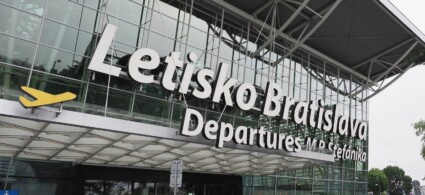
The Slovak capital is served by Milan Rastislav Štefánik Airport, located about 9 kilometres from the city centre. The best way to reach the centre from the airport is to take bus 61, which runs every 15-20 minutes, or alternatively, line N61, which operates at night. The journey takes about 30 minutes.
Bratislava is well connected to major European cities via the international railway network. The Central Railway Station (Bratislava Hlavná Stanica) is about 1.5 kilometres from the city centre and is connected by trams and city buses.
The city is also easily accessible by car via the A1 motorway (from Vienna), A2 motorway (from Budapest) and other main arteries.
How to get to Bratislava from Vienna
If you decide to visit Bratislava from Vienna, you can use the usual means of transport, such as train, bus or rental car, or combine business with pleasure by sailing the Danube on a fast catamaran, allowing you to enjoy the journey from a different perspective!
This day trip can be done independently or by taking part in an organised (group or private) tour.
By train
From Vienna’s main train station (Wien Hauptbahnhof) there are around 13-15 trains leaving daily for Bratislava’s main train station (Bratislava Hlavná Stanica). The fastest trains take 1 hour and 9 minutes, while the average duration is about 2 hours and 47 minutes for connections with changes. The railway companies operating on the route are ÖBB (Austrian Railways) and RegioJet.
By bus
There are many bus companies, local and international, connecting the two capitals. The choice of which company to choose for the Vienna-Bratislava route can therefore be made on the basis of the offers you will be able to find on ticket prices and the stations of departure and destination. With more than 100 departures per day, you are sure to find the company and timetable that best suits your needs.
The route travelled by the buses of the various companies may vary, but roughly the journey time is about 1 hour. The main operators include:
FlixBus: departs from Vienna International Busterminal (VIB) in Erdbergstraße and arrives in Bratislava AS Nivy.
Nomago: same route as FlixBus with similar stops
RegioJet: direct connections with comfortable buses
All vehicles are equipped with air conditioning, free Wi-Fi, electrical sockets and luggage included in the price.
By boat along the Danube
The Twin City Liner operates a fast catamaran service between Vienna and Bratislava with up to 3 daily connections. The trip takes 75 minutes and prices start at €30-40 one way. Departures are from:
Vienna: Wien City river station at Schwedenplatz
Bratislava: Pontoon Twin City Gate, near the historical centre
During the navigation you can admire the ruins of Devín Castle and the Danube landscapes. The service operates all year round with reduced frequencies in the low season.
On a guided day tour
If you don’t want to think about anything but simply take a ticket and enjoy the journey, the best solution for you is definitely to take part in an organised tour, whether it is a group tour or reserved for you alone. They usually involve travel by bus and/or boat.
Austria and Slovakia are both part of the European Union and the Schengen Treaty, so there are no border controls. The cities are about 90 km apart and the car journey takes about an hour, travelling along the Austrian A4 and A6 motorways. The latter ends at the border with Slovakia and from there becomes the D1 motorway.
The traffic rules in the two countries are identical: 50 km/h speed limit in towns, 90 km/h on state roads and 130 km/h on motorways. It should be noted that in Slovakia there is zero tolerance for driving after drinking, with fines of 200 to 1,000 euros and a ban on driving for five years, even with a blood alcohol level below 0.05%, which is the maximum permitted in Austria.
Remember that in order to travel on the motorways of Slovakia and Austria you need to buy the appropriate vignettes. If you want to rent a car, you can book one on the Car hire in Vienna page.
Where to stay in Bratislava
The historical centre is the most popular area to stay in Bratislava, offering the possibility to walk to all the main attractions. Boutique hotels and guesthouses in the centre combine historical charm with modern comforts, often housed in restored Baroque buildings. The area provides immediate access to restaurants, historic cafés and the city’s vibrant nightlife.
The castle area offers accommodations with panoramic views of the city and the Danube, which are particularly appreciated for their tranquillity and more exclusive atmosphere. Although slightly decentralised, it remains easily connected to the centre via scenic stairways or public transport.
The Petržalka district, located on the opposite bank of the Danube and connected by the SNP Bridge, offers modern hotels at lower prices. This area, developed during the socialist era, offers a different perspective on the city and good connections to the centre.
We offer best rates If you find it cheaper we refund the price difference.
Free cancellation Most properties allow cancellation without penalty.
We're available 24 hours a day For any problem call Booking.com.
The Little Carpathians extend northeast of Bratislava and offer excellent opportunities for nature excursions and wine tasting. The Modra wine region is only 30 kilometres from the capital and allows you to discover the Slovak wine tradition through historical cellars and hilly landscapes. Renting a car makes it easy to explore this area full of medieval castles and picturesque villages.
Devín Castle is located just 10 kilometres from the centre of Bratislava, at the confluence of the Danube and Morava rivers. This ruined medieval fortress offers spectacular views and is an important archaeological site documenting human occupation since the Bronze Age. It can also be reached by public transport.
The Mala Fatra National Park offers spectacular mountain landscapes about a 2-hour drive from Bratislava. The spa of Rajecké Teplice and the traditional village of Čičmany, famous for its ornate wooden houses, are interesting destinations for those wishing to discover more authentic Slovakia.
Bratislava Weather
What's the weather at Bratislava? Below are the temperatures and the weather forecast at Bratislava for the next few days.
Friday 27
2°
11°
Saturday 28
3°
11°
Sunday 1
2°
11°
Monday 2
3°
11°
Tuesday 3
4°
10°
Wednesday 4
2°
13°
Where is located Bratislava
Bratislava is located in south-western Slovakia, only 60 kilometres from Vienna and 200 kilometres from Budapest. The Slovak capital occupies a unique geographical position, being the only European capital to directly border two states: Austria to the west and Hungary to the south. The Czech Republic is only 70 kilometres to the north, making Bratislava a strategic crossroads of Central Europe.
How to save on transport and entrance fees
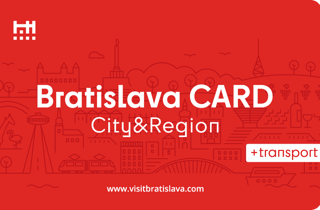
City Card allow you to save on public transport and / or on the entrances to the main tourist attractions.
 Hotel
Hotel  Budget accommodations
  Apartments
  Family Hotel
  Luxury Hotel